


4 min readAug 24, 2026 08:40 PM IST
Nasa’s Johnson Space Center is preparing to shift from supporting a largely government-led space station programme to working alongside private operators as the International Space Station (ISS) approaches retirement.
The ISS is expected to remain in operation until around 2030, although Nasa officials have said the station could continue flying longer if directed by Congress. At the same time, Nasa is working with private companies to develop commercial destinations in low Earth orbit, which requires the agency to rethink how it will use its astronaut training facilities and operational expertise in the future.

Nasa’s Commercial LEO Destinations (CLD) programme intends to have private space stations ready around the time the ISS retires. In 2021, the agency awarded early-stage contracts worth about $415 million to three teams led by Nanoracks, Blue Origin, and Northrop Grumman. Northrop Grumman later joined Voyager Space’s Starlab effort rather than continuing as an independent CLD station developer.
Companies such as Vast Space are also developing their own station modules, while other commercial groups are working on future orbital destinations.
Mission Control prepares for a shared future
The transition to commercial stations does not mean the American space agency will step away from human spaceflight operations. Instead, it expects to provide expertise and support to companies that operate future orbital facilities.
Nasa’s Mission Control at Johnson Space Center remains a key example of this expertise. The facility contains dedicated control rooms for different missions, including operations linked to the ISS, Artemis, and Boeing’s Starliner. The ISS control room continues to monitor astronauts, spacecraft systems, and communications as crews work aboard the station.
Flight director Diane Dailey said future mission control centres will require specialists responsible for areas such as propulsion, communications, and computers. Nasa already has experience across these disciplines, which could help shape how responsibilities are divided between the agency and private operators.
Story continues below this ad
The Space Vehicle Mockup Facility, known as Building 9, is another important part of this transition. The facility is increasingly being used not only for Nasa missions but also by commercial spaceflight companies. Astronauts train for emergencies such as fires and medical situations, including performing procedures in microgravity where even something as basic as CPR becomes more difficult.
The facility has also housed hardware from companies including SpaceX and Blue Origin, along with a mock-up associated with the Starlab Space consortium. As Nasa plans to become a customer of future commercial stations, officials expect more private-sector hardware and training activities to move into facilities such as Building 9.
Neutral Buoyancy Lab remains central to astronaut training
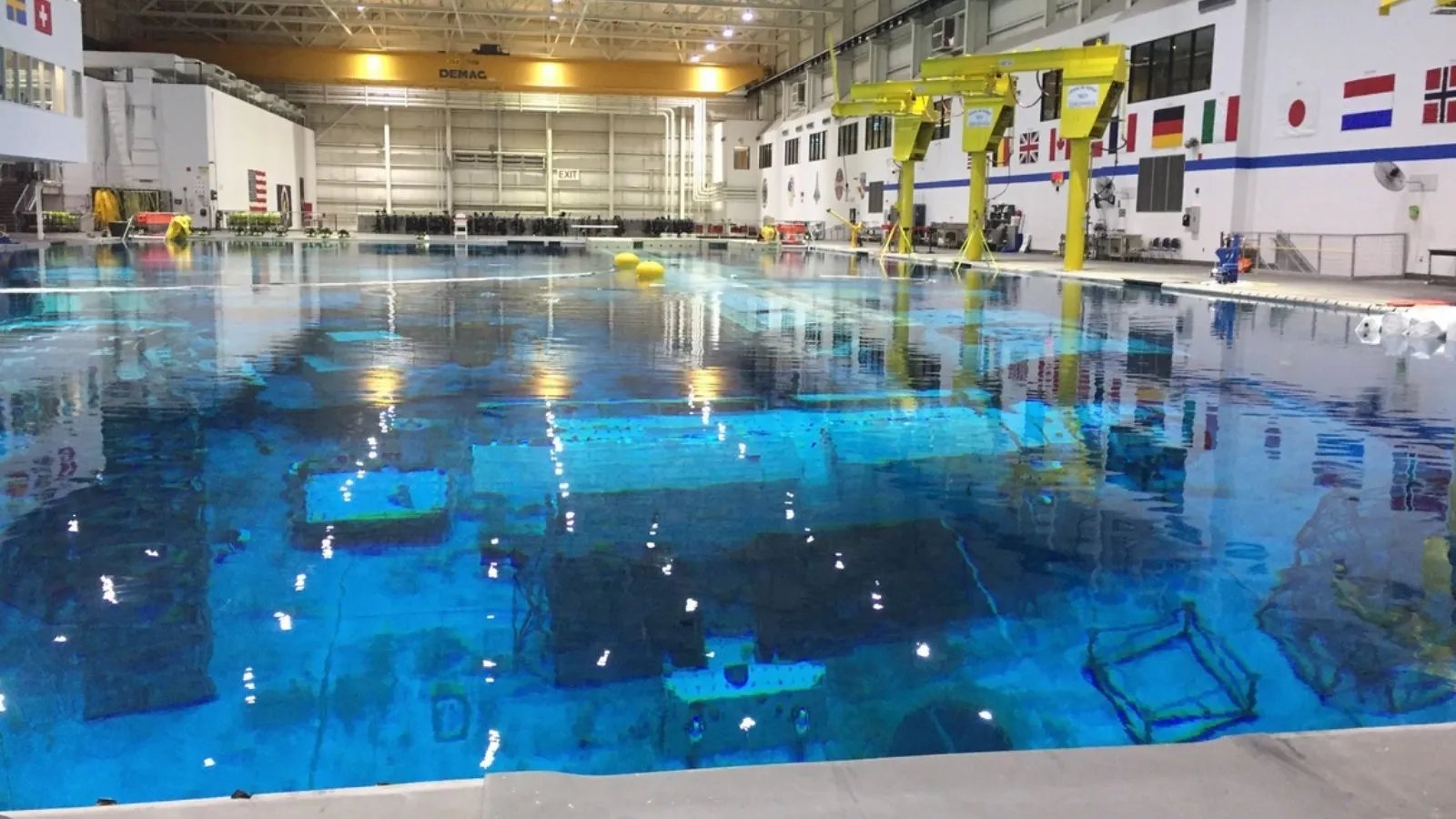
One of JSC’s most recognisable facilities is the Neutral Buoyancy Laboratory (NBL), where astronauts practise spacewalks underwater while wearing specially adapted spacesuits.
The facility contains mock-ups of ISS modules and spacecraft, allowing astronauts and support teams to rehearse operations and emergencies. Training can include scenarios such as spacecraft landing in different positions in the water, helping crews learn how to enter and exit vehicles safely during recovery operations.
Story continues below this ad
Private companies already use NBL for activities such as spacesuit testing. Nasa expects to expand commercial services at the facility as the ISS programme winds down, although much of its current spare capacity is occupied by the US Navy.
As the ISS era draws to a close, Nasa’s Houston facilities are therefore evolving from a primarily government-focused training and operations centre into a hub that can support the agency, international astronauts, and a growing commercial space industry.