

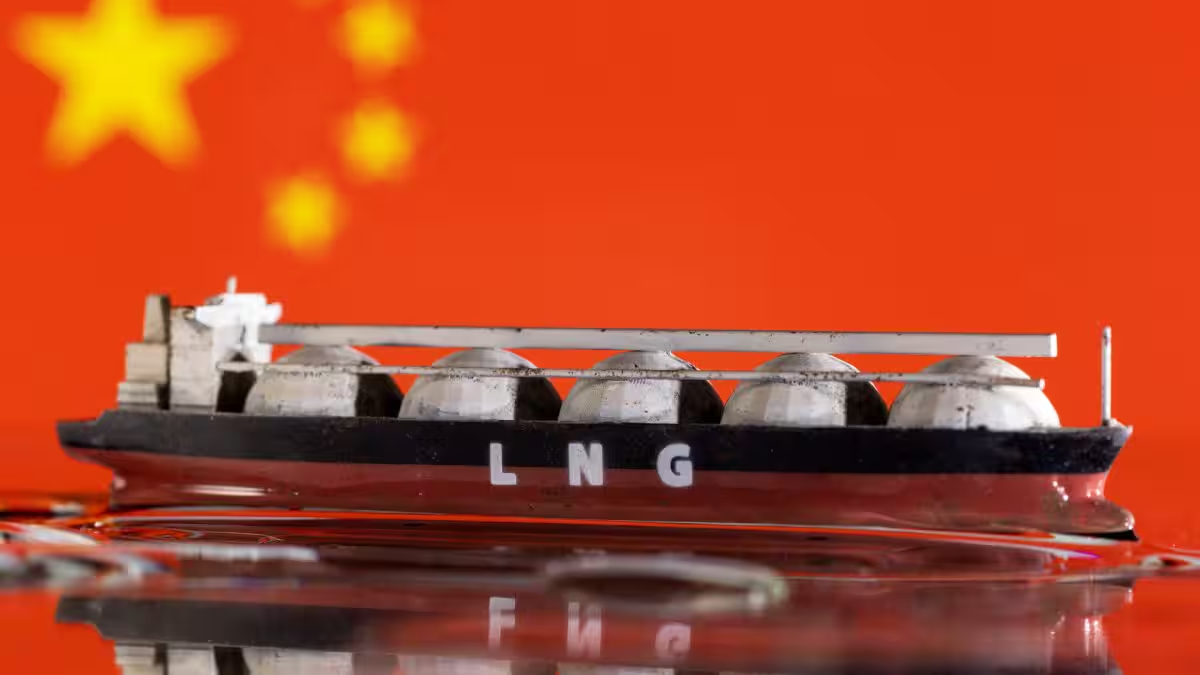

LNG prices have surged to nearly $30 per MMBtu after West Asia supply disruptions, prompting Indian and Chinese buyers to switch fuels and seek alternative cargoes
India and China could see liquefied natural gas (LNG) demand recover once the West Asia conflict eases and global gas prices return to more normal levels, industry executives said, after the supply disruption pushed Asian spot prices close to $30 per million British thermal units (MMBtu).
LNG prices were around $10 per MMBtu before the conflict but have surged as disruptions to shipments through the Strait of Hormuz cut access to supplies from major exporters Qatar and the United Arab Emirates. The route previously carried about one-fifth of global LNG supplies.
The sharp increase has forced buyers in India and China to look for alternative cargoes, while some consumers have switched to coal, oil and other fuels where gas has become too expensive.
Deepak Gupta, chairman and managing director of GAIL, said the price surge was already affecting gas demand in India, particularly among industries that are sensitive to fuel costs.
“The prices have hit through the roof,” Gupta said at the Gastech conference in Bangkok. He added that several industries were switching to other fuels when natural gas was no longer economically viable.
GAIL, India’s largest natural gas distributor by market share, initially had to restrict gas consumption after supplies from the Middle East were disrupted. Gupta said the company has since increased its trading activity and restored supplies to about 90 to 95 per cent.
 More from Business
GAIL has also been searching for LNG from alternative sources to replace cargoes affected by the disruption. PetroChina International, the trading arm of China’s state energy major PetroChina, has similarly deployed trading teams to secure replacement supplies.
PetroChina International chief executive Luo Yizhou said the company moved quickly to secure gas after the conflict began, reflecting the urgency faced by major Asian buyers as Middle Eastern supplies were disrupted.
Demand hit by high prices
The immediate decline in LNG consumption in India and China is increasingly being viewed by industry executives as a price-driven disruption rather than a permanent loss of demand.
Gupta said India’s industries and power sector were likely to return to greater gas use once prices ease and supplies become more reliable.
He expects additional global LNG production of about 150 million to 200 million tonnes over the next four to five years, which could help increase supply and bring prices down.
“In the coming days, in mid-term and long-term, things will become normal,” Gupta said.
In China, Luo expects gas-fired power generation to recover once LNG prices return to a more normal range of around $7 to $9 per MMBtu.
China has continued to see strong electricity consumption even as LNG imports have fallen, suggesting that higher gas prices, rather than weaker underlying energy demand, are weighing on LNG consumption.
“I don’t think it will kill the demand in China,” Luo said.
The supply shock comes at a difficult time for Asian buyers, with Europe also competing for limited LNG cargoes ahead of winter. Shell estimates that the global market has lost about 36 million tonnes of LNG from the Middle East so far this year.
(With inputs from agencies.)