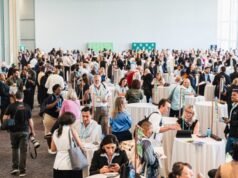




At Arabian Travel Market 2026, Breaking Travel News spoke directly with hotel CEOs and senior hospitality leaders across the region to explore the trends shaping the sector, from stronger domestic demand and shorter stays to more flexible hotel formats, loyalty and increasingly experience-led hospitality. See more interviews here, and a roundup of the trends at Arabian Travel Market here.
One of the clearest shifts seen throughout the show has been the strength of local demand. Christopher Hartley, CEO of Global Hotel Alliance, said the group had seen a 7% increase in UAE staycations this year as hotels adapted to changing travel patterns.
“We saw a huge growth in, for example, staycations within the country. That was up 7% this year,” Hartley told Breaking Travel News. “Despite the drop in international travel, we saw a growth in local travel.”
That shift is also showing up in hotel loyalty. Emilie Couton, CEO of Accor Plus, said the company’s UAE launch in May had helped increase its domestic business mix from 2% to 16%, prompting expansion into nine additional Middle Eastern countries.
“What we saw is that we saw an increase in the domestic mix from 2% to 16%,” Couton said. She also described loyalty as a way to “create demand for travel”, through benefits including free nights, member rates and dining offers.
The hotel product itself is becoming more flexible. A newly opened 217-key property on Saadiyat Island combines apartments for short and long stays with rooms and studios, with kitchenettes throughout. The property has also incorporated pet-friendly facilities, including a pet menu and dedicated elevator.
The idea of a hotel as an adaptable base is also reflected across the wider sector. Ascott’s regional leadership described the group as “specialized in long stay” while remaining strong in “short stay corporate and leisure” accommodation, reflecting an increasingly blurred line between different types of hotel guest and length of stay.
Meanwhile, hotel operators are putting greater emphasis on what happens once the guest walks through the door. Eddy Tannous, COO of Rotana Hotel Management Corporation, said the group had launched a “five senses” programme focused on the physical experience of its properties.
“We are about guest experience, we are about impacting the guest,” Tannous said. “If the guest walks into my hotel and he doesn’t feel it and experience it, then I failed.”
For the newly opened Saadiyat property, that same emphasis is expressed through a deliberately homelike approach. Its hotel manager said: “We are looking at giving hospitality, not service,” with the aim of making guests feel that “they are home”.
The interviews at ATM point towards a hotel market evolving on several fronts at once: local travellers are becoming an important source of demand, stays are becoming more flexible, loyalty is being used to encourage additional travel, and the physical experience of the hotel is increasingly part of the proposition itself.