

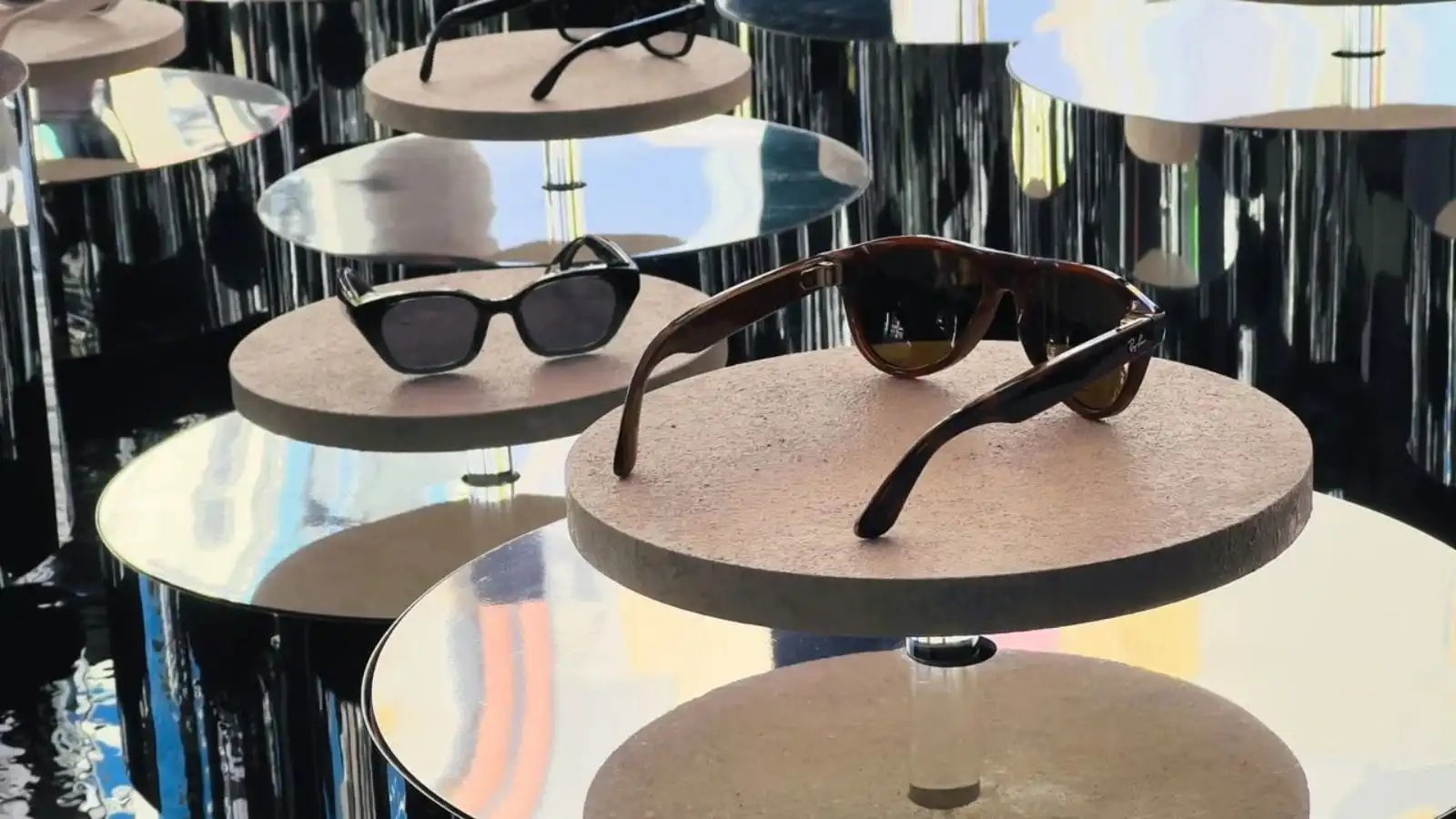

Smart glasses that can capture video, photos, and audio from the wearer’s perspective are becoming more popular. However, as the technology becomes more widespread and more everyday users wear these glasses, concerns are rising about consent and whether existing privacy laws can keep pace with technology that lets people record almost invisibly.
“There is a huge benefit to having a camera. We just need to make sure that we are mitigating the concerns that people have,” Ziad Asghar, Senior Vice President and General Manager of XR, Wearables and Personal AI at Qualcomm Technologies Inc, told indianexpress.com in an interview at the Snapdragon Summit in Maui, Hawaii.

Asghar said that, as a platform provider, Qualcomm offers backend privacy options that an OEM or brand making the glasses can enable before selling the device to consumers.
“Today, at least with the glasses that I see out there, people have tried to provide that comfort by ensuring that if you take a picture, a light comes on. If you are recording, the light blinks. As a platform provider, we are providing all the means to our customers to be able to do the right thing,” he said.
Tackling privacy concerns
Asghar said that the company has built a robust security subsystem on the backend, along with trust-management engines, keeping in mind the age of agentic AI, where glasses will be always-on, always-sensing and for that to happen, constant context capture and AI agents will enable a better understanding of users’ wants and needs.
 Ziad Asghar, SVP & General Manager – XR, Wearables & Personal AI at Qualcomm Inc. (Image credit: Anuj Bhatia/Indian Express)
“What you typically use the camera for is really about context. What we are doing within our sensing hub is having an always-sensing camera that allows us to detect a face, not recognise it. For example, if I am wearing my glasses and want to take a picture of a lamp that I would like to buy, I don’t really need information about all the faces in the room,” he explained.
“We can actually detect and obfuscate all the faces. Anything that we save, an image that we save, has no face information. It means that picture never left the device because I processed it there. I gave you a response, and that’s it. If we can do more of the AI processing on the device, I mitigate a lot of those privacy concerns as well,” he added.
Story continues below this ad
Asghar said that brands that use Qualcomm’s platform to create smart glasses are free to forgo cameras altogether and launch audio-only glasses. The company will not stop them from doing so, but if they choose to include cameras, they must implement privacy-preserving features and transparent indicators, such as recording lights.
“If somebody tries to cover the camera, it will not work anymore. If somebody tries to tamper with the actual link from the camera to the chip, there are ways that we can detect that,” he said.
Other smart glasses
On Thursday, Meta launched new glasses without a camera, limiting the device to audio-only functionality. The camera-less glasses may help ease concerns among critics and privacy advocates and potentially address some privacy worries. However, the glasses, which use a Qualcomm chip, still have microphones and speakers for music, calls, and interacting with the company’s AI assistant, Muse.
The launch at the company’s headquarters in Menlo Park, California, coincided with Qualcomm’s Snapdragon Summit.
Story continues below this ad
For years, Meta has faced scrutiny over how people, especially men, have used its AI glasses to record videos without subjects’ consent. The company previously updated its glasses to prevent users from covering the recording light while recording, after an earlier update enabled the glasses to detect whether the light had been tampered with.
Similarly, Samsung’s upcoming glasses, powered by Google’s software, will feature a tamper-resistant privacy light. Simply put, the glasses show a recording light when taking photos or videos, but they need to be worn on your face to work. If the LED is blocked, the camera won’t record either.
While uneasiness about having cameras on glasses is growing, many acknowledge that privacy concerns around camera-enabled AI glasses are an industry-wide issue. But tech companies see advantages in putting cameras on glasses to understand a user’s surroundings, rather than simply taking photos or recording videos.
“I do feel that there is a use case for the camera on the glasses as well. For example, I could stand outside waiting for an Uber. The glasses should know where I am based on the camera and location information and basically say, ‘Order me an Uber to go home.’ That’s it. I don’t need to take my phone out and tap it 50 times,” he said.
Story continues below this ad
‘Not a replacement device’
No matter how much we try to ignore the new wave of camera-equipped smart glasses and even AI-ready headphones, tech companies are racing to find the next big thing in consumer tech.
 Snap Specs are big, feature two built-in displays, one for each lens, support augmented reality, and belong to the highest tier of smart glasses available on the market. (Image credit: Anuj Bhatia/Indian Express)
During this week’s Snapdragon Summit, Qualcomm brought AI agents into glasses. Asghar described new-age devices that include glasses and earbuds with cameras that can sense what’s happening around you, understand your intent, and respond while you are still in the moment. The phone remains the primary hub, but glasses can bring the agent closer to what you are looking at and respond through audio or a display.
However, getting the glasses right also depends on how much processing can happen locally on the device, reducing the delay caused by sending a question to the cloud and waiting for an answer. It also means running smaller AI models that can deliver useful processing within the glasses’ tight memory and battery constraints. That requires a lot of effort to get the hardware right, balancing the camera, microphones, battery, heat and fit while delivering the right AI experience.
“I don’t look at this [glasses] as a replacement device. Just like when mobile devices came along, PCs didn’t go away. You are still carrying and using it. Similarly, when these new devices come along, mobile devices won’t go away. We will continue to move perhaps some use cases over and do some new use cases on these devices,” he said.
Story continues below this ad
Asghar predicts that, similar to smartphones and other consumer products, glasses will become a category of their own and be available across multiple tiers. He sees audio-only glasses, without a camera, as entry-level products that could help expand the market. Above that, there could be glasses with cameras, followed by glasses with colour displays, including both RGB and monochrome displays.
“I feel like this is the time when Symbian was moving to Android,” he said when asked what stage the current generation of glasses is at.