

The US and China have moved from a tariff war to a fragile trade truce as Trump and Xi prepare for talks in Washington
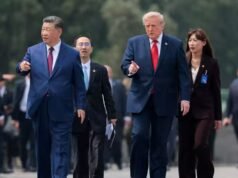
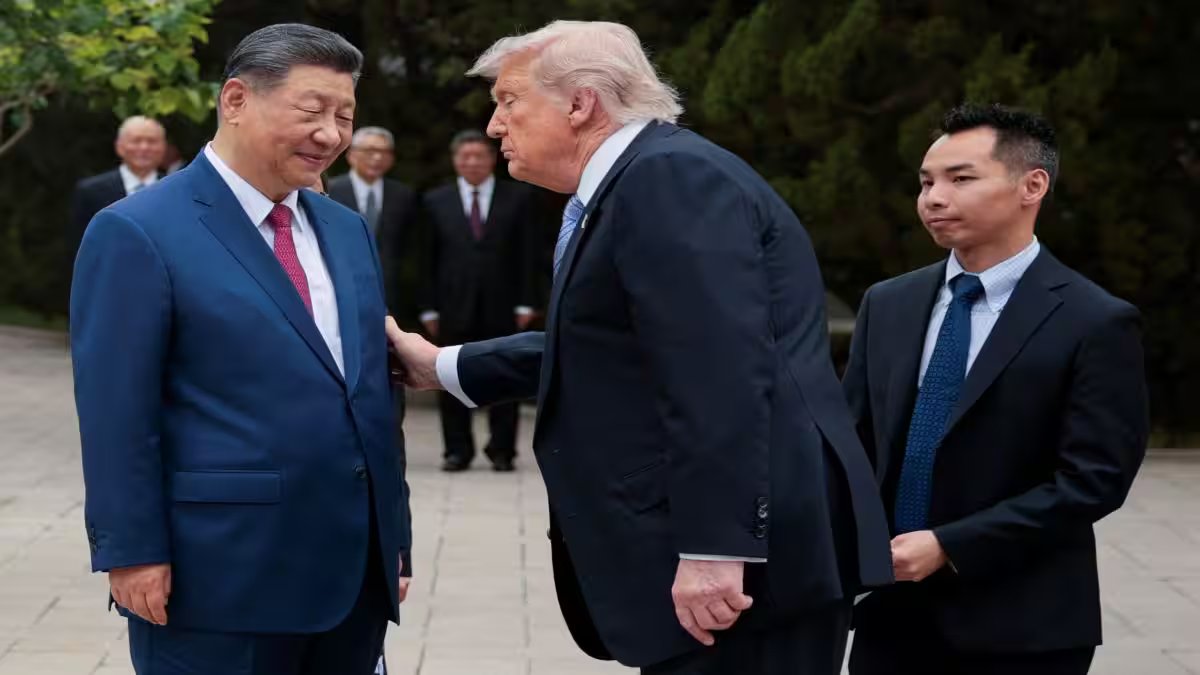
The US-China trade relationship has moved from a rapid escalation in tariffs to a fragile truce, with President Donald Trump and Chinese President Xi Jinping now preparing for another summit aimed at keeping tensions from rising again.
Xi is set to meet Trump at the White House on September 24. The two leaders are expected to focus on extending a trade truce that is due to expire in November, while also discussing issues including artificial intelligence, critical minerals and purchases of US goods.
The shift is striking because the two countries came close to a much wider trade confrontation in 2025. At one stage, US tariffs on Chinese goods and China’s retaliatory duties both reached 125 per cent.
The truce did not end the rivalry. Instead, it created a framework for Washington and Beijing to manage their differences while keeping trade flowing.
How the trade war began
Trump restarted the trade confrontation soon after returning to the White House in 2025.
In February, his administration imposed a 10 per cent tariff on Chinese goods, citing concerns over fentanyl and immigration. Beijing responded with tariffs on US coal, liquefied natural gas, crude oil and automobiles. China also restricted exports of five metals used in defence and clean-energy industries.
 More from Business
The confrontation widened in March. The US doubled the fentanyl-related tariff to 20 per cent, while China imposed 10-15 per cent tariffs on US agricultural products.
The biggest escalation came in April, when Trump announced his so-called “Liberation Day” tariffs. Chinese goods faced an additional 34 per cent duty.
China retaliated with matching tariffs. The two sides then repeatedly increased duties, taking US tariffs on Chinese goods to 84 per cent and later 125 per cent. China’s tariffs also rose to 84 per cent and then 125 per cent.
Beijing additionally tightened controls on rare-earth exports and warned its citizens against travelling to the US.
The rapid escalation raised concerns about a much wider disruption to global trade because the US and China are two of the world’s largest economies.
Geneva brings the first pause
The first major break in the escalation came in May 2025.
US and Chinese officials met in Geneva and agreed to a 90-day pause. Washington cut its tariff rate on Chinese goods to 30 per cent from 145 per cent, while Beijing reduced its tariffs on US goods to 10 per cent from 125 per cent.
The pause was later extended for another 90 days in August.
The agreement did not resolve the structural disagreements between the two countries. But it gave businesses and markets some relief and created space for further negotiations.
October truce changes the direction
Tensions rose again in October 2025 after China widened rare-earth export controls.
Trump responded by announcing an additional 100 per cent tariff and new export controls on critical software. His administration also threatened restrictions on Boeing parts.
But the two leaders later reached a broader trade truce after talks in South Korea.
Trump agreed to reduce some tariffs in return for Chinese steps on fentanyl precursor chemicals, a resumption of soybean purchases and a pause in some rare-earth export controls.
That agreement became the foundation for the current period of relative stability in US-China trade.
From tariffs to trade management
The relationship then entered a more transactional phase.
In February 2026, the US Supreme Court ruled against Trump’s use of emergency powers for some of his tariff measures, including the China fentanyl tariffs and reciprocal tariff regime. Trump subsequently imposed a temporary 10 per cent global tariff under a different law.
In May, Trump travelled to Beijing for a summit with Xi. The two sides announced plans to establish new Boards of Trade and Investment.
China also agreed to purchases of Boeing aircraft and US agricultural products, although several commitments from the May meeting remain unresolved.
The May summit showed that the two governments were no longer focused only on raising tariffs. They were also looking for mechanisms to keep trade and investment moving despite disagreements over technology, national security and market access.
Why the September summit matters
The next test comes on September 24, when Xi meets Trump in Washington.
The immediate objective is not expected to be a comprehensive trade agreement. Instead, the focus is on keeping the existing truce alive.
The current arrangement is due to expire in November, making an extension one of the most important issues before the leaders.
Recent preparatory talks in New York between US Treasury Secretary Scott Bessent and Chinese Vice Premier He Lifeng also covered possible tariff reductions on non-sensitive goods.
US Trade Representative Jamieson Greer said Washington was looking at a relatively small group of non-sensitive US and Chinese products that could be traded in a more balanced way. Potential US exports could include energy, agricultural products and medical devices, while Chinese exports could include consumer and low-tech goods.
Critical minerals remain another unresolved issue. US officials have said China’s earlier commitments to ease restrictions have not resulted in sufficient supplies for American companies.
AI enters the trade talks
The relationship has also expanded beyond conventional trade.
At the New York talks, Bessent proposed a new US-China mechanism for notifying each other about AI incidents that could have national security implications.
The proposed system would create a channel for discussions on common risks and threats associated with artificial intelligence.
China’s response to the proposal was not clear. A Chinese state media readout said the two sides had held frank and constructive discussions on economic and trade issues, including implementing agreements reached in earlier negotiations.
AI is particularly sensitive because Washington and Beijing see advanced technology as central to their economic and national security competition. US export controls on advanced AI chips and semiconductor equipment remain a major point of disagreement, although those controls were not part of the latest AI safety mechanism discussions.
China enters the talks from a stronger trade position
The balance between the two sides has also changed since the height of the tariff confrontation.
China’s exports to the rest of the world have continued to grow despite the US tariff campaign. China’s global trade surplus is on course to exceed $1 trillion for a second consecutive year.
More than half of the roughly 6,500 product categories China has sold to the US so far this year have recorded growth compared with 2025, according to Reuters.
That means the tariff campaign has not eliminated China’s role as a major global supplier.
For Washington, the challenge is therefore no longer simply about imposing higher tariffs. It is also about securing concessions on areas such as critical minerals, fentanyl precursor chemicals, purchases of US goods and access for American companies.
For Beijing, maintaining access to major markets while strengthening domestic resilience remains important.
What remains unresolved
The trade truce has reduced the risk of another immediate tariff escalation, but it has not resolved the underlying disputes.
Chinese purchases of US agricultural products remain an issue. Commitments involving Boeing aircraft are also yet to be fully delivered.
Washington wants better access to critical minerals, while Beijing is seeking relief from US technology restrictions.
Taiwan could also complicate the economic discussions. Trump has described a proposed $14 billion US arms package for Taiwan as a potential negotiating chip, while Beijing continues to regard Taiwan as a core issue in its relationship with Washington.
The two governments are therefore trying to separate areas where cooperation is possible from disputes that remain difficult to resolve.
A truce, not an end to the trade war
The evolution of the US-China relationship since February 2025 shows that the tariff war has not disappeared. It has changed form.
The sequence has been clear: tariffs, retaliation, extreme escalation, negotiation, temporary pauses and then a broader truce.
The September 24 meeting will test whether that process can continue.
(With inputs from agencies.)