

O Panneerselvam, who was twice given the Chief Minister’s position after Jayalalithaa was forced to resign due to court convictions, was a reliable replacement for Jayalalithaa.
Chennai
The shift following J Jayalalithaa’s passing was inevitably going to be difficult for a party that was founded on massive charisma and towering personalities. The AIADMK, which was founded by matinee idol and political phenomenon M G Ramachandran, has endured for decades thanks to the remarkable appeal of two leaders, MGR and Jayalalithaa, who both consistently turned their personal popularity into electoral victories.
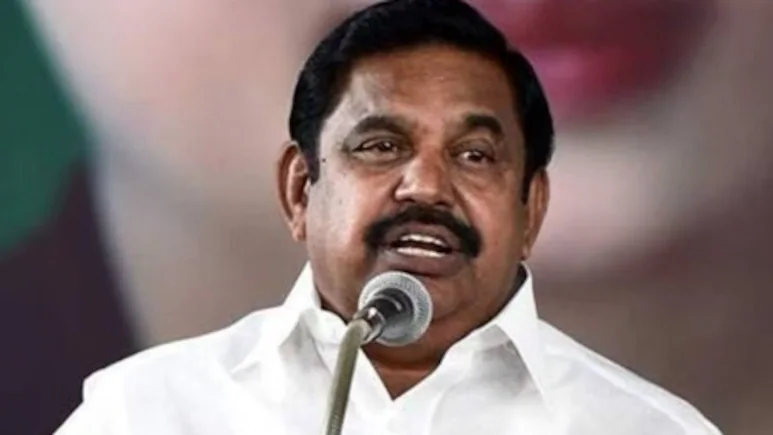
Three elections in a row were won by MGR. Before passing away in 2016, Jayalalithaa also wrote history by winning two consecutive terms in office. Edappadi K Palaniswami (EPS), a loyalist who was neither publicly recognised as Jayalalithaa’s political heir nor groomed, stepped into those gigantic shoes.
O Panneerselvam, who was twice given the Chief Minister’s position after Jayalalithaa was forced to resign due to court convictions, was a reliable replacement for Jayalalithaa.
However, after Jayalalithaa became the head of the AIADMK and her assistant V K Sasikala was found guilty and imprisoned in the disproportionate assets case, Tamil Nadu politics drastically changed. OPS, who had once again taken office, was replaced as Chief Minister by EPS, whom Sasikala personally chose. Many thought that while Sasikala ruled the government from prison, EPS would continue to be politically flexible. Rather, he established a short-term ceasefire with OPS and drove Sasikala out of the party, solidifying his hold on the AIADMK.
Critics claim that a protracted attempt to crush competitors and consolidate power ensued, which might have permanently damaged the party.
Thevar Factor
The powerful Thevar community in southern Tamil Nadu provided the AIADMK with steadfast support for many years. The party had a strong social foundation in the south because OPS, Sasikala, and her nephew T T V Dhinakaran were all from the same community.
Political analysts contend that EPS upset this delicate equilibrium. In addition to OPS, Sasikala, and Dhinakaran being marginalised or expelled, the party’s power center has clearly moved in the direction of western Tamil Nadu, especially politicians from the Gounder community, to whom EPS belongs.
Traditional support bases in the south became resentful when leaders from the western belt were appointed to several top posts within the organization. Despite appeals from some of the expelled leaders to return, even as regular party employees, EPS refused to readmit them despite repeated electoral setbacks.
The repercussions were dire. Under EPS’s leadership, the AIADMK lost power for two terms in a row for the first time in its history.
Since then, OPS has once again experienced electoral triumph by siding with the ruling Dravida Munnetra Kazhagam. After making amends with EPS, Dhinakaran ran under the NDA flag. In order to politically oppose EPS, Sasikala and PMK founder S. Ramadoss formed a separate front.
Minority Drift and the BJP Alliance
At a time when the saffron party is still facing opposition in Tamil Nadu and is viewed as a liability, EPS’s frequent alliances with the Bharatiya Janata Party have drawn significant criticism.
Following past trials with the coalition, Jayalalithaa had separated the AIADMK from the BJP. However, EPS contested in coalition with the BJP in three of the four elections that the AIADMK lost following Jayalalithaa’s passing.
In private, party insiders acknowledge that this led to a gradual decline in minority votes, which were formerly a crucial part of the AIADMK coalition. Traditional Dravidian voters were also turned off by the party’s perceived dependence on the BJP.
Not Aligning with Vijay
EPS’s failure to form an alliance with actor-turned-politician Vijay and his party, the Tamilaga Vettri Kazhagam, is another area of contention among AIADMK critics.
Vijay refrained from publicly criticising the AIADMK for months prior to the election, which fuelled rumours that the two parties may come to an agreement. However, after temporarily severing the partnership prior to the 2024 Lok Sabha elections, EPS decided to re-establish relations with the BJP.
The wager was unsuccessful.
There was still a chance for the AIADMK to share power and avoid a ten-year period in opposition, even though the election resulted in a divided mandate with TVK emerging as the single largest party with 108 seats. According to reports, certain members of the recently elected AIADMK legislature party supported a coalition government led by TVK.
Instead, EPS made an unsuccessful attempt to investigate a more expansive Dravidian coalition arrangement with outside assistance from fierce foe the DMK. With the help of the Indian National Congress and outside assistance from DMK allies like the Viduthalai Chiruthaigal Katchi, the Indian Union Muslim League, the CPI, and the CPM, Vijay had already acted quickly to create the government. Later, VCK and IUML became official members of the coalition government.
Rewriting the Vision of MGR
The fact that EPS significantly changed the internal democratic structure that MGR had envisioned is arguably the worst criticism levelled at him.
MGR had envisioned the AIADMK as a cadre-driven organization where any worker at the grassroots level might theoretically aim for the highest position within the party. However, EPS changed the party statutes in ways that opponents claim made it very difficult for challengers to run for leadership posts in order to keep rivals like OPS or Sasikala from taking over the organization.
Despite numerous election setbacks, he is accused by his detractors of consolidating power around himself, eroding the democratic ethos that MGR had previously promoted.
The Last Straw
The most recent crisis might turn out to be the worst yet.
In the recent trust vote, twenty-five of the AIADMK’s 47 MLAs publicly challenged EPS’s authority by voting in favour of the TVK government, defying the leadership. Asserting that the party’s legitimacy has been undermined by four straight electoral losses, rebel lawmakers are now calling for the party to call a meeting of its General Council.
But EPS doesn’t give up. He has maintained that the AIADMK’s vote share endured “only because of him” and charged rebels with betraying the party in order to gain power.
However, for many members of the AIADMK, the issue is no longer only one of leadership. It concerns whether a movement founded by MGR and maintained by Jayalalithaa can withstand the gradual deterioration of its popular appeal, internal democracy, and social coalitions under EPS.