


4 min readAug 21, 2026 02:41 PM IST
China is preparing to launch its Chang’e-7 lunar probe this weekend in what is being described as one of the most ambitious robotic missions ever attempted on the Moon. The mission, scheduled for August 24 Beijing time, will study the lunar south pole’s environment, terrain and resources, while also looking for signs of water ice in areas that remain permanently shielded from sunlight.
The mission will lift off aboard a Long March 5 Y14 rocket from the Wenchang Spacecraft Launch Site in Hainan.

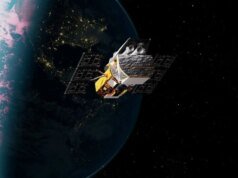
Chang’e-7 is made up of an orbiter, lander, rover and a specialised hopper, along with a range of scientific instruments developed by organisations from several countries. Its primary target is the lunar south pole, with the lander expected to attempt a touchdown near the edge of Shackleton Crater later this year.
After launch, the spacecraft will spend several months travelling to and orbiting the Moon before the lander is deployed.
James Head, a leading planetary scientist at Brown University, described Chang’e-7 as “the most ambitious, comprehensive, and complex robotic lunar mission ever attempted by any nation or entity.”
Chang’e-7 will search for water ice
One of the mission’s most important objectives will be to investigate possible deposits of water ice inside permanently shadowed craters. Scientists believe water ice could exist in these extremely cold regions, but its distribution and quantity have not yet been fully established.
The Chang’e-7 lander will deploy a hopper designed to move between sunlit areas and shadowed craters. Unlike conventional lunar vehicles, the hopper will be able to make short jumps across the challenging terrain. It uses active shock-absorption technology to help it land safely on sloped surfaces.
Story continues below this ad
The mission will use several methods to study the region, including observations of the lunar surface and investigations inside craters. China says the mission will combine orbiting, landing, roving and hopping operations to build a detailed picture of the south polar environment.
The probe will also carry a range of international experiments. Instruments from Russia, Italy, Switzerland, Thailand, Bahrain, Egypt and other organisations will study everything from lunar dust and plasma to high-energy particles and the Moon’s surface.
Among the instruments is a wide-field optical camera developed by the International Lunar Observatory Association and the Laboratory for Space Research at the University of Hong Kong. Mounted on the lander, the camera is designed to capture full-colour images of the lunar sky and the Milky Way from the Moon’s surface.
Mission could support China’s future Moon plans
Chang’e-7 is not just a scientific mission. Its work is also expected to contribute to China’s longer-term plans for human exploration of the Moon.
Story continues below this ad
China is targeting a crewed lunar landing by 2030, and Chang’e-7 will help provide information about the environment and resources around the south pole that could be important for future missions. A follow-up mission, Chang’e-8, is expected around 2028 and is designed to test technologies for using lunar soil to construct structures.
Also Read: ISRO set to resume launches after 7-month pause with GISAT-1A in September
Together, Chang’e-7 and Chang’e-8 are expected to support China’s plans for an International Lunar Research Station, a proposed multi-stage facility for conducting scientific research on the Moon.
The mission also highlights the growing international interest in the lunar south pole. Permanently shadowed regions around the poles are considered particularly important because their extreme conditions could preserve water ice for long periods.
Story continues below this ad
For China, the Chang’e-7 mission represents another major step in its increasingly ambitious lunar programme. For scientists, it could provide some of the most detailed information yet about one of the Moon’s least explored regions.