

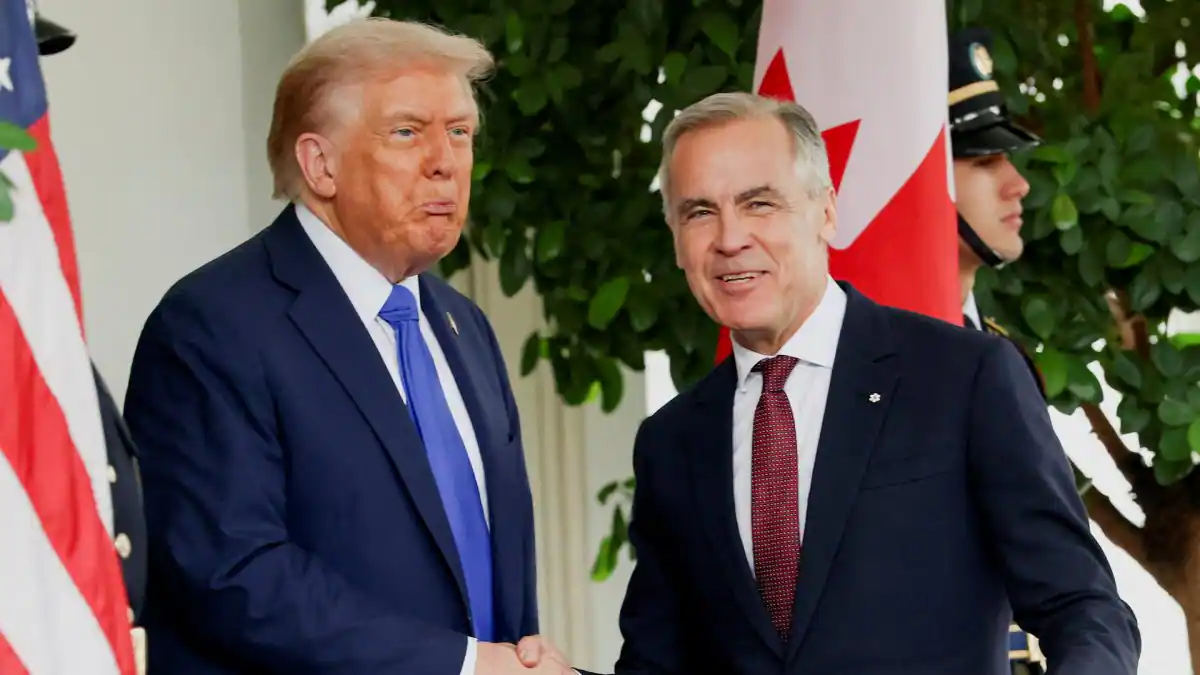

Canada’s latest tariffs target $20 billion of US goods as trade tensions with Washington intensify
Canada’s retaliatory tariffs on about $20 billion worth of US goods took effect on Tuesday, escalating the trade dispute with its biggest trading partner after negotiations between the two countries broke down last month.
The tariffs cover hundreds of US products, including steel, aluminium, furniture, clothing, electronics, appliances, cosmetics, cheese and farm equipment. Duties range from 15 per cent to 50 per cent depending on the product.
The move marks a fresh escalation in an 18-month-old trade war and raises new uncertainty over the future of the United States-Mexico-Canada Agreement (USMCA), which underpins much of North American trade.
The latest measures are designed to match the value and, in many cases, the tariff rates imposed by Washington on Canadian goods.
Canada strikes back
The Canadian action follows new US tariffs imposed last month on about $20 billion of Canadian exports.
Those duties hit sectors including wine, furniture, dairy, cement, clothing, fishing equipment and hockey products.
Canada’s latest tariffs do not apply to goods covered by exemptions under the USMCA. That means the new measures could add costs to products moving across a supply chain that has become deeply integrated over decades.
Canada sent nearly 68 per cent of its total exports to the US this year, according to government data. About 80 per cent of those exports moved duty-free under the USMCA.
 More from Business
That dependence makes the trade dispute particularly sensitive for Ottawa.
Growing concern over USMCA
The future of the USMCA has become a bigger source of uncertainty after US President Donald Trump declined to extend the agreement for another decade.
The pact is now subject to annual reviews, raising concerns among businesses about investment decisions and the stability of cross-border supply chains.
Canada’s economy is far smaller than that of the US, making a prolonged tariff battle particularly difficult for Ottawa.
“What we are worried about is an escalatory spiral,” Michael Harvey, executive director of the Canadian Agri-Food Trade Alliance and a member of Prime Minister Mark Carney’s advisory committee on bilateral US economic relations, said.
Harvey said Canada understood the need for Carney’s government to maintain leverage but cautioned against allowing the dispute to spiral further.
Trump threatens more tariffs
Trump has continued to pressure Canada since trade talks collapsed on August 21.
Last month, he threatened to raise US tariffs on Canadian cars, trucks and auto parts to 50 per cent from January 1.
Such a move could have a significant impact on the North American automobile industry, where vehicles and components cross the US-Canada border several times during the manufacturing process.
Trump also threatened on Monday to stop Canadian aircraft maker Bombardier from selling planes in the US unless it manufactures them in America.
The threats have added to concerns over Canadian manufacturing and jobs.
Carney has warned that US demands could leave some Canadian industries gradually shrinking and eventually disappearing from the country.
Canada still wants a deal
Despite the escalation, Carney has said Ottawa remains ready to reach an agreement that benefits both countries.
There are currently no talks between Canadian and US ministers or officials, according to a Canadian government source.
The Canadian government is also seeking to reduce its economic dependence on the US by expanding trade and investment relationships elsewhere.
But shifting trade away from the US will take time. The two economies are deeply connected, particularly in energy, manufacturing, agriculture and automotive production.
The US also relies on Canada for crucial supplies. American refineries receive about 4 million barrels of Canadian oil a day, while US farmers rely heavily on Canadian potash fertiliser.
Ottawa has so far stopped short of using some of those supplies as direct leverage in the dispute.