

Madras may be 387 years old, but who doesn’t like to be celebrated on their birthday? Over the years, especially in the age of social media, the days leading up to August 22 have grown increasingly exciting, with residents finding newer ways to tell the city’s story. The outpouring of love is evident in the many heritage walks, talks, exhibitions and concerts that uncover lesser-known facets of Madras, reminding us that it is more than just a place on the map.
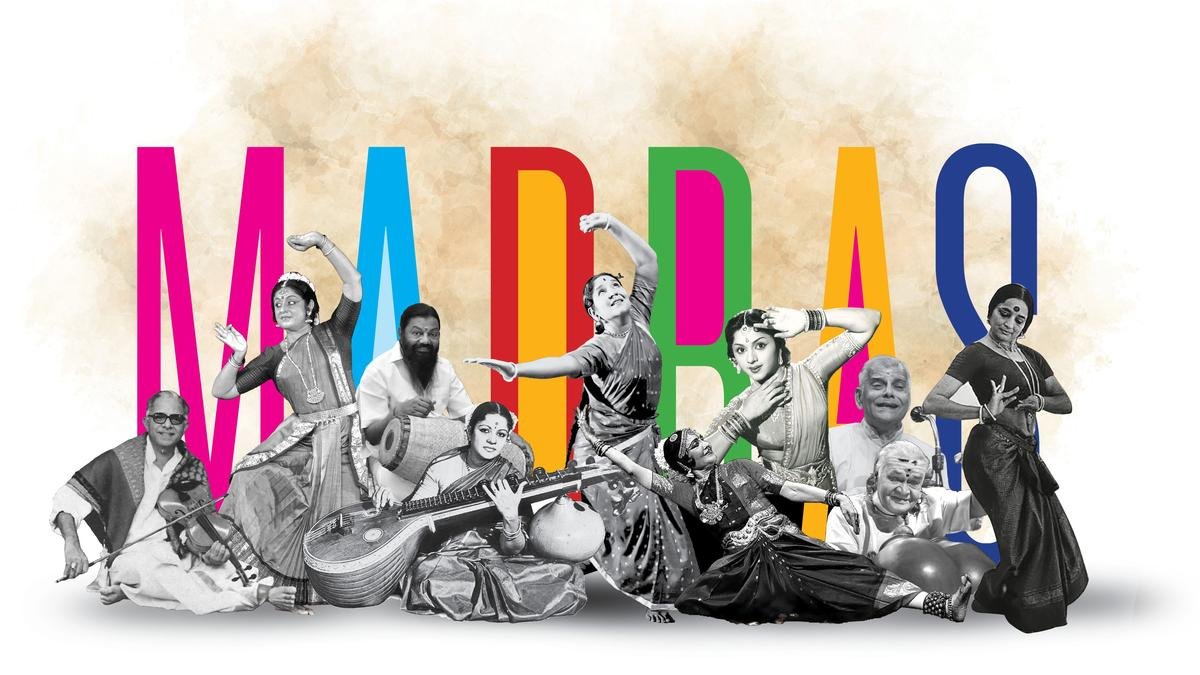
Few cities wear their artistic identity as proudly as Madras. From Carnatic music and Bharatanatyam to theatre, literature, cinema and fine art, its cultural landscape has been shaped by generations of visionary creators. As Madras grows another year older, its artistic traditions and cultural institutions offer a window into its spirit.
My own understanding of that spirit began in 1996, the year Madras became Chennai, when I first arrived here. Neighbours and friends in the North warned that the move would be a social climb-down. But I soon discovered that Chennai offered something else: a cultural world that felt, in many ways, richer.
Ever since my school days, I had dreamt of escaping the freezing winters of the North and experiencing the warmth of music during Chennai’s Margazhi, when the city turns unusually breezy and cool. It was also the time when you could spot the finest pattu saris and impeccably draped veshtis. While people across the country geared up to end the year in pomp and style, for Chennaiites, it marked the beginning of a new Season.
What struck me most about Chennai’s kutcheri culture was its lack of pretension. The focus was firmly on the music. Interestingly, conversations at family gatherings and friendly get-togethers revolved not around fashion trends or food, but around who had sung Abheri or Kalyani best or which dancer had drawn a full house.
I soon understood that in this city, art was not merely entertainment; it was a way of life. So, in 2017, when Chennai was included in UNESCO’s Creative Cities Network for its contribution to the performing arts, it only affirmed what residents had long known.
While deeply protective of its artistic traditions, the city has never prevented its artistes from questioning conventions, broadening their horizons and engaging with their art on their own terms. This openness is not a recent phenomenon; it has been part of the city’s artistic temperament for decades.
How else can one explain the founding of an institution such as Kalakshetra by Rukmini Devi Arundale? Established at a time when Bharatanatyam was undergoing a transformation in social perception, Kalakshetra sought to preserve the form’s classical rigour even as it placed it within a new institutional framework.
A few kilometres away, closer to the sea, Chandralekha established her creative hub, Spaces, where she built an experimental practice on the foundations of her Bharatanatyam training. Her bold and radical approach to choreography explored the expressive possibilities of the body and, in the process, redrew the boundaries of the dance form.
Then there was the inimitable Balasaraswati, a powerful representative of the artistic legacy of the heriditary devadasi tradition that had long nurtured and enriched Bharatanatyam.
These pioneering artistes set the stage for succeeding generations of dancers to reimagine the repertoire and discover new possibilities within an ancient dance form.
But the city’s ability to accomodate seemingly opposing artistic impulses was not confined to dance. It has also enabled the kutcheri tradition to thrive, even in the digital era. Few other cities can boast such an extensive network of sabhas, a concert calendar that continues to expand and a steady stream of young entrants willing to take on the challenges of a complex and demanding classical tradition.
Yet, the tradition has not remained unchanged. The duration of a kutcheri has shrunk from four hours to two, and sometimes even less. Mikeless concerts have given way to amplified performances. Artistes are also finding ways to assert their individuality, whether by incorporating modern poetry that engages with social concerns, reinventing presentation style or performing in unconventional spaces. Some, in search of possibilities beyond the conventional concert format, have moved to cross-genre collaborations. What is remarkable is that the city’s rasikas have been accepting of these changes and continue to throng sabhas.
As the art form evolved, instrumentalists, once largely confined to the role of accompanists in kutcheris, gained greater visibility. Exclusive festivals began to showcase their artistry and celebrate their contributions. Ghatam legend Vikku Vinayakram broke new ground nearly five decades ago by joining the iconic East-West band Shakti, inspiring generations of percussionists to explore collaborative music-making and find new avenues for creative exploration.
They have come a long way since then. Two Chennai-based instrumentalists, violinist Ganesh Rajagopalan and kanjira exponent Selva Ganesh, have gone on to win Grammy Awards, taking the sounds and sensibilities of Indian classical music to global audiences.
Published – August 20, 2026 06:20 pm IST