
Iran claimed that the US’s action to seize Iranian ships in the disputed Strait of Hormuz amounts to “piracy at sea and state terrorism” while it was still unsure whether to participate in the final peace negotiations in Pakistan. Tonight is the last day of the two-week ceasefire.
Tensions are still high after a US naval action against Iranian vessels, and the two-week fragile ceasefire is about to expire. Iran indicated on Tuesday that it has not yet decided whether to attend last-ditch peace talks with the US in Pakistan.
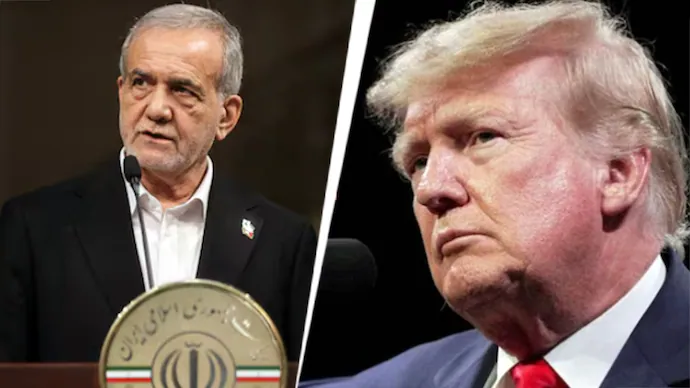
Just hours before the anticipated discussions, Iran’s Foreign Ministry spokesperson Esmaeil Baghaei stated that no final decision had been made about participation, indicating ongoing uncertainty. He questioned whether the US was sincere about negotiations and accused Washington of obstructing diplomacy, characterising US action against two Iranian ships as “piracy at sea and state terrorism.”
Iranian officials have openly stated that the US naval blockade of their ships near Hormuz was a major factor in their reluctance. According to reports, Tehran was still considering its options following the boarding incident.
Pakistan, which is mediating the negotiations, stated that it is still awaiting Tehran’s official response. In a post on X, Information Minister Attaullah Tarar stated, “A formal response from the Iranian side regarding confirmation of a delegation to attend Islamabad peace talks is still awaited.”
He continued by saying that Islamabad was still “in constant touch” with Iranian officials and was working to further diplomacy.
In the meantime, Islamabad is getting ready for the negotiations; a fancy hotel has been approved to accommodate the delegations, and portions of the city have been placed under lockdown.
US Vice President JD Vance, who was supposed to head the team, was still attending policy meetings in Washington, according to a White House official. However, US President Donald Trump took a firm stance, stating that while he had high hopes, he was not inclined to prolong the ceasefire.
“I’m not interested in doing that. We’re running out of time,” Trump said on CNBC. “I expect to be bombing… The military is raring to go,” he added, emphasising the military option.
US BOARDS OIL TANKER “WITHOUT INCIDENT”
Even as tensions in the Gulf continue to impede international energy flows, US forces successfully boarded a sanctioned oil tanker connected to Iran earlier.
The US Navy declared the mission to have gone “without incident” after confirming that it had intercepted and boarded the tanker Tifani, which is subject to sanctions for dealing with Iran. According to tracking data, the ship was in the Indian Ocean close to Sri Lanka, carrying about two million barrels of petroleum, with Singapore listed as its destination.
The action was part of a larger campaign against sanction-busting networks, according to the US Central Command.
It declared, “As we have made clear, we will pursue global maritime enforcement efforts to disrupt illicit networks and interdict sanctioned vessels providing material support to Iran—anywhere they operate.”
Meanwhile, uncertainty also persists over the timeline of the current ceasefire. Trump initially said the truce would last two weeks from the evening of April 7 in Washington, but has since indicated it will run until the evening of April 22, effectively extending it by a day.
A Pakistani official involved in the talks said the ceasefire is expected to expire at 8 pm Eastern Time on Wednesday (5:30 am Thursday in India).
Tehran has essentially closed the Strait of Hormuz to all ships but its own since the US-Israeli strikes on Iran on February 28, increasing strain on the world’s oil supplies. Since the waterway normally processes 20 million barrels of crude each day, its blockage would seriously disrupt international markets.
After the US refused to withdraw its embargo on Iranian ports, Tehran changed its mind about temporarily reopening the strait.
WILL THE PEACE TALKS HAPPEN?
Iran has ruled out future conversations following the US detention of an Iranian cargo ship, and the first round of talks in Islamabad ended ten days ago without any progress.
Additionally, Trump has stated that “lots of bombs start going off” in the event that a deal is not made, threatening to hit Iran’s civilian infrastructure.
According to a Pakistani source, talks may soon go back up despite the difficulties, and Vance is still anticipated to travel to Islamabad.
Washington is pressing for a deal that would calm financial markets and stabilise oil prices, but it is adamant that Iran give up its highly enriched uranium stockpile and not be allowed to continue developing nuclear weapons.
Tehran, on the other hand, is claiming that its nuclear program is meant for benign purposes while requesting relief from sanctions and perhaps using its influence over the strait to obtain concessions.