

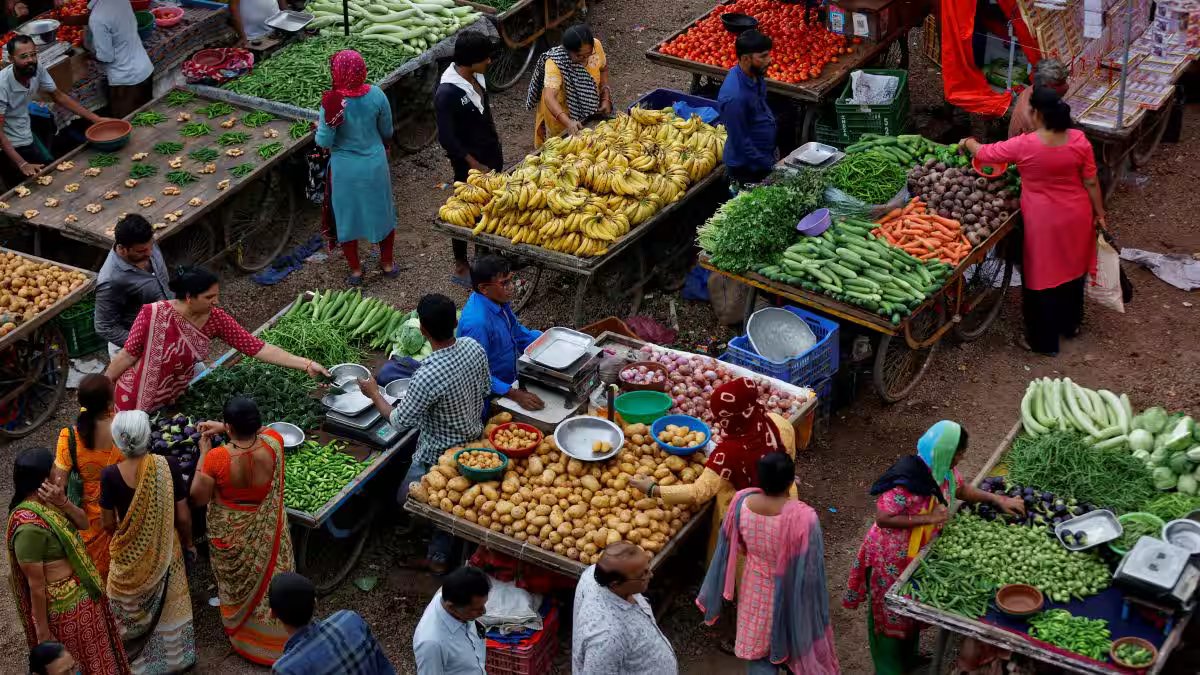

Food inflation accelerates to 8.94% in October from 7.74% in September, pushing overall retail inflation above the RBI’s upper tolerance limit for the first time under the current CPI series.
India’s retail inflation accelerated from 5.54 per cent in September, driven by a sharp rise in food inflation to 8.94 per cent. The latest reading exceeded economists’ expectations and took inflation above the Reserve Bank of India’s tolerance band.
India’s retail inflation climbed to 6.09 per cent in October, breaching the Reserve Bank of India’s (RBI) upper tolerance limit of 6 per cent for the first time under the current Consumer Price Index (CPI) series, as rising food prices put pressure on household budgets.
The latest reading marks a sharp increase from 5.54 per cent in September and was higher than the 5.93 per cent forecast in a Reuters poll of economists.
Food prices emerged as the biggest driver of inflation, with food inflation accelerating to 8.94 per cent in October from 7.74 per cent in the previous month. Essential kitchen items, including onions, garlic and ginger, recorded significant price increases, adding to the burden on consumers.
Retail inflation has now remained above the RBI’s medium-term target of 4 per cent for five consecutive months, putting the central bank’s inflation-management strategy under renewed scrutiny.
The acceleration in food prices was the primary contributor to the increase in overall retail inflation. Food accounts for nearly 40 per cent of the CPI basket, making it a crucial component of the country’s inflation trajectory.
 More from Business
Higher prices of vegetables and other essential food items have pushed up household expenditure, leaving consumers with less disposable income for savings and discretionary spending.
Transport inflation also accelerated to 5.84 per cent in October, adding to the overall price pressure.
The increase comes at a time when households are already dealing with higher living costs, with food and transportation accounting for a significant share of monthly expenses.
Under India’s flexible inflation-targeting framework, the RBI aims to maintain retail inflation at 4 per cent, with a tolerance band of 2 percentage points on either side.
This means the central bank is mandated to keep inflation within the range of 2 per cent to 6 per cent. October’s reading of 6.09 per cent has pushed inflation marginally above the upper limit.
However, a single month’s reading above 6 per cent does not constitute a formal failure of the RBI’s inflation-targeting mandate.
Under the framework, the central bank is considered to have failed to meet its target if average inflation remains above the upper tolerance limit for three consecutive quarters. The latest reading is therefore a warning sign for policymakers, particularly as they assess whether rising food prices will spill over into broader inflationary pressures.
The trajectory of food prices will remain a key factor determining India’s inflation outlook in the coming months. Weather-related risks, including the possibility of an El Niño pattern, could affect agricultural production and disrupt supplies of essential commodities, potentially keeping food prices elevated.
However, adequate foodgrain stocks and government interventions could help contain supply-side pressures and prevent a sharper increase in prices. Lower crude oil prices could also provide some relief by reducing transportation and input costs across the economy.
For the RBI, the key challenge will be determining whether October’s inflation spike is temporary or signals a more sustained increase in price pressures. The next two inflation readings will be particularly important in assessing whether inflation returns within the central bank’s tolerance band or remains above the 6 per cent threshold.