

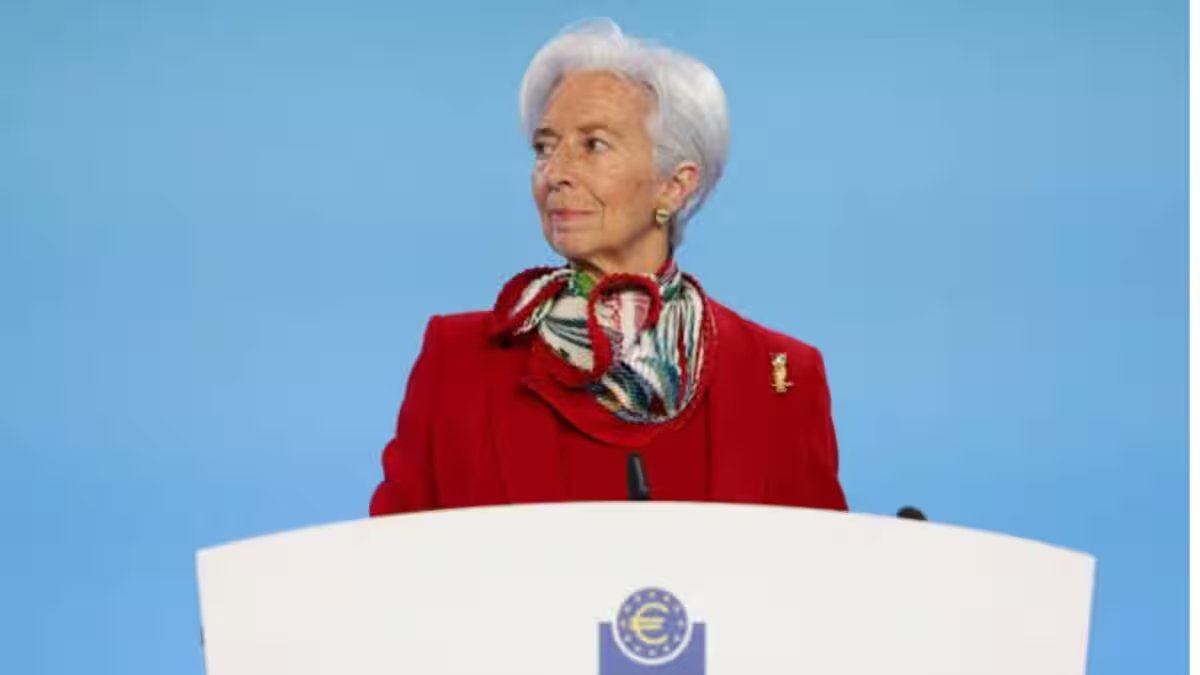

European Central Bank chief will leave nearly nine months before her term ends in October 2027, giving French President Emmanuel Macron a say in choosing her successor ahead of next year’s presidential election.
European Central Bank (ECB) President Christine Lagarde will step down on February 7, 2027, nearly nine months before the end of her term, the central bank said on Thursday, October 29.
The announcement ends months of speculation about Lagarde’s future and sets the stage for a major leadership change at one of Europe’s most influential economic institutions.
The ECB said Lagarde had informed its Governing Council and European Council President Antonio Costa of her decision to leave the position. The central bank did not immediately provide details about her plans after stepping down.
Lagarde’s departure will open the way for European Union leaders to begin discussions over her successor. Under EU treaty rules, the European Council is responsible for appointing the ECB president.
The timing of her exit also carries political significance for France. It gives French President Emmanuel Macron an opportunity to influence the choice of the next ECB chief before France’s presidential election in 2027.
Marine Le Pen, leader of France’s National Rally party and a longstanding critic of the European Union, is currently among the leading contenders in the presidential race. The prospect of a change in France’s political leadership adds another dimension to the succession process.
 More from Business
The ECB is also approaching a broader leadership reshuffle. Executive Board member Isabel Schnabel is due to leave in January 2027 to take up a senior role at the International Monetary Fund, while the term of ECB Chief Economist Philip Lane ends in May 2027.
These impending departures could prompt negotiations among EU capitals over several senior positions at the central bank, making the coming months crucial for determining the composition of its leadership.
Lagarde took over as ECB president in November 2019, succeeding Mario Draghi. Her eight-year term was due to end in October 2027.
As ECB president, she has led the institution through the Covid-19 pandemic, a surge in inflation following Russia’s invasion of Ukraine and the subsequent tightening of monetary policy. The leadership transition comes as policymakers continue to navigate inflation risks, economic uncertainty and differing growth conditions across the eurozone.
The appointment of her successor will be closely watched by financial markets, given the ECB’s central role in setting interest rates and steering monetary policy across the 20-member eurozone.