

European manufacturers warn of job losses as Brussels weighs quotas, tariffs and other safeguards against Chinese imports
As European Trade Commissioner Maros Sefcovic holds talks in Beijing to narrow the EU’s trade deficit with China, 44 European industry associations have urged the bloc to take tougher action against what they describe as unfair Chinese trade practices.
The associations, representing sectors including metals, chemicals and automotive parts, warned that these practices threaten European manufacturing and risk further job losses. They have called on EU member states to make more effective use of existing trade defence measures and introduce new tools to address market distortions.
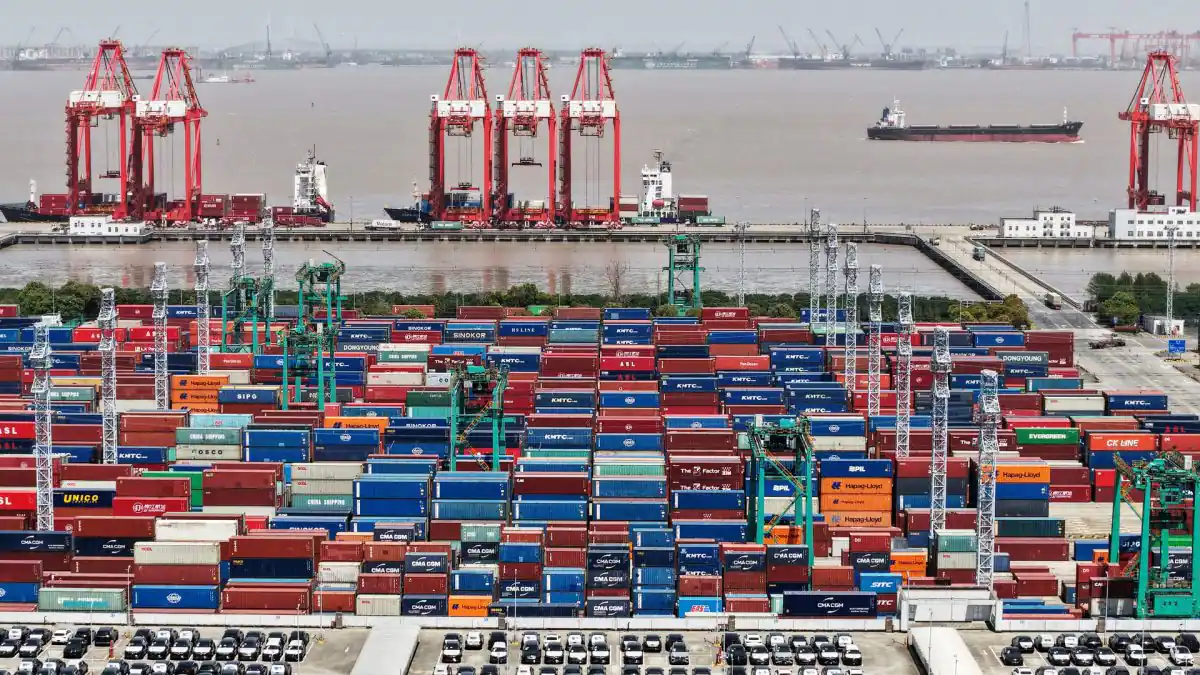
The appeal comes as the EU grapples with a goods trade deficit with China exceeding €1 billion (around $1.12 billion) a day. European leaders are due to discuss the bloc’s response at a summit in Brussels next Thursday, with the outcome of the Beijing talks likely to shape the debate.
In their appeal, the industry groups urged the European Commission to examine entire value chains when investigating trade complaints and recruit more staff to process cases faster. They also called for new instruments to tackle state-driven market distortions, while cautioning against measures that could adversely affect close European partners such as Britain, Norway and Switzerland.
EU considers tougher action on Chinese imports
Sefcovic’s two-day visit to Beijing is aimed at securing concessions from China to help narrow the trade imbalance. Talks with Chinese Commerce Minister Wang Wentao have focused on vehicle exports, particularly plug-in hybrid cars, which have gained ground in the European market.
 More from Business
According to a report by Politico on Thursday, one in eight cars bought in the EU in August was Chinese, driven largely by rising sales of plug-in hybrid vehicles.
The EU imposed additional countervailing duties on Chinese-made battery-electric vehicles in 2024, but plug-in hybrids are not covered by those measures. European negotiators are seeking some form of Chinese export restraint in the sector.
If negotiations fail to produce meaningful commitments, the European Commission is considering unilateral trade restrictions on cars, including import quotas and tariffs, to protect European automakers, Politico reported.
The bloc is also looking at safeguards for other industrial sectors. European Industry Commissioner Stephane Sejourne said the Commission planned to introduce targeted safeguards on plastics and composite materials, subject to a request from EU governments.
France and Germany back stronger trade defences
The push for tougher measures has gained support from France and Germany. On Monday, French President Emmanuel Macron and German Chancellor Friedrich Merz called for the Commission to have greater freedom to restrict access to the EU’s single market for goods from countries accused of distorting competition.
European policymakers are concerned that higher US tariffs could divert more Chinese exports towards Europe, intensifying competition for domestic manufacturers. The bloc’s dependence on China for processed rare earths and other critical raw materials also leaves European industries exposed to potential retaliation if trade tensions escalate.
However, expectations of a breakthrough in Beijing remain low. China relies on exports to support economic growth amid weak domestic demand and a prolonged property sector downturn, limiting its room to make substantial concessions.