

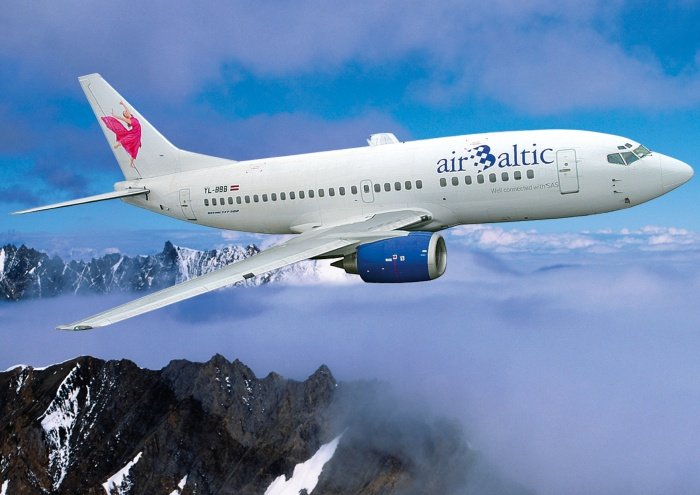


On 1 October 1995, the Latvian airline airBaltic operated its first commercial flight, from Riga to Stockholm. The airline began operations with a 33-seat Saab 340 aircraft and a network of just four routes. Thirty-one years later, airBaltic operates a network of more than 70 destinations across Europe and beyond and has carried more than 70 million passengers since its establishment.
The change in scale is reflected not only in the number of destinations served, but also in the range of connections available from the Baltic region. Routes that today connect Riga with major European cities have been developed over many years, while connections between the Baltic capitals have become an established part of the regional network.
From the first routes to a wider European network
Stockholm, the destination of airBaltic’s first commercial flight, remains part of the airline’s network today. Helsinki followed as the airline’s second direct route, with London and Frankfurt added soon afterwards, and Copenhagen joining the network in early 1996. All five destinations continue to be served today, maintaining long-standing connections between Riga and key European cities.
Other major European cities were added as the network developed. Paris, Amsterdam, Zurich, Barcelona, and Munich have all been connected with Riga for more than 20 years, giving passengers from Latvia and the wider Baltic region direct access to major European centres.
These connections to major European hubs also enable passengers from the Baltic states to reach more than 200 destinations worldwide with just one stop, including New York, Tokyo and Chicago, through the airline’s 25 codeshare partners, providing Latvia and the wider Baltic region with access to destinations around the world.
The network has also developed beyond point-to-point connections from Riga. As airBaltic’s network expanded, Riga increasingly became a connecting point through which passengers from the Baltic region and Scandinavia could reach destinations further across Europe, strengthening Latvia’s capital meaning as the Baltic gates to the world.
Connecting the Baltic capitals
Connectivity between Riga, Tallinn and Vilnius has been another longstanding element of airBaltic’s network. The airline’s flights between the three Baltic capitals have operated for three decades, providing direct links within the region while also connecting the capitals with the wider airBaltic network across Europe. These connections also foster regional mobility and open up broader opportunities for both business and tourism.
Today, passengers travelling from Tallinn and Vilnius can access a range of direct destinations, while up to five daily connections through Riga provide additional travel options across Europe. In this way, the development of the network has taken place not only around Riga, but across the three Baltic capitals.
What the network means today
Today, airBaltic offers direct destinations from Riga across the Nordic countries, Western and Southern Europe and beyond. Together with its direct network from Tallinn and Vilnius, these routes provide the Baltic region with connections to a wide range of European cities.
For passengers, these connections provide opportunities to travel directly to European cities for business and leisure, visit family and friends, study abroad and for many other purposes. The network also provides businesses and organisations in the Baltic region with direct links to European markets and destinations.
The scale of the network is reflected in the number of people who have travelled with airBaltic. More than 70 million passengers have travelled with the airline since 1995, including 5.2 million passengers in 2025 – the highest number of passengers carried in a single year in the airline’s history. Each journey represents a connection between the Baltic region and another city, whether for work, tourism, education, visiting family and friends, or other purposes.
The development from a 33-seat aircraft and a route map of four routes to a modern fleet of 148-seat Airbus A220-300aircraft and a network of more than 70 destinations illustrates how the connectivity between the Baltic region and Europe has changed over the past 31 years.