

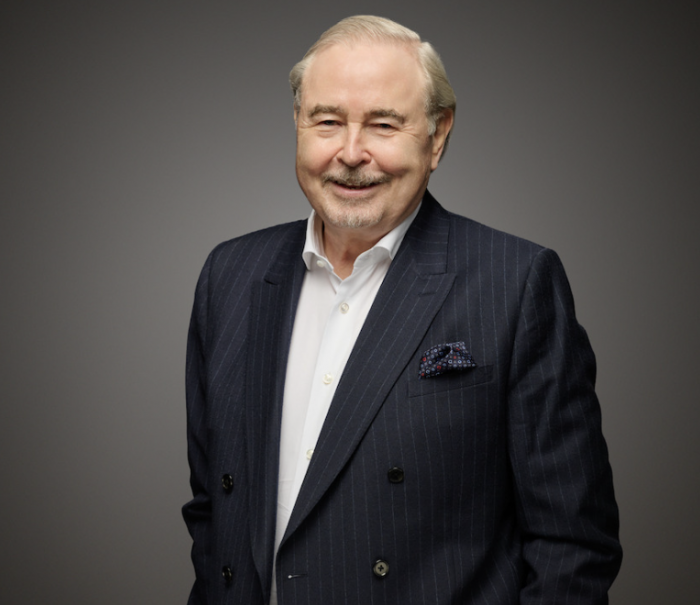


Rotana’s competitive advantage has always been proximity. The company grew from the region, built brands for its markets and established owner relationships long before the Middle East became a priority for every global hotel group. Chief executive Philip Barnes must preserve that local intelligence while giving the business the systems and reach required for its next phase.
Barnes joined Rotana as chief executive in 2024 after spending approximately 25 years with Fairmont. His career there covered hotel operations, openings and regional leadership across multiple markets. It gave him experience of managing landmark luxury properties and of working within a global brand platform where owner returns, service standards and talent development must align.
His five-decade career is broader than Fairmont alone. Barnes has worked across North America, Europe, the Middle East, Asia and Australia, including senior positions with Four Seasons and Shangri-La. At Fairmont, his roles included regional vice president for the UAE, vice president for the Middle East and regional leadership in Southern California. He managed both iconic individual hotels and multi-country development agendas across the Gulf, South Africa and North Africa.
Rotana’s owners deliberately recruited an external chief executive able to bring lessons from several global systems. Barnes has described his task as combining that perspective with a company whose regional identity is one of its greatest assets. The implication is not that Rotana should imitate an international conglomerate. It is that owner reporting, commercial technology, leadership succession and development discipline must become strong enough to support the group’s ambitions without adding bureaucracy that slows it down.
At Rotana, he inherited a portfolio of more than 100 properties operating or under development across the Middle East, Africa, Eastern Europe and Turkiye. The estate spans luxury, full-service, apartment and value-oriented brands, allowing the group to pursue both established city markets and destinations where hospitality demand is still taking shape.
Saudi Arabia is the clearest growth priority. In April 2026, Rotana opened Edge Riyadh Al Rabie, the first of seven hotels planned with Memar Development and Investment. By June, the group said its Saudi pipeline would take the country portfolio to 23 hotels by 2027. The opportunity is substantial, but success requires more than placing an international flag on a building. Religious travel, business demand, domestic leisure and new destination projects each need different products and operating models.
Barnes is also taking Rotana into less familiar terrain. The signing of a property at Gudauri Ski Resort in Georgia will give the company its first ski destination. That move is strategically useful because it diversifies the portfolio beyond the Gulf’s city and beach markets while testing whether Rotana’s regional customer base will follow the brand abroad.
His operating background matters during this expansion. Hotel groups grow through contracts, but reputations are made through openings, staffing and daily delivery. New markets create pressure on recruitment, procurement, distribution and brand consistency. Barnes has placed emphasis on strengthening commercial systems and developing people so that portfolio growth does not outpace the organisation supporting it.
There is also a positioning question. Rotana competes against global groups with enormous loyalty programmes and distribution budgets, as well as increasingly capable regional operators. Its answer is a combination of owner accessibility, market knowledge and brands designed around regional travel patterns. Barnes needs to make those advantages measurable in revenue performance and guest loyalty.
Sustainability and cost control will shape owner decisions too. Energy, water, food waste and local sourcing are no longer separate corporate-responsibility topics. They affect operating margins and the licence to grow, particularly in markets where resource use is under scrutiny.
Barnes’ appointment represents an exchange of strengths. He brings the experience of a global luxury operator to a company with deep regional roots. Rotana gives him a platform capable of moving quickly in the markets where hospitality supply is expanding fastest. His success will depend on ensuring that scale sharpens the group’s identity rather than softening it.