


For conservationists working around Bwindi Impenetrable National Park, protecting mountain gorillas has stopped being just about what happens inside the forest. Increasingly, the fight to safeguard the species is plying out on community land just outside the park boundary one seedling at a time.
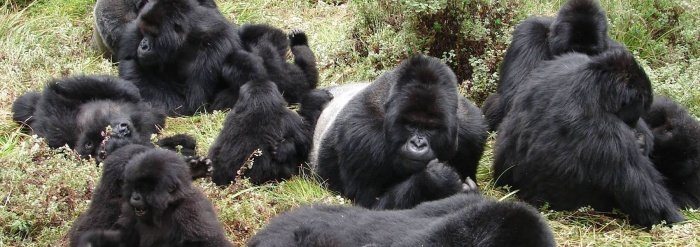
Bwindi is the most popular and largest destination for gorilla tours, unique adventures into the heart of Africa to see mountain gorillas. There are about 1060 mountain gorillas left in the whole world and Bwindi hosts nearly half of these great apes.
Ahead of World Gorilla Day on September 24, community organizations and conservation groups ramped up tree-planting drives aimed at reinforcing the forest habitat gorillas depend on. A recent session at Ruhija Seed School saw students planting indigenous species, including Croton, in an event organized by Change a Life Bwindi alongside the Uganda Wildlife Authority (UWA) and other partners.
Joseph Muhindo, an Assistant Tourism and Hospitality Officer for the Bwindi Impenetrable Conservation Area, explains the logic behind the move. Many of the same indigenous tree species growing inside Bwindi also thrive in surrounding community land, and planting them there stretches the effective forest belt into areas that have been degraded over time.
That matters because households near the park often rely on trees for construction material, medicine, and other daily needs pressure that, left unaddressed, pushes people into the park itself in search of resources.
By giving communities their own stock of tree products to draw from, Muhindo says, the initiative eases that pressure on the protected forest while also improving climate resilience restored vegetation helps stabilize rainfall patterns that both the park and neighboring farms depend on.
He frames it as conservation with a dual purpose: protecting gorilla habitat while also serving the people who live closest to it.
Getting Young People Invested Early
For Change a Life Bwindi, sustainability means starting with schools. Founder Tina Katushabe says the organization works across youth, women’s, and Batwa community groups in villages bordering the park, and getting conservation education into classrooms is a deliberate strategy students who grow up participating in tree planting are more likely to internalize why forests, biodiversity, and wildlife are worth protecting long after they leave school.
Katushabe also connects the tree-planting work to livelihoods, not just ecology: healthy community forests can eventually support small ecotourism ventures and other local enterprises, giving residents an economic reason to keep them standing.
So far, Change a Life Bwindi has planted 56 indigenous tree species across an 85-acre forest, backed by university and community partners.
The programme isn’t without obstacles. Limited available land constrains how far the initiative can expand, and increasingly erratic rainfall which affects both tree planting schedules and local farming has made the work harder to plan around.
At Ruhija Seed School itself, teacher Mbabazi Celestine welcomed the initiative for practical reasons: shade, a better learning environment, and a small but real contribution to reducing environmental degradation nearby.
Muhindo places the tree-planting push within a broader framework one where protecting gorillas means thinking beyond the park’s fence line entirely.
He also points to something easy to overlook: mountain gorillas share close genetic ties with humans, which makes disease control and careful interaction between people, livestock, and gorillas a serious conservation concern in its own right.
Beyond ecology, he notes that gorilla conservation carries real economic weight for the region, including generating tourism revenue, jobs, and promoting community development.
As Uganda prepares to mark World Gorilla Day, the message coming out of Bwindi is a simple one: protecting the gorilla starts with protecting the habitat around it and that responsibility now extends well past the park boundary, into the schools and villages of the people who live alongside it.
What Makes Bwindi Different
Few places on earth offer what Bwindi does. It’s one of only a handful of locations in the world alongside Mgahinga National Park in Uganda, the Volcanoes National Park of Rwanda and the Virunga National Park of Democratic Republic of Congo. Bwindi is the most popular destination attracting travelers all year round who venture on Uganda tours through dense montane forest to see the endangered mountain gorillas. Guided walks through Bwindi are taken daily and the activity is highly regulated.
Bwindi alone is home to roughly half of the world’s remaining mountain gorillas, packed into a forest so old and tangled that its name “the impenetrable forest” is barely an exaggeration.
Gorilla trekking here is as much a physical experience as a wildlife encounter. Trails wind through steep, misty terrain thick with ferns, vines, and centuries-old hardwoods, and reaching a gorilla family can take anywhere from 30 minutes to several hours depending on where the group has moved.
That unpredictability is part of the appeal no two treks unfold the same way, and the payoff, watching a silverback move calmly through undergrowth just meters away, is something few wildlife experiences anywhere else can match.
The human story around Bwindi is just as distinctive. The forest’s edges are home to the Bakiga and Batwa communities, the latter often described as the original forest-dwelling people of the region, displaced when Bwindi was gazetted as a protected area in 1991.
Today, cultural encounters built around Batwa heritage traditional dance, storytelling, and guided walks led by former forest dwellers give visitors a rare window into a way of life that predates the park itself.
Combined with community-run craft cooperatives, homestead visits, and the porter associations that employ hundreds of local residents on trekking days, a Bwindi visit ends up being as much about people and culture as it is about gorillas which is exactly why conservation efforts here are so deliberately built around community benefit rather than just wildlife protection alone.