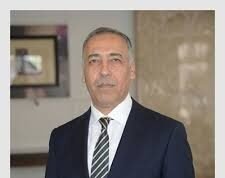

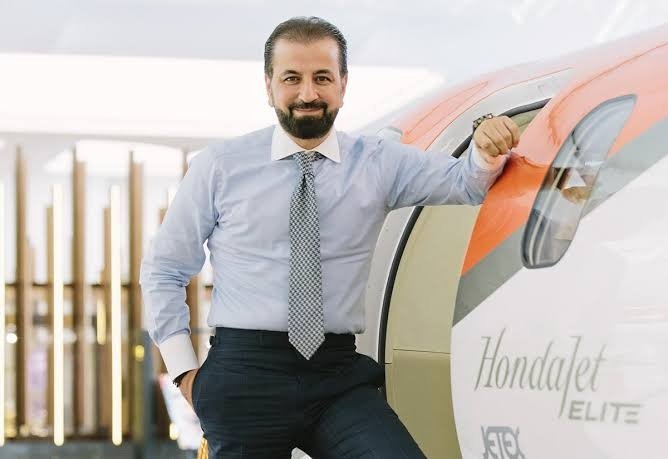


Adel Mardini founded Jetex in 2005 after identifying a gap between the sophistication of private aircraft and the fragmented experience passengers encountered on the ground. His proposition was simple but ambitious: apply the responsiveness, design and hospitality of a luxury hotel to flight support and fixed-base operations. Two decades later, Jetex has grown from Dubai into a global aviation-services brand.
Mardini understood that the private-aviation journey includes far more than time aboard the aircraft. Landing permits, fuel, ground handling, customs, crew support, transport and terminal service all shape reliability. A failure in any one location can undermine the entire trip. Jetex set out to make those elements feel coordinated, even when the underlying regulatory and supplier environment varied by country.
The company’s branded terminals became a visible expression of that strategy. Rather than treating the FBO as a functional waiting room, Jetex introduced private lounges, concierge support and design intended to make the ground experience part of the premium product. The approach helped push the wider sector towards higher standards and gave airports a way to improve their appeal to business-aviation customers.
Mardini’s expansion has required an unusual mix of relationships. Jetex works with airport authorities, civil-aviation regulators, fuel providers, handlers, governments, aircraft operators and passengers. Market entry depends on trust and local permissions as much as capital. His role has been to maintain a recognizable global promise while building partnerships adapted to each jurisdiction.
Technology now supports that coordination. Digital tools can simplify requests, track services, communicate changes and give operators a single point of accountability. Yet business aviation often involves last-minute complexity that cannot be solved by an interface alone. Mardini’s model retains human control, with technology making the service team more informed and responsive.
Sustainability is the sector’s unavoidable test. Private aviation has high per-passenger emissions and faces growing public scrutiny. Ground-service companies can support sustainable aviation fuel, efficient operations and credible reporting, but must avoid presenting incremental improvements as a complete answer. Mardini’s leadership will be judged partly by how transparently Jetex helps customers and airports reduce impact.
His achievement is to have globalized a Dubai-born service concept. Jetex competes not by manufacturing aircraft or owning an airline, but by reducing the friction around complex journeys and making hospitality consistent across borders. Mardini saw that the ground experience was an underserved part of private aviation and built a business around fixing it. That insight has made him one of the region’s most influential aviation entrepreneurs.
Brand control becomes harder with every new location. Some facilities are operated directly, while others depend on local partners and airport systems. Mardini must define the service moments that are non-negotiable, audit them intelligently and give teams authority to recover problems. A passenger judges Jetex by the weakest stop on an itinerary, making consistency across the network more valuable than an exceptional flagship alone.
The business also benefits destinations that understand the economics of private aviation. A reliable FBO can attract corporate movements, investment visits and high-spending leisure traffic, especially where scheduled connectivity is limited. Mardini’s negotiations with airports can therefore involve a wider development case, not only a concession. By quantifying that value and training local teams, Jetex can make premium ground infrastructure part of a destination’s competitive toolkit.