

Brent crude falls below $103 a barrel as markets assess prospects of US-Iran diplomacy, recovering Gulf supplies and rising US crude inventories
Oil prices fell on Thursday after surging 4 per cent in the previous session, as Iran signalled that it remained open to diplomatic efforts to end its war with the United States, easing some of the geopolitical risk premium in crude markets.
Brent crude futures fell 92 cents, or 0.9 per cent, to $102.16 a barrel at 0400 GMT, while US West Texas Intermediate crude declined 77 cents, or 0.8 per cent, to $91.39 a barrel.
The decline came as markets assessed signs of a possible diplomatic opening between Washington and Tehran. A senior Iranian official said Iran was reviewing the US response to its peace proposals, which include lifting a US naval blockade on Iranian ports and reopening the Strait of Hormuz.
However, the two sides remain divided over how to end the conflict. Iranian officials have continued to stress that diplomacy must continue, while Iran’s president said Tehran would not surrender to US pressure.
Brent crude continues to carry a larger geopolitical and sea-route premium because international oil markets are more directly exposed to disruptions in the Middle East and around the Strait of Hormuz, while WTI is relatively more insulated by US supply.
Strait of Hormuz remains a key risk
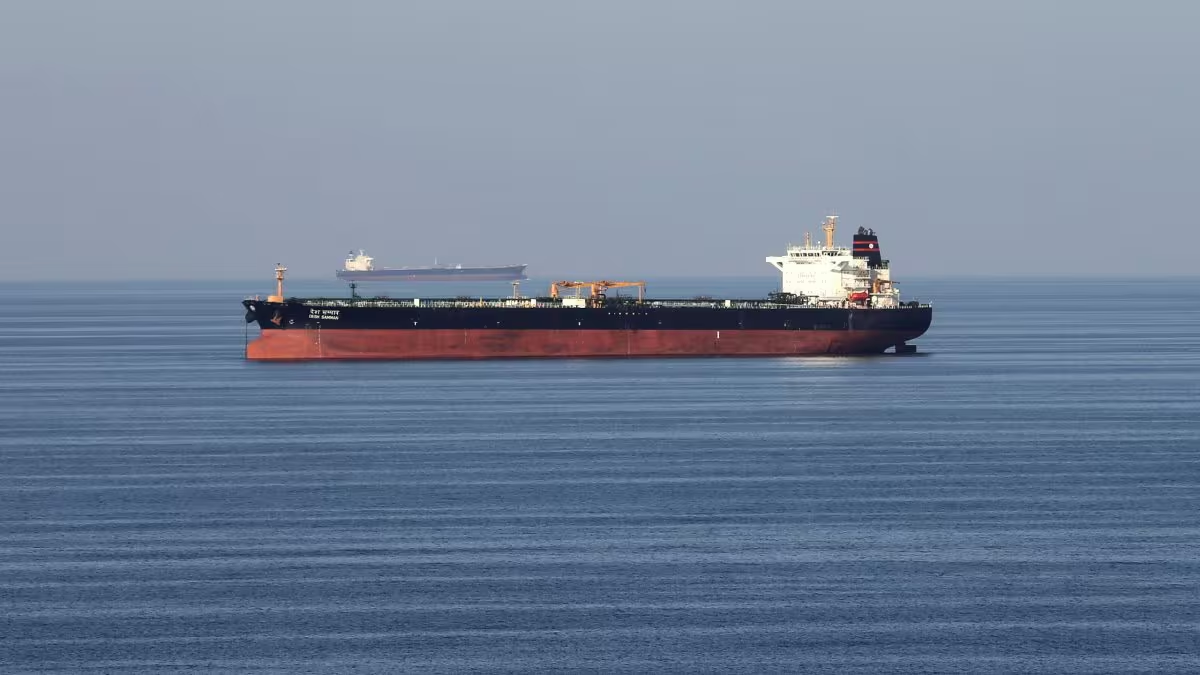
The outlook for the Strait of Hormuz remains a major factor for oil markets. Iran’s security chief Mohsen Rezaei said on Wednesday that the strategic waterway would not be reopened until Iran’s conditions were met.
 More from Business
US Secretary of State Marco Rubio said a potential agreement with Iran would require sustained negotiations. He also said US President Donald Trump continued to have military options.
Markets assess diesel export risks
Traders were also watching reports about possible restrictions on US diesel exports. Ultra-low-sulphur diesel futures fell about 5 per cent in midday trading after Politico reported that the Trump administration was preparing a possible 90-day diesel export ban.
The White House denied the report. US Energy Secretary Chris Wright also said a diesel export ban would not work, although Trump had said he would support such a move.
Analysts and market watchers have warned that restricting US diesel exports could do little to bring down elevated energy prices and could instead tighten global fuel supplies and add to economic disruption.
US crude inventories rise
Meanwhile, US crude inventories increased by 3 million barrels last week to 426.4 million barrels, according to the Energy Information Administration. Analysts polled by Reuters had expected a decline of 641,000 barrels.
US distillate stockpiles, including diesel and heating oil, fell by 428,000 barrels to 107.4 million barrels.
The combination of shifting diplomatic expectations, recovering Gulf supply and US inventory data is keeping oil markets highly sensitive to developments around the US-Iran conflict and the Strait of Hormuz.