

The Federal Reserve heads into Wednesday’s policy decision with markets overwhelmingly expecting a rate hike, inflation still above target and the 10-year Treasury yield around 5 per cent.
The Federal Reserve is expected to raise interest rates on Wednesday, but the 25-basis-point move itself is hardly the biggest story.
Markets have already largely priced it in. Wall Street banks, including Goldman Sachs, JPMorgan, HSBC and Deutsche Bank, are forecasting a quarter-point increase, while the probability implied by futures markets has been above 90 per cent.
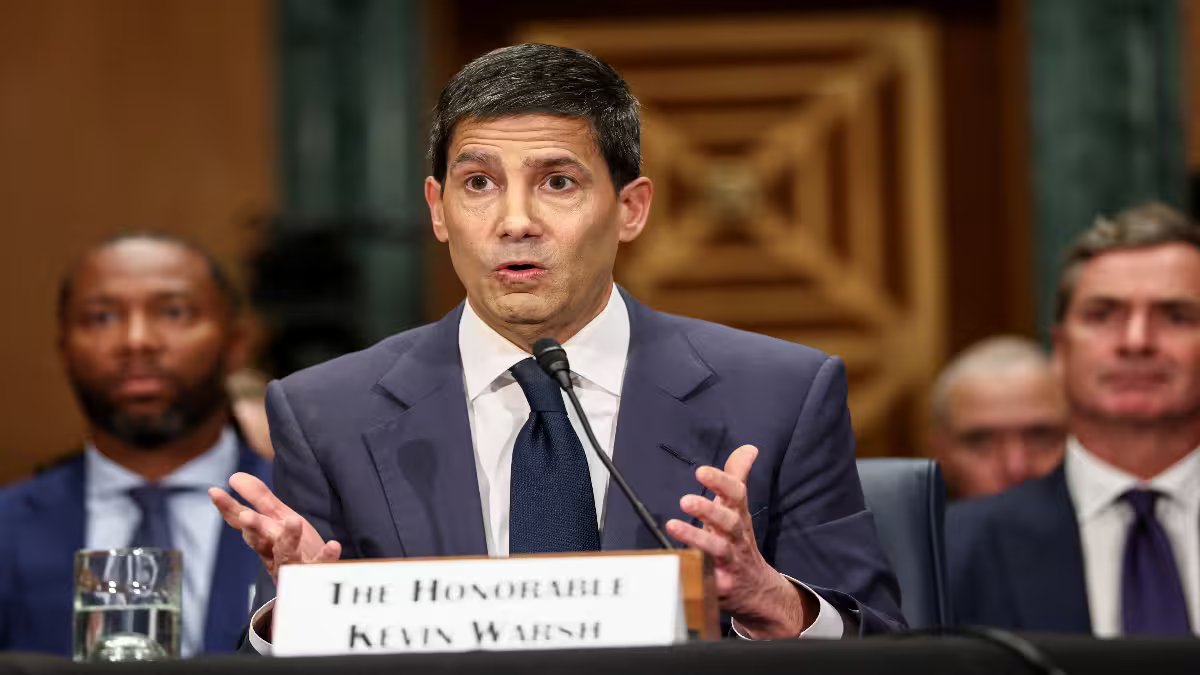
The bigger question is what Fed Chair Kevin Warsh says afterwards — and whether investors believe him.
Warsh walks into a difficult first test
The Fed’s policy meeting comes at an unusually complicated moment. Inflation has not fallen quickly enough to give policymakers complete comfort, oil prices have moved above $100 a barrel amid renewed West Asia tensions, and the labour market has shown more resilience than some investors expected.
August core consumer prices rose 0.3 per cent from the previous month, while headline inflation remained elevated. At the same time, August nonfarm payrolls increased by 162,000, substantially above the 55,000 consensus cited in the market analysis. That combination makes a straightforward dovish pivot difficult.
Warsh has already indicated that the Fed would have “work to do” if it could not be confident that underlying inflation was moving towards 2 per cent clearly and at sufficient speed.
 More from Business
So even if Wednesday brings the expected hike, investors will be listening for something else: Is this a one-off adjustment, or the beginning of a new tightening phase?
Bond market sending warning
The most uncomfortable signal for the Fed may not be coming from equities or even from Washington. It is coming from the Treasury market.
The 10-year US Treasury yield has climbed to around 5.02 per cent, its highest level since 2007. The move reflects a combination of inflation concerns, higher oil prices, heavy government borrowing and expectations that investors will demand greater compensation to hold long-term US debt. That matters far beyond the bond market.
The 10-year Treasury yield influences mortgage rates, corporate borrowing costs and valuations across financial markets. A sustained move above 5 per cent could therefore tighten financial conditions even without the Fed raising its policy rate aggressively. In other words, the bond market can do some of the Fed’s tightening for it. But there is a catch.
If Treasury yields continue rising because investors are losing confidence in the US inflation or fiscal outlook, the Fed could face an increasingly difficult policy environment. Cutting short-term rates would not necessarily bring down long-term borrowing costs if bond investors remain unconvinced.
Trump wants lower rates
That brings the White House into the equation. President Donald Trump has repeatedly called for lower interest rates and has criticised the Fed for not moving quickly enough. The choice of Warsh was also accompanied by expectations that he would ultimately deliver easier monetary policy.
A rate hike therefore puts Warsh in an awkward political position. The Fed can argue that policy is being driven by inflation and economic data. But politically, a higher policy rate is difficult to sell when the administration wants cheaper borrowing costs and stronger economic momentum.
The problem becomes even more sensitive ahead of the US midterm election cycle.
Yet the Fed cannot simply respond to political pressure. If investors begin to believe that monetary policy is being shaped by the White House, inflation expectations could become harder to anchor — and Treasury yields could rise further. That would defeat the purpose of easier policy.
Bessent knows the bond market has power. Treasury Secretary Scott Bessent has already acknowledged the importance of maintaining confidence in the Treasury market. His multi-billion-dollar Treasury buyback programme was designed partly to support market liquidity and temporarily helped push yields lower. But buybacks cannot resolve the fundamental forces pushing long-term yields higher.
Bessent’s warning that “the bond market has taken out more governments than howitzers” captures the central problem facing Washington.
The government can influence fiscal policy. The Fed controls short-term interest rates. But investors ultimately determine the price at which the US can borrow in the long-term market. That makes the bond market an increasingly important constraint on both fiscal and monetary policy.
The Fed’s internal debate
Warsh also has to manage divisions within the Federal Reserve. At the July meeting, policymakers voted 9-3 to keep rates unchanged, with Lorie Logan, Beth Hammack and Neel Kashkari favouring a hike. Other officials, including Christopher Waller and John Williams, had argued for patience.
That split means Wednesday’s decision could reveal more than simply a change in the policy rate. The Fed’s updated projections, or dot plot, could show whether policymakers expect another hike later this year. If the median forecast points towards further tightening, Treasury yields could remain under pressure.
If policymakers signal that Wednesday’s increase is likely to be the last, markets could interpret the decision as a dovish hike. Either way, the communication will matter almost as much as the rate itself.
Yields changes everything
A Treasury yield above 5 per cent is not just another market statistic. It raises the cost of financing the US government’s debt. It increases borrowing costs for companies and households. It can make bonds more attractive relative to equities. And it can force investors to reassess valuations across global markets.
That creates a feedback loop. Higher Treasury yields tighten financial conditions. Tighter conditions can slow growth. Slower growth could eventually push the Fed towards rate cuts. But if yields are rising because of inflation and fiscal concerns rather than stronger growth alone, the Fed may have less room to cut.
This is why the current environment is so complicated. Wednesday’s 25-basis-point hike is increasingly viewed as the easy part.
The difficult part will be explaining why the Fed is hiking, how worried it is about inflation, and whether another increase is likely. Warsh must convince markets that the Fed is neither ignoring inflation nor responding to political pressure.
At the same time, he needs to avoid sending a signal that could trigger another sharp rise in Treasury yields.
That is the balancing act
Trump wants cheaper money. The Fed needs inflation credibility. The Treasury wants a stable bond market. And investors want compensation for the risks they see in inflation, debt and policy uncertainty. Those forces are now colliding in the same market.
For Warsh, therefore, Wednesday’s decision is more than his first major test as Fed chair. It is a test of whether the central bank can maintain its credibility when the White House wants lower rates, inflation remains sticky and the bond market is demanding higher yields. Because Washington can argue about interest rates. The bond market gets a vote too.