

India’s large waste base could provide a new source of domestic gas while reducing pollution and reliance on imports
India could produce around 62 million metric tonnes (MMT) of compressed biogas (CBG) every year from its large pool of animal waste, crop residue, municipal waste and other organic feedstock, according to a report by Equirus.
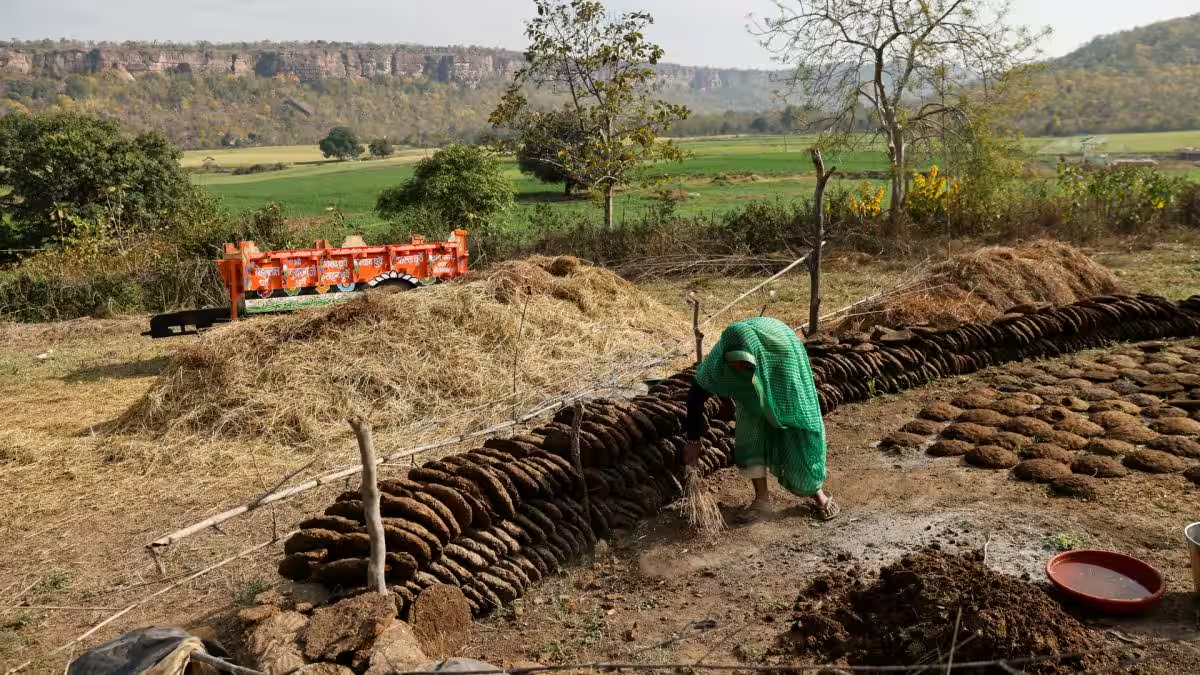
The estimate is based on around 472 MMT of annual feedstock available across the country. Of this, animal waste represents the largest potential source, with about 190 MMT of feedstock capable of producing nearly 25 MMT of CBG, the report said.
That would account for roughly 41 per cent of India’s total estimated CBG potential.
The opportunity, however, is not simply a matter of having enough waste. The report said only around 15 per cent of the total dung generated in the country is collectable, making the availability of dense rural clusters important for setting up economically viable CBG plants.
Agricultural residue is the second major source of potential feedstock. Around 150 MMT of paddy and wheat straw, cane trash and other crop residue could potentially produce nearly 20 MMT of CBG annually.
But collecting this material at scale remains a challenge. Crop residue has to be aggregated within a relatively short period after harvest, with the report putting the collection window at around 45 days.
The economics of CBG projects therefore depend not only on the quantity of waste available, but also on how efficiently it can be collected, transported and supplied to a plant.
 More from Business
Waste-to-gas opportunity
Municipal waste could provide another significant source of CBG. Around 62 MMT of municipal solid waste could generate nearly 5 MMT of CBG, according to Equirus.
The report noted that only around 50-55 per cent of urban wet and food waste is biodegradable, limiting the portion that can be used for biogas production.
Sewage treatment plant biomass could provide around 50 MMT of feedstock, with the potential to generate nearly 10 MMT of CBG. Another 20 MMT of press mud from sugar mills could produce about 2 MMT of CBG.
Press mud has an advantage over several other feedstocks because it can be sourced at a single location and does not require pre-treatment, the report said.
The scale of the opportunity also has implications for India’s energy security. The Petroleum and Natural Gas Regulatory Board estimates that the country’s 472 MMT feedstock base could support around 230 million metric standard cubic metres per day (MMSCMD) of biogas, according to the report.