
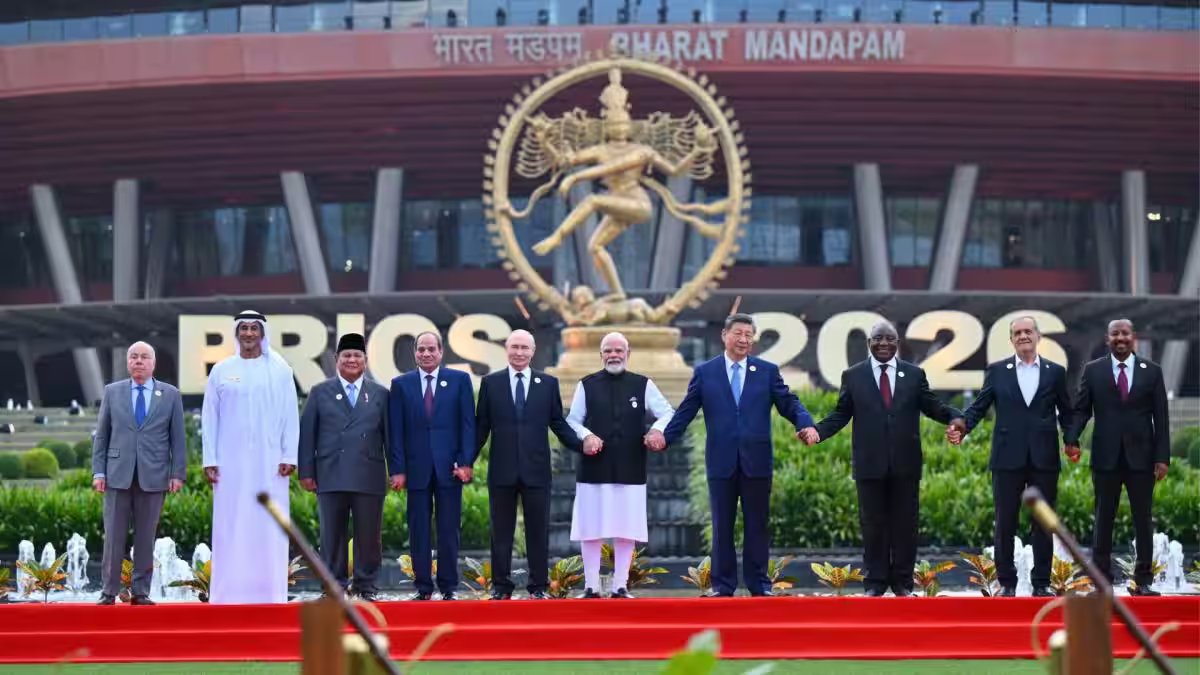

From Xi Jinping’s first India visit in seven years to BRICS marking its 20th anniversary, the New Delhi summit unfolded against wars in West Asia and Ukraine, a rapidly changing global order and an expanding 11-member grouping.
The 18th Brics Summit in New Delhi is likely to stand out in the grouping’s history for a combination of diplomatic, geopolitical and institutional firsts.
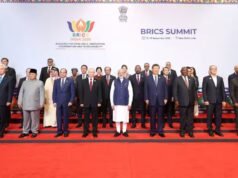
Held as Brics marked 20 years since the grouping was established, the summit brought together an expanded membership at a time of heightened global tensions, with conflicts in West Asia and Ukraine, trade restrictions and debates over reform of the international order dominating the backdrop.
Xi Jinping returns to India after seven years
Perhaps the most closely watched first was Chinese President Xi Jinping’s return to India after a seven-year gap. His visit was his first to the country since the 2020 India-China border crisis and came as New Delhi and Beijing seek to stabilise bilateral ties. Xi also held a bilateral meeting with Prime Minister Narendra Modi on the sidelines of the summit.
The timing gave the BRICS summit an additional diplomatic dimension, with India-China relations featuring prominently alongside the bloc’s formal agenda.
Brics turns 20
The New Delhi summit also marked two decades of Brics. The grouping, which began with Brazil, Russia, India and China before South Africa joined, has since expanded substantially and evolved from an economic grouping into a broader platform for political, economic and strategic cooperation.
India marked the anniversary at the summit with the release of two commemorative postage stamps by Brics leaders.
 More from Business
First BRICS summit in an increasingly tense West Asia
The summit unfolded against an unusually volatile geopolitical backdrop, with the West Asia conflict adding urgency to discussions on peace, diplomacy and global governance.
The New Delhi Declaration called for restraint and dialogue over conflicts in West Asia and expressed opposition to the forced displacement of Palestinians. The presence of both Iran and the UAE also created an unusual diplomatic setting, with Iranian President Masoud Pezeshkian meeting UAE Crown Prince Sheikh Khaled bin Mohamed bin Zayed on the sidelines — their highest-level meeting since the conflict began, according to Reuters.
Firsts in India’s Brics agenda
India used its chairmanship to push several new institutional and practical initiatives. Prime Minister Modi proposed a Brics Continuity and Implementation Mechanism to ensure that initiatives survive the annual rotation of the chairship.
India also proposed a Seafarers Emergency Support Network, 10 proposals for global governance reform and a Brics reform roadmap for the next summit.
Other initiatives highlighted during the summit included a Brics digital public infrastructure repository, a health-focused Training Hub Network, the India Centre for Brics Industrial Competencies and the Brics-New Development Bank Knowledge Portal.
A summit shaped by wars, tariffs and AI
The New Delhi summit also reflected how far Brics has moved beyond its original economic focus.
The leaders’ declaration dealt with West Asia, terrorism, tariffs, trade, energy security, climate change, artificial intelligence, digital governance and reform of multilateral institutions. AI received particular attention, with the bloc backing ethical, inclusive and secure AI development tailored to the needs of the Global South. The document also opposed unilateral economic measures that disrupt trade and called for greater representation of developing countries in global institutions.
A declaration that reflects the changing Brics
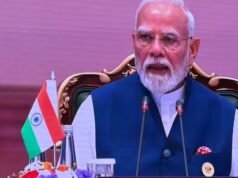
The summit culminated in the unanimous adoption of the New Delhi Declaration on the first day, another notable feature of the 2026 meeting. Prime Minister Modi said the declaration provides a direction for the grouping and stressed the need to convert its decisions into tangible outcomes.
At 140 numbered paragraphs and 45 pages, the declaration is also the longest BRICS leaders’ declaration in recent years, reflecting the sheer expansion of the bloc’s agenda.
From Xi’s return to India after seven years and Brics’ 20th anniversary to the grouping’s focus on AI, global governance and conflicts, New Delhi 2026 stands out not because of a single headline event, but because several significant developments converged at one summit.
That may ultimately be the defining feature of Brics in 2026: a grouping that is larger, more politically consequential and dealing with a far broader set of global issues than it did when the bloc began two decades ago.