


From passion-led travel and niche experiences to new air links, technology and the human touch, Breaking Travel News speaks to the experts on the ground at WTM Spotlight Riyadh to discover the trends shaping the next chapter of travel.
From the air, Riyadh is a city in motion: construction cranes punctuate the skyline, new districts are taking shape, roads, hotels, entertainment venues and cultural spaces are appearing at extraordinary speed. On the ground, though, another story is becoming visible.
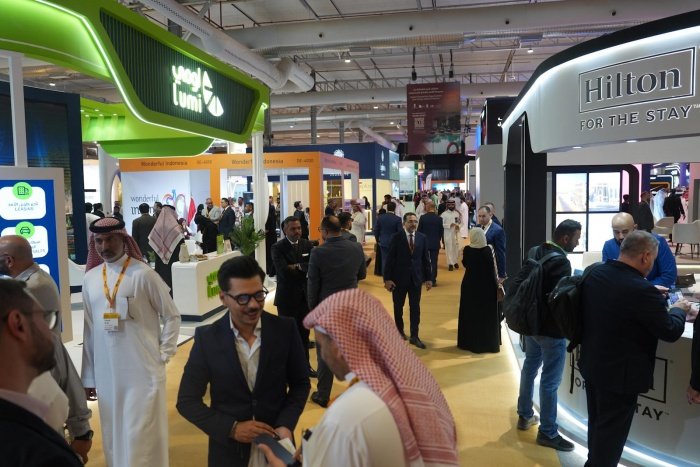
When Breaking Travel News returned to Riyadh for the inaugural WTM Spotlight, the wider region was facing a period of profound uncertainty. The show itself was finding its feet as a first edition. But inside, the atmosphere was markedly different. There was energy in the conversations, optimism among the exhibitors and a sense that, despite everything happening around the region, Saudi Arabia’s tourism story was continuing to move forward. It felt like a moment of transition.
For years, the international narrative around Saudi tourism has been dominated by the extraordinary scale of Vision 2030: giga-projects, billions in investment, new resorts and cities, ambitious visitor targets and architecture conceived on a planetary scale. Those projects remain a fundamental part of the picture, but talk to the people actually selling, guiding, transporting, hosting and developing tourism in the Kingdom and the emphasis begins to shift. The question increasingly becomes: what will people actually come here for? And one word keeps coming up. Passion.
Dr. Jens Thraenhart, CEO, Chameleon Strategies
Let passion lead
For Dr Jens Thraenhart, CEO of Chameleon Strategies, the answer lies in what he calls “passion tourism”, looking beyond the traditional destination categories towards the micro-niches that inspire people to travel in the first place. “Stargazing, birdwatching, calligraphy, AP tourism, like beekeeping, the long tail of travel, really anything that people have a passion for,” he told Breaking Travel News. The idea is to turn the traditional destination model around. “Not looking at the destination for it, but looking at the passion. The passion becomes the destination.”
Thraenhart is developing an AI-powered passion travel inspiration engine which allows travellers to enter an interest and discover destinations where they can pursue it. Enter stargazing, for example, and AlUla can appear alongside destinations including Finland, Chile, New Zealand and Sedona, followed by a personalised itinerary. It is a small but significant shift in the way the industry thinks about the traveller. Instead of asking how to attract people to a destination, the question becomes how a destination can meet the interests of the people already looking for that experience.
It is a deceptively simple idea: a traveller interested in astronomy may want dark skies. A birdwatcher needs particular habitats. A diver follows particular waters. Someone passionate about architecture, food, archaeology or craft may travel thousands of miles for an experience that would barely register on a conventional destination checklist. An technology can increasingly connect those interests with the places capable of satisfying them.
Sven Verseegh, CEO, Jaba DMC
From the obvious to the undiscovered
Saudi Arabia has an unusually large canvas on which to do it, stretching across deserts, mountains, coastlines and ancient settlements, with archaeological and cultural landscapes alongside rapidly developing urban centres and luxury destinations. Much of it remains unfamiliar to international travellers, which creates an opportunity to move beyond the established itinerary.
Sven Verseegh, CEO of Jaba DMC describes Saudi Arabia as a country where visitors can travel thousands of kilometres and encounter something new every day. The company is developing self-drive itineraries across 13 destinations and more than 400 products, to help visitors experience a country whose sheer geographical scale makes conventional group touring difficult, and opening up areas well beyond the familiar Riyadh, Jeddah and AlUla circuit. He pointed to Qassim, with its enormous camel market, hidden valleys, volcanic craters and mountain landscapes as examples of what remains relatively undiscovered. The attraction is precisely that these places can feel like discoveries, “Sometimes you drive straight into the Middle Ages,” he said.
That appetite for lesser-travelled destinations is also visible in the development of the wider Saudi tourism ecosystem, where nature, heritage, adventure, culture and entertainment are increasingly being packaged around specific experiences. The latest World Travel Awards nominations reflect that broadening landscape, with Saudi destinations, hotels, DMCs and tourism products represented across categories ranging from emerging tourism destinations and national parks to adventure, heritage, business travel and new resorts. The opportunity is therefore becoming less about simply bringing more people to the best-known places and more about giving travellers reasons to go deeper.
Dave Goodger, Managing Director of Tourism Economics
Resilience in uncertain times
Tourism across the region has been operating against geopolitical uncertainty, and several interviewees acknowledged that the situation has been difficult, yet the prevailing response was remarkably forward-looking.
Olivier Thomas, General Manager of Sana Tourism Company, acknowledged that the situation had been difficult for the tourism industry across the region, but described the importance of people continuing to come together and support the sector. “Hopefully, when the situation gets better, we can see a big uptick in our industry,” he said.
Dave Goodger, Managing Director of Tourism Economics, offered a wider perspective on travel’s ability to recover from disruption. “People really want the experiences that only travel can provide,” he said. He added that destinations that have been proactive in communication and restoring supply have recovered faster than average.
The message from Riyadh was less about ignoring uncertainty and more about continuing to build through it. That resilience is visible in the investment continuing to flow into tourism infrastructure, hospitality and aviation. But perhaps the question is becoming less about whether Saudi Arabia can build the infrastructure and more about what happens once the infrastructure is there: who comes? Why do they come? What do they experience? And what makes them want to return?
Michael Thomas, Regional Director, EMEAI, Global Communications at Delta
New connections, new markets
Perhaps nowhere is that more visible than in the skies. Michael Thomas, Regional Director, EMEAI, Global Communications at Delta, was in Riyadh to promote the airline’s new Atlanta–Riyadh service, due to begin in October 2026. Delta describes the route as its first direct connection to Saudi Arabia and the first nonstop service between the US and Riyadh operated by a US airline.
Speaking to Breaking Travel News, Thomas described the new route as part of a broader appetite for connection between Saudi Arabia and the United States. “We are seeing that there’s an appetite to connect these two countries,” he said. He also described Saudi Arabia as having a “vibrant, young, well-traveled, well-connected population”.
The significance of the route goes beyond simply adding another flight to the timetable. For the traveller, connectivity is ultimately about possibility. A direct flight can make a previously distant market viable, domestic transport can open a region, a self-drive itinerary can turn an empty stretch on the map into an adventure. The investment story therefore becomes inseparable from the experience story: connectivity is what allows passion to travel.
For Saudi travellers, connectivity also works in the opposite direction, opening more of the world to an increasingly sophisticated outbound market. Hussein Alsaqaf, Travel Experience Director at almatar, described the importance of segmentation and personalisation as Saudi travel grows. “We’re serving the Saudi customers [with] the very niche experiences that you need to have to serve them.” He described a market spanning religious, business and leisure travel, with increasingly different needs within each segment. “Having that segmentation and personalisation for every segment that you are serving gets massive.” This is where passion tourism starts to connect with the much larger technology story.
Hussein Alsaqaf, Travel Experience Director, almatar
AI can find the niche
AI was inevitably part of the conversation, but the most interesting observations were about what technology is actually being used for.
Hussein Alsaqaf, Travel Experience Director at almatar makes a great point: if customers are searching through AI, travel businesses need to be discoverable there, and the recommendations need to be personal. “If the customer are searching on the AI, you need to be on the AI. You need to have personal recommendation that every single customer that you have different kind of recommendation, personalisation.” AI potentially takes that idea much further: if a traveller can describe an interest rather than simply a destination – astronomy, diving, wildlife, architecture, food, history – technology can increasingly match that passion with a place, an operator and an itinerary. That is where the technology story becomes more interesting.
At Sofitel Riyadh, managing director Fadel G. Wehbe said AI is being used to understand guests better and improve their experience. “I would like to stress as well that nothing will replace the human touch.” The technology gathers information and helps make the journey more seamless, and the human turns that information into hospitality. That balance between technology and people emerged repeatedly.
Fadel Wehbe, Managing Director, Sofitel Riyadh Hotel & Convention Centre
Talent becomes part of the product
In hospitality, passion is also about the people delivering the experience. Salem Al Shahrani, Chief of Staff at Rua Al Haram Al Makki, King Salman Gate, put the scale of the challenge another way: “The tourism workforce of the future is not one workforce.” He describes destinations requiring engineering, infrastructure, hospitality, retail, culture, mobility and technology to operate together. In other words, the more sophisticated the experience becomes, the more sophisticated the people behind it need to be.
Saudi Arabia’s tourism transformation has sometimes been presented through buildings and investment figures. Yet the experience of travelling through the Kingdom is often much more intimate. Hospitality is one of the country’s oldest assets. Across the interviews, local knowledge, welcome and personal service repeatedly surfaced alongside the technology and investment conversation. This matters because the more individualised travel becomes, the more valuable human expertise becomes. A passion-led itinerary may depend on the guide who knows where to find the wildlife, the hotelier who knows the landscape, the chef who can explain a dish, or the local operator who can take visitors somewhere they would never find through a standard package.
Camels at Al Ula
From destination to experience
The strongest theme to emerge from WTM Spotlight Riyadh may therefore be surprisingly human. Technology is developing rapidly. Investment is accelerating. New hotels, attractions and routes are changing the map. Yet underneath all of this sits a relatively old-fashioned reason for travel: people care deeply about things. They care about seeing a particular landscape, learning a particular craft, following wildlife, exploring history, eating somewhere extraordinary, watching a particular sport, attending an event, finding a place their friends have not yet discovered. Passion gives the industry a way of understanding those motivations.
It also offers a possible route towards more sustainable destination development. Rather than concentrating every visitor around the same handful of famous sites, a passion-led model can help distribute demand towards smaller communities, specialist operators and lesser-known regions, provided the underlying assets are protected.
The long-term challenge is to protect the places and experiences that passionate travellers come to see. That is particularly relevant for Saudi Arabia, where the tourism story is still being written.
Stargazing in the Desert
The next Saudi story
A tourism industry built around passions can potentially take travellers further from the established centres. For a country whose tourism story has so often been told through scale, that feels like a significant evolution. Construction provides the architecture, connectivity provides the routes into it, technology can help travellers find their way through it, talent delivers the experience. But passion may be what makes people want to come in the first place.
For Breaking Travel News, that is part of the reason to keep listening to the people on the ground. Through BTN’s video interviews at WTM Spotlight Riyadh, and across our wider travel media platforms, we are seeing another layer of the story: the people behind the transformation. And their message is becoming increasingly clear: the future of travel may be built around bigger destinations, smarter technology and better connectivity, but increasingly, it starts with something much smaller. A reason to care, a reason to go: a passion.