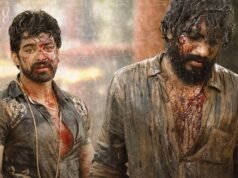




R. Sarath’s works travelled to international film festivals and received recognition for their treatment of social, cultural and human themes.
| Photo Credit: special arrangement
Filmmaker R. Sarath, known for his contemplative cinema which expressed environmental concerns, passed away at a private hospital in Thiruvananthapuram, Keralam, in the early hours of Monday (September 7, 2026). He was 65.
Two years after India conducted nuclear tests at Pokhran, Sarath made Sayahnam (2000), his debut film which raised questions on the issue. It portrayed the story through the eyes of an ageing writer who is upset about the nuclear tests and his scientist son who celebrates the achievement. The filmmaker had said that the Pokhran tests and the public responses to it had served as the basic thread when he started working on the film. The film fetched him the Indira Gandhi Award for Best Debut Film of a Director, the National Film Award for Best Feature Film in Malayalam, and seven Kerala State Film Awards.
He followed it up with Sthithi (2003), a film that centres on the life of a couple employed in the government Secretariat, and Seelabathi (2005), a drama set in rural Kerala that revolves around the experiences of two young people who come from outside the village, which foregrounded who human greed destroyed nature. His docu-fiction Bhoomikku Oru Charamageetham, a visual adaptation of O.N.V. Kurup’s poem of the same name, also raised environmental concerns.
His other films include The Desire: A Journey of a Woman, Parudeesa, Buddhanum Chaplinum Chirikkunnu, Swayam, Mahatma Gandhi Road and Burial of Dreams.
His films travelled to international film festivals and received recognition for their treatment of social, cultural and human themes. The Desire, an Indo-Chinese co-production, received the award for Best Narrative Feature Film at the 2011 Geneva International Film Festival.
Began career as a journalist
Born in Vilakkudy, Kollam, he began his career as a journalist and later moved into documentary filmmaking, short films and feature cinema. His early work in documentaries brought him recognition both in India and abroad. While making the documentary The Painted Epics, his research led to the discovery of previously unseen mural paintings associated with Raja Ravi Varma. His work on murals also earned him a Junior Fellowship from the Department of Culture, Government of India, in 1996.
He served in the Information and Public Relations Department of the Government of Keralam and had earlier served as Director of MPCC (Vyloppilli Samskrithi Bhavan) and Secretary of Bharat Bhavan under the Department of Culture. He also served as Festival Director of the International Union of Film Critics Festival in London in 2007.
Published – September 07, 2026 11:05 am IST