

China is reviewing energy storage capacity amid overcapacity concerns, pausing approvals for new factories while projects already under construction continue
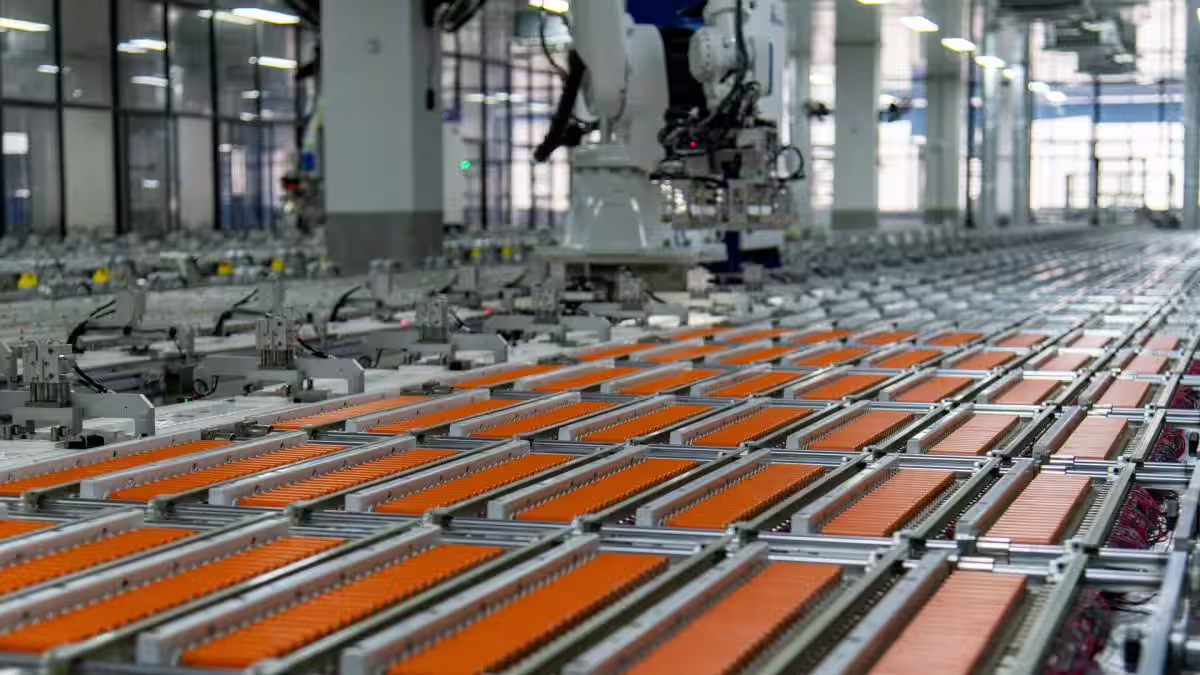
China has temporarily paused approvals for new battery manufacturing projects for energy storage as authorities review existing and planned production capacity amid concerns over overcapacity, according to a report by Chinese financial news outlet Cailianshe.
The review is focused particularly on battery cells, with authorities assessing the scale of capacity already in place and projects in the pipeline, Cailianshe reported, citing people in the industry.
Projects that have not yet started construction will be put on hold for now, while those already under construction will not be affected, according to the report. The policy could be adjusted later depending on market conditions.
The move does not amount to a blanket halt on China’s energy storage industry. Instead, it signals a more cautious approach towards adding new production capacity at a time when manufacturers are facing intensifying competition and pressure on prices.
Why China is reviewing battery capacity
China has rapidly expanded its energy storage manufacturing base alongside its large-scale deployment of renewable energy. Batteries are increasingly being used to store electricity from intermittent sources such as solar and wind, balance power grids and provide backup power.
 More from Business
Demand for energy storage batteries has continued to grow, but manufacturers have also been grappling with excess capacity. Intense competition has contributed to falling prices and pressure on profit margins.
The problems mirror those seen in other Chinese industries, including solar panels and electric vehicles, where rapid investment and aggressive capacity expansion have led to intense price competition.
China’s solar manufacturers have also moved into battery energy storage as a way to diversify beyond solar panels, where overcapacity and weak profitability have weighed on the industry.
Beijing moves to rationalise capacity
The latest move is part of broader efforts by Chinese authorities to address excess capacity in new-energy industries.
China has already taken measures affecting the battery and solar sectors. In July, the country introduced a consumption tax on lithium-ion batteries and solar cells as part of efforts to rationalise the industries.
The temporary pause could therefore give authorities time to assess whether planned energy storage investments match expected demand rather than allowing production capacity to expand unchecked.
At the same time, the underlying demand outlook for energy storage remains strong. The growth of renewable power generation and the need for grid flexibility are expected to increase demand for batteries capable of storing electricity and supplying it when needed.
The distinction between existing projects and new projects is significant. Facilities already under construction are not affected by the reported pause, meaning China’s current manufacturing expansion will continue even as authorities reassess future capacity additions.
The latest development also highlights a broader challenge for China’s clean-energy industries: maintaining its manufacturing advantage while preventing excess capacity, falling prices and weak returns from undermining the sector.
For global energy markets, any sustained tightening of new battery manufacturing capacity in China could eventually affect the supply outlook for energy storage systems, although the immediate impact is expected to be limited because projects already under construction can continue.