

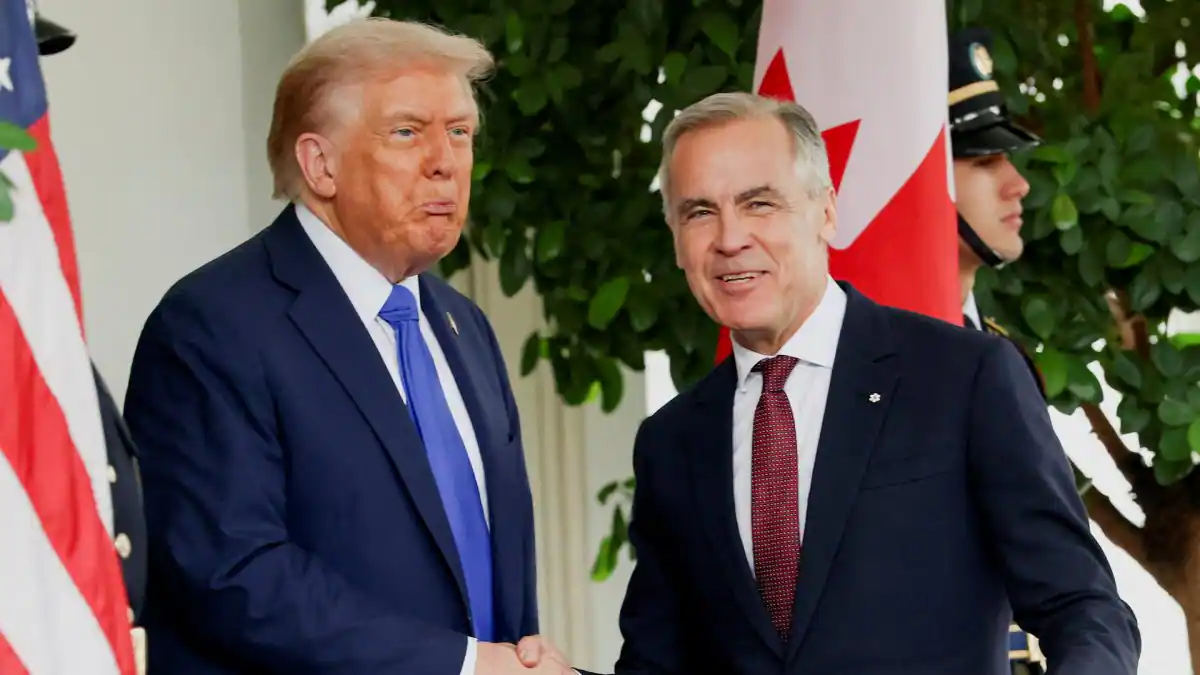

Trump’s latest remarks come as Washington and Ottawa impose retaliatory tariffs, putting their deeply integrated trade relationship under pressure
US President Donald Trump has criticised Canada’s leadership, calling it “very, very difficult to deal with” as the two neighbours remain locked in a trade dispute over tariffs and market access.
“I find Canada to be very, very difficult to deal with — their leaders, not the people. The people are fantastic,” Trump said.
Trump has repeatedly accused Canada of treating the US unfairly in trade. He has also said Ottawa wants to reach a deal with Washington.
The latest comments come after trade talks between the two countries broke down in August, leading to another round of tariffs and retaliatory measures.
US, Canada raise tariffs
The US imposed 50 per cent tariffs on about $27.6 billion worth of Canadian goods in August. Canada responded with tariffs of its own on US products.
The Canadian measures cover products including steel, dairy, agricultural goods, appliances and other manufactured items.
The US has also restricted imports of some Canadian products, including alcoholic beverages, motorcycles and certain dairy goods.
Canadian Prime Minister Mark Carney has defended the retaliatory tariffs but said Ottawa remains open to a trade agreement with Washington.
 More from Business
The dispute has put pressure on businesses on both sides of the border, particularly in the auto, energy and agriculture sectors.
Why Canada has a trade surplus with US
Trump has often pointed to the US trade deficit with Canada as evidence that the relationship is unfair to American businesses.
The US recorded a merchandise trade deficit of about $27.3 billion with Canada last year.
However, a major part of that gap comes from energy imports. Canada exported more than $85 billion worth of crude oil to the US in 2025.
Much of that oil comes from Alberta and is shipped to refineries in the US Midwest, which are designed to process the heavier crude produced from Canada’s oil sands.
The US therefore depends heavily on Canadian crude, making energy a key part of the trade relationship.
Canada also remains heavily dependent on the US market. Around two-thirds of Canadian exports go to the US, although that share has fallen from levels seen before the trade dispute.
Trade war threatens North American supply chains
The escalating dispute has raised concerns about the future of the US-Mexico-Canada trade agreement, known as USMCA.
The agreement has helped build closely linked supply chains across the three countries, particularly in the automobile industry.
Businesses now face higher costs and uncertainty as tariffs remain in place.
Carney has said Canada plans to diversify its trade and reduce its dependence on the US by developing stronger ties with other markets.