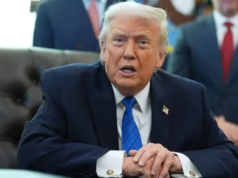

Nine pharmaceutical companies have agreed to reduce the price of their prescription medications in the US, according to a Friday announcement made by US President Donald Trump.
Amgen, Bristol Myers Squibb, Boehringer Ingelheim, Genentech, Gilead Sciences, GSK, Merck, Novartis, and Sanofi are among the pharmaceutical corporations that will now control Medicaid medicine costs to match their rates in other industrialized nations.
As part of the agreement, new drugs produced by those businesses will also be priced at the nation’s “most-favored-nation pricing” for all newly introduced pharmaceuticals, including those sold in commercial and cash pay marketplaces as well as Medicare and Medicaid.
In the US, a variety of factors, like as insurance coverage and the level of competition a treatment confronts, can affect drug pricing for patients. The majority of people are protected from a large portion of the expense by government programs like Medicaid and Medicare, employment, or the individual insurance market.
Lower prescription costs could benefit state budgets that support Medicaid, a federally and state-funded program for low-income individuals. Currently, patients in Medicaid pay a small co-payment of a few dollars to fill their medications.
Patients without insurance and with limited negotiating power will also benefit from lower prescription prices. However, individuals may still have to spend hundreds of dollars a month for certain prescription drugs despite the administration’s website offering significant 50% discounts.
According to William Padula, a professor of pharmaceutical and health economics at USC, Medicaid already has the most advantageous drug rates, which in certain situations will be comparable to the most advantageous price in the country. It is unclear what additional effects it may have, such as increased research and development.
It can’t be awful. Padula stated, “I don’t see much downside, but it’s hard to judge what the upside is.”
It will take years to see how successful this plan is in terms of more people getting more of the medications they require, even if it is noteworthy that Trump was able to get major pharmaceutical companies to the table to negotiate lower costs.
Regarding the pharmaceutical businesses, Padula stated that it is beneficial for their stock as well as for their future research and development. It’s obviously influential, but will it all have a significant impact? Until our nation’s health improves, nothing truly matters here.
According to Trump administration officials, the pharmaceutical companies will also provide pharmacy-ready medications on the TrumpRx website, which will go live in January and let consumers purchase medications straight from producers.
Businesses like Merck, GSK, and Bristol Myers Squibb also committed to donate substantial amounts of active pharmaceutical ingredients to a national reserve, as well as to synthesize and distribute them into drugs like blood thinners, antibiotics, and rescue inhalers as needed in an emergency.
Additionally, Bristol Myers Squibb, a company located in New Jersey, stated that it will provide the Medicaid program with their hallmark blood thinner, which is prescribed to lower the risk of blood clots and stroke, at no cost. Known as Eliquis, it is one of Medicaid’s most popular medications and the company’s most prescribed medication.
According to Padula, the donations, which include some of the most important medications in the world, are an important step toward health parity and a recognition that the pharmaceutical companies can afford to pursue profitability in other areas of their business. One of the most lucrative medications ever produced is Eliquis.
Padula said of the Eliquis donation, “It’s a thoughtful health equity move that they can afford given that it’s been such a blockbuster.”
Earlier this year, the Trump administration reached similar agreements with Pfizer, AstraZeneca, EMD Serono, Novo Nordisk, and Eli Lilly, among other significant pharmaceutical companies.
Since Trump publicly wrote letters to executives at 17 pharmaceutical companies about the issue, pointing out that US prices for name-brand medications can be up to three times higher than averages elsewhere, the administration has now negotiated lower drug prices with 14 companies, though specific terms were not disclosed.
Trump claimed that in order to get the pharmaceutical firms to act morally, he effectively threatened them with 10% tariffs.