

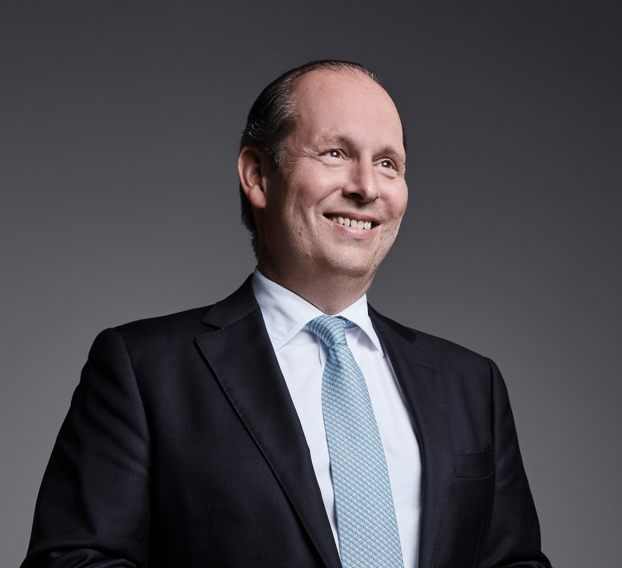


Jumeirah has never lacked recognition. Burj Al Arab gave the company one of hospitality’s most photographed symbols, while its Dubai beachfront hotels helped define the emirate’s luxury resort market. The challenge facing chief executive Thomas B Meier is to turn that recognition into a more globally balanced luxury brand.
Meier joined Jumeirah as chief operating officer in 2021, became interim chief executive in 2024 and took the permanent role in January 2025. By 2026, he oversaw 29 properties in 11 countries, including 15 in the UAE. His mandate is not expansion for its own sake. Jumeirah wants a carefully curated portfolio of about 50 properties by 2030, with growth in gateway cities and resort destinations that can strengthen the brand.
His career has combined hotel operations with portfolio development. A graduate of Ecole hoteliere de Lausanne, Meier built experience in Asia before taking senior responsibilities across Raffles, Fairmont and Swissotel. He led global Raffles operations and worked on openings and integrations across multiple luxury brands. At Minor Hotels, where he became senior vice president of operations for Asia in 2016, he managed a diverse regional estate and the complexity of scaling brands across cultures.
Meier’s progression was unusually property-led for a modern group chief executive. Between 2000 and 2008, he held general-management roles with Swissotel and Raffles in Cambodia, Singapore and China before becoming vice president of global operations for Raffles across the United States, Caribbean, Europe, the Middle East and Asia. That sequence matters because it exposed him first to the demands of individual landmark hotels and then to the compromises required when a luxury brand expands across owners and markets.
At Minor, he oversaw brands including Anantara and Avani across Asia during a period of rapid growth. The experience sharpened his ability to separate what must remain consistent from what should be local. Jumeirah’s ambition to reach roughly 50 properties by 2030 will depend on that judgement. The company cannot reproduce Dubai in every market, but it must make its approach to service, design and generosity recognisable wherever it operates.
That background is visible in his approach to Jumeirah. The company is refining service, design, dining and wellbeing rather than relying solely on the architecture of its properties. The opening of Jumeirah Marsa Al Arab added a new ultra-luxury anchor beside Burj Al Arab and Jumeirah Beach Hotel, creating a connected waterfront expression of the brand’s evolution.
Meier has also widened the definition of the portfolio. In December 2025, Jumeirah announced a luxury yachting experience aboard the Maltese Falcon. The move places the brand in the guest’s broader lifestyle rather than confining it to the hotel stay. It also reflects a competitive reality: top luxury travellers increasingly compare hotels with villas, yachts, private clubs and highly personalised journeys.
At the same time, he must care for legacy assets. Burj Al Arab is scheduled for an extensive restoration programme beginning in 2026. Updating a global icon is delicate work. The hotel needs contemporary rooms, technology and sustainability performance without losing the visual and service codes that made it famous.
International growth presents another test. Jumeirah’s Dubai identity is a strength, but properties in Europe, Asia and Africa must feel locally grounded. Meier’s years in Asia and his work across multi-brand organisations give him a useful instinct for balancing consistency with cultural relevance. The best global luxury brands are recognisable without becoming repetitive.
The commercial environment is also changing. Development costs are high, owners are selective and luxury customers expect personalisation before arrival, not merely attentive service on property. Jumeirah must therefore prove that its brand can generate rate premiums, residence demand and loyalty in markets where its name is less established.
Meier’s reset is significant because it moves Jumeirah from icon-led fame towards portfolio-led credibility. Burj Al Arab will remain the emblem, but the company’s future depends on whether travellers can recognise the same confidence, generosity and sense of place across every Jumeirah address. His career suggests he understands that luxury scale is built one operating detail at a time.