
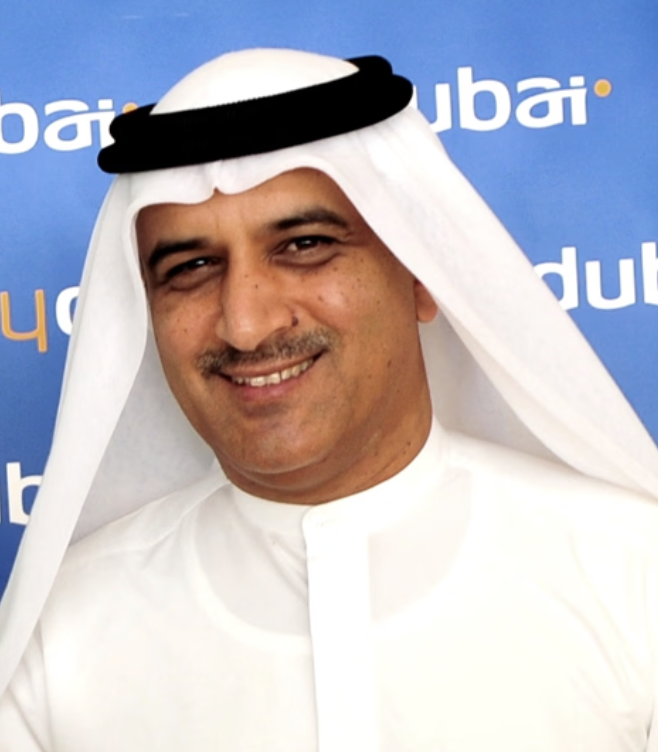


When flydubai was created in 2008, its purpose was to connect Dubai with underserved regional markets using a simple narrowbody model. Under chief executive Ghaith Al Ghaith, it has grown into something more complex: a network airline that complements Emirates, carries premium as well as value-conscious travellers and reaches cities larger aircraft cannot serve efficiently.
Al Ghaith brought more than two decades of aviation experience to the launch. He joined Emirates in 1986 and rose to executive vice president for commercial operations worldwide, giving him direct exposure to route planning, sales and the development of Dubai as a hub. Leading flydubai allowed him to apply that knowledge to a more agile platform.
His Emirates career began when the future scale of Dubai aviation was far from assured. Over 23 years, he moved through commercial positions and ultimately directed worldwide operations. In 2008, the Government of Dubai selected him to turn the idea of a new low-cost airline into an operating company within a year. That origin helps explain the speed and commercial pragmatism that have characterised flydubai’s development.
The airline has since moved beyond the conventional low-cost template. Business class, connecting partnerships, cargo and longer-range routes have increased revenue opportunities but also introduced complexity. Al Ghaith’s central strategic decision has been to accept that evolution without trying to reproduce Emirates on smaller aircraft. flydubai instead uses the economics and flexibility of the narrowbody fleet to reach markets that strengthen Dubai’s network as a whole.
By June 2026, the airline operated 97 aircraft and served more than 120 destinations in 58 countries. It had carried 137 million passengers since beginning operations in 2009. During 2025 alone, flydubai added 12 destinations and transported 15.7 million customers.
The network’s strategic value lies in its reach. flydubai has opened direct links to secondary cities across Central Asia, the Caucasus, Africa, Europe and the Middle East. Through its partnership with Emirates, those routes also feed long-haul traffic into Dubai. The two airlines retain separate brands and fleets, but their schedules and connectivity give the hub a broader market than either could serve alone.
Al Ghaith is now preparing for a larger and more diversified fleet. At the 2025 Dubai Airshow, flydubai announced commitments for 150 Airbus A321neo aircraft valued at $24 billion and 75 Boeing 737 MAX aircraft valued at $13 billion. The Airbus decision reduces reliance on a single manufacturer and gives the carrier additional range and capacity options.
That diversification reflects lessons from delivery delays and fleet groundings across the industry. It also changes the company. Multiple aircraft families bring training, maintenance and scheduling complexity. The benefits will depend on whether flydubai can deploy each type where its economics and range are strongest.
People are part of the capacity plan. In February 2025, the airline opened a training centre and introduced multi-crew pilot licence and flight-dispatcher programmes for UAE nationals. Such initiatives support Emiratisation, but they also address a global shortage of skilled aviation professionals.
Geopolitical disruption remains a constant test. In 2026, regional conflict and airspace restrictions temporarily reduced available capacity. By September, flydubai had restored about 85 per cent of its network and expected a full recovery by year end, while preparing to take further aircraft beyond a fleet of 100.
Al Ghaith’s achievement is the creation of an airline that has outgrown the label of start-up without losing its ability to enter thin markets. flydubai now sits between low-cost simplicity and full-service connectivity. Managing that balance will define its next era, especially as the carrier prepares for Dubai’s future airport expansion. Few executives understand the city’s aviation model as deeply as the leader who has guided its second airline from the first day