
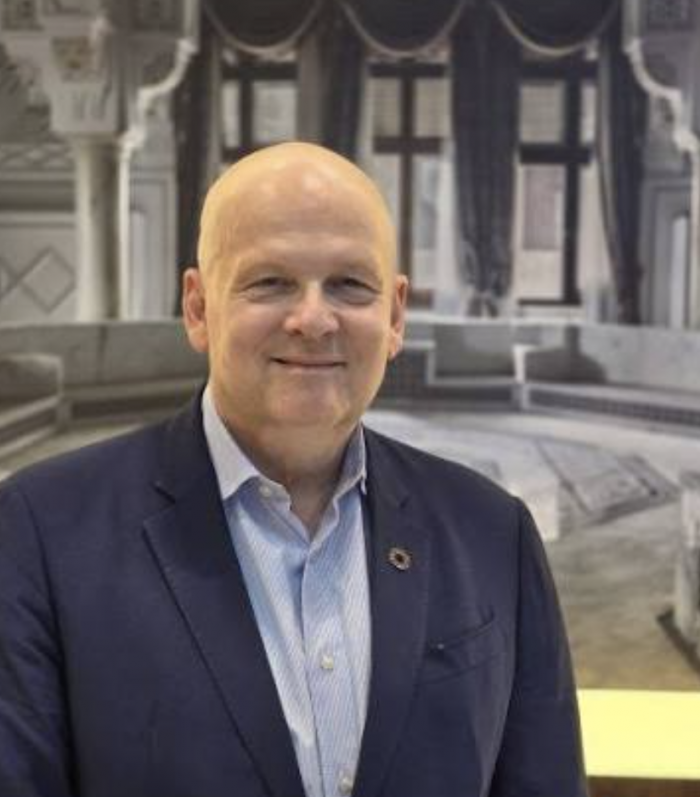


Christoph Mares did not arrive at Boutique Group to build another collection of luxury hotels. He arrived to help define a new category. The Public Investment Fund-owned company is converting former royal palaces into ultra-luxury hospitality assets, a task that demands commercial discipline, conservation judgement and a service culture capable of making monumental buildings feel personal. Since taking the chief executive role in January 2025, Mares has become the operator charged with turning that ambition into a repeatable guest experience.
His preparation was unusually well matched to the assignment. Mares spent most of his career with Mandarin Oriental Hotel Group, rising through senior operational and corporate roles to become chief operating officer. Across more than 25 years in luxury hospitality, he worked at the point where brand promise becomes operating detail: rooms, restaurants, spas, people, standards and the countless small decisions by which discerning guests judge a hotel. That apprenticeship matters in Saudi Arabia, where physical investment is advancing at a pace that makes experienced operational leadership especially valuable.
Boutique Group’s proposition is built on scarcity rather than scale. Its portfolio consists of culturally important palaces whose architecture and histories cannot simply be standardized. The first opening, The Red Palace in Riyadh, is scheduled for April 2026. Other landmark properties include Al Hamra Palace in Jeddah and Tuwaiq Palace in Riyadh. Each requires Mares and his team to reconcile preservation with contemporary luxury, and privacy with a desire to share Saudi heritage more widely.
That balance is his defining leadership test. A palace conversion can easily become either a museum with bedrooms or a generic luxury hotel wearing historic decoration. Boutique Group must avoid both outcomes. Mares has emphasized experiences rooted in Saudi culture, supported by highly personalized service and facilities of international standing. At The Red Palace, that includes ambitious wellness and culinary components, but the more important product is the sense that guests are entering a chapter of national history.
His influence can also be seen in the way Boutique Group is treating people as part of the product. Palatial hospitality depends on intuitive service, not merely impressive interiors. Building that capability means recruiting and developing Saudi talent, codifying standards without flattening local character, and creating career routes in a segment that is still being invented. Mares’ long operating background gives the project a practical centre of gravity: he knows that a brand is only as convincing as the team delivering it at two in the morning.
For Saudi tourism, the significance extends beyond a handful of keys. Vision 2030 has produced extraordinary destination and hotel investment, yet the country’s most defensible advantage is not construction volume. It is culture that cannot be replicated elsewhere. Boutique Group places that idea at the top of the market. If the company succeeds, it will demonstrate how protected national assets can generate economic and reputational value without losing their meaning.
Mares is therefore building more than an operator. He is helping establish a Saudi language of ultra-luxury, one that can sit beside the great palace and heritage hotels of Europe and Asia while remaining unmistakably local. The opening sequence will expose the model to real guests, real operating pressures and global comparison. His record suggests a leader comfortable with that unforgiving transition from concept to service. The result could become one of the Kingdom’s most important hospitality signatures.
The economics will be watched just as closely as the aesthetics. Palace hotels contain spaces never designed for modern guest circulation, kitchens, engineering or back-of-house logistics. Their room counts are limited while restoration and service costs are high. Mares must command exceptional rates without allowing revenue pressure to turn culturally significant buildings into mere luxury commodities. That demands precise positioning, strong international sales and experiences valuable enough to lengthen stays.
There is a wider brand-building question too. Boutique Group’s name must eventually mean something independent of any single palace. Mares needs common standards in reservations, recognition and service recovery, while allowing each property to preserve its own historical identity. His Mandarin Oriental years offer a useful lesson: consistency is most powerful when it protects a feeling rather than enforcing identical design. If he can establish that balance from the first opening, later palaces will join a recognizable collection without becoming replicas