

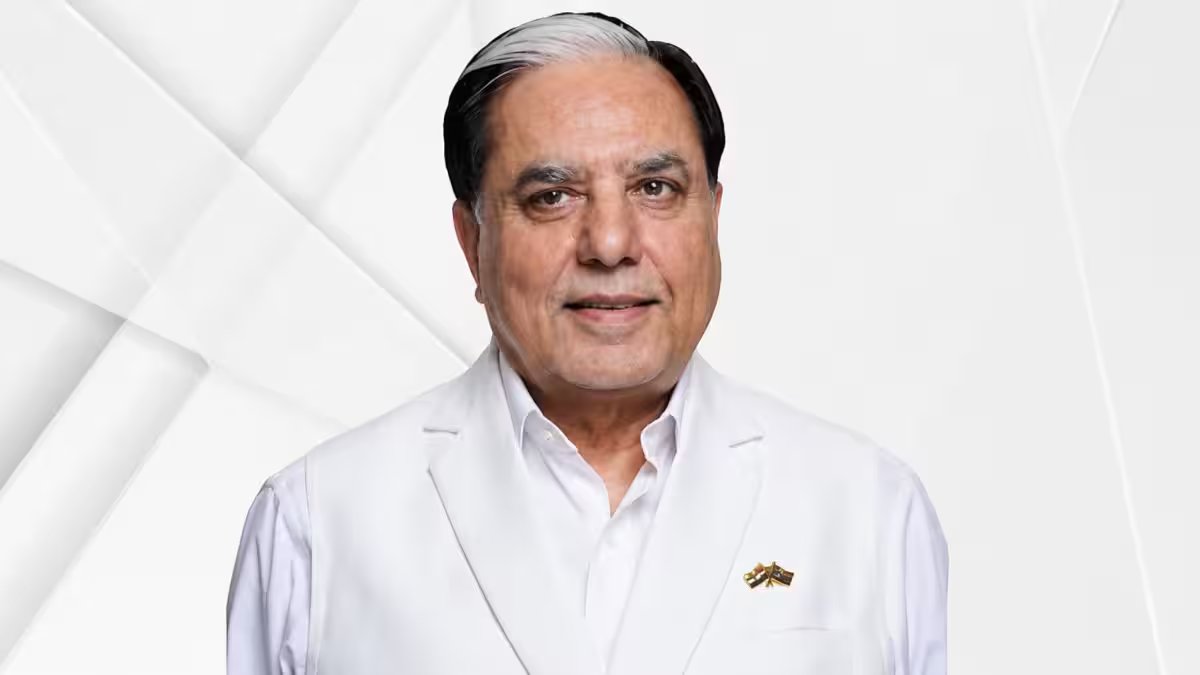

HDFC Bank opposed the repayment plan that offers creditors Rs 6.25 crore against admitted claims of Rs 22,006.57 crore and is considering challenging the NCLT order
HDFC Bank is considering an appeal before the National Company Law Appellate Tribunal (NCLAT) against an order approving a repayment plan for Essel Group founder Subhash Chandra, CNBC-TV18 reported on Thursday.
The National Company Law Tribunal (NCLT) has approved a plan under which creditors will receive Rs 6.25 crore against admitted claims of Rs 22,006.57 crore.
Another Rs 25 lakh has been set aside for the cost of the insolvency process, taking the total amount under the plan to Rs 6.5 crore.
For creditors, this means they would recover only about 0.028 per cent of the amount they have claimed. In simple terms, creditors would get roughly 28 paise for every Rs 1,000 they are owed. The remaining amount represents a haircut of nearly 99.97 per cent.
HDFC Bank said it opposed the settlement and voted against the repayment plan. The plan, however, received enough support from other creditors to be approved.
“With regard to the referred NCLT matter, HDFC Bank admitted claim was only 3.2 per cent of the total stated amount. Bank inherited this facility which was previously provided by HDFC Limited,” an HDFC Bank spokesperson told CNBC-TV18.
“HDFC Bank had opposed this settlement and had voted against this resolution, which was approved by the majority. The Bank is exploring an appeal at NCLAT,” the spokesperson added.
 More from Business
The bank said the loan facility was inherited from HDFC Limited after the two entities merged. It had also already made provisions for the facility, meaning it had accounted for the possibility of a loss.
Why is HDFC Bank considering an appeal?
The repayment plan has faced opposition from several financial institutions because of the extremely low amount offered to creditors.
The plan was approved with creditors representing 80.81 per cent of the voting share backing it.
HDFC Bank’s admitted claim accounted for 3.2 per cent of the total claims. Despite its opposition, the bank could not block the proposal because the required majority of creditors voted in favour of it.
The bank is now considering taking the matter to the NCLAT, the appellate tribunal that hears challenges to orders passed by the NCLT.
What did the NCLT decide?
The NCLT’s decision came after its original two-member bench disagreed over whether Chandra’s repayment plan should be approved.
When members of a bench disagree, another member can be appointed to resolve the points of difference.
Nilesh Sharma was appointed as the third member in the case. On August 25, he favoured approval of the repayment plan.
His decision effectively created a majority in favour of the plan. The matter will now return to the original bench for a formal order reflecting the majority view.
The tribunal also considered whether rejecting the plan would result in a better recovery for creditors.
It concluded that the tribunal could not simply replace the commercial decision of the required majority of creditors with its own assessment.
This is an important principle in India’s insolvency framework. Creditors who lend money to a company or individual generally have to assess whether a proposed settlement gives them a better chance of recovering their money than other available options.
How did Subhash Chandra’s insolvency case begin?
The insolvency proceedings against Chandra originated from a Rs 170-crore loan given to Vivek Infracon.
Chandra had personally guaranteed the loan. A personal guarantee means that if the borrower fails to repay, the guarantor can also be held responsible for the debt.
After the loan turned bad, Indiabulls Housing Finance, now known as Sammaan Capital, approached the NCLT in 2022 seeking insolvency proceedings against Chandra.
The NCLT admitted the plea in 2024.
The case subsequently resulted in creditors filing claims amounting to more than Rs 22,000 crore against Chandra.
The large gap between the original Rs 170-crore loan that triggered the proceedings and the more than Rs 22,000 crore in admitted claims is one of the notable features of the case.
Why did creditors oppose the repayment plan?
The biggest concern for opposing creditors was the size of the recovery.
Under the plan, just Rs 6.25 crore will be distributed among creditors against admitted claims of Rs 22,006.57 crore.
LIC Housing Finance, for example, had an admitted claim of Rs 1,322.39 crore. It was proposed to receive around Rs 38.09 lakh, according to the NCLT proceedings.
Some creditors also raised concerns about the verification of claims and the participation of certain entities in the voting process.
They alleged that some of these entities were connected to Chandra and questioned their participation in the voting process.
The tribunal, however, did not accept all these objections.
The NCLT also held that the approved repayment plan would be binding on creditors, including those that voted against it or did not vote, under the applicable provisions of the Insolvency and Bankruptcy Code (IBC).