


4 min readUpdated: Aug 10, 2026 08:51 AM IST
SpaceX’s attempt to recover the upper stage of Starship’s 13th test flight appears increasingly unlikely to succeed, with company founder and CEO Elon Musk saying the spacecraft could be lost at sea.
The 171-foot (52-metre) Starship upper stage, known as Ship, splashed down in the Indian Ocean off the coast of Western Australia on July 24 after completing its suborbital test flight. Unlike previous missions, Ship remained intact after landing and continued floating in the ocean.

SpaceX has since been working to tow the spacecraft back to shore for inspection. However, rough seas and difficult recovery conditions have complicated the operation.
“Unfortunately, ship recovery is not looking good right now,” Musk wrote on X on August 7.
Despite the setbacks, Musk said SpaceX had managed to collect valuable close-up images of important areas of the spacecraft.
“Nonetheless, we were able to obtain close-up photos of critical regions of the heat shield and engines for future upgrades,” he said.
Rough seas hamper Starship recovery
SpaceX said its recovery team had been dealing with challenging conditions and increasingly rough seas while attempting to guide the 52-metre-long spacecraft towards port in Western Australia.
Story continues below this ad
The recovery effort followed an unusual outcome from Flight 13. After completing its mission, Ship landed in the Indian Ocean and remained in one piece even after tipping over and being hit by waves.
The spacecraft’s survival provided SpaceX with an unexpected opportunity to study the vehicle after its return from space. The company was particularly interested in examining the heat shield and engines, two critical components for Starship’s future missions.
Starship is designed to be fully and rapidly reusable, with both its upper stage and Super Heavy booster intended to return to Earth and fly again. The heat shield is especially important because it protects Ship from the extreme temperatures generated during atmospheric re-entry.
Musk has previously described the heat shield as one of Starship’s biggest development challenges. However, following Flight 13, he expressed confidence that the issue had largely been resolved.
Story continues below this ad
“I don’t want to jinx it or anything, but I think I’d consider the heat shield problem solved at this point,” Musk said during SpaceX’s first quarterly earnings call on August 4.
Flight 13 marked a major Starship milestone
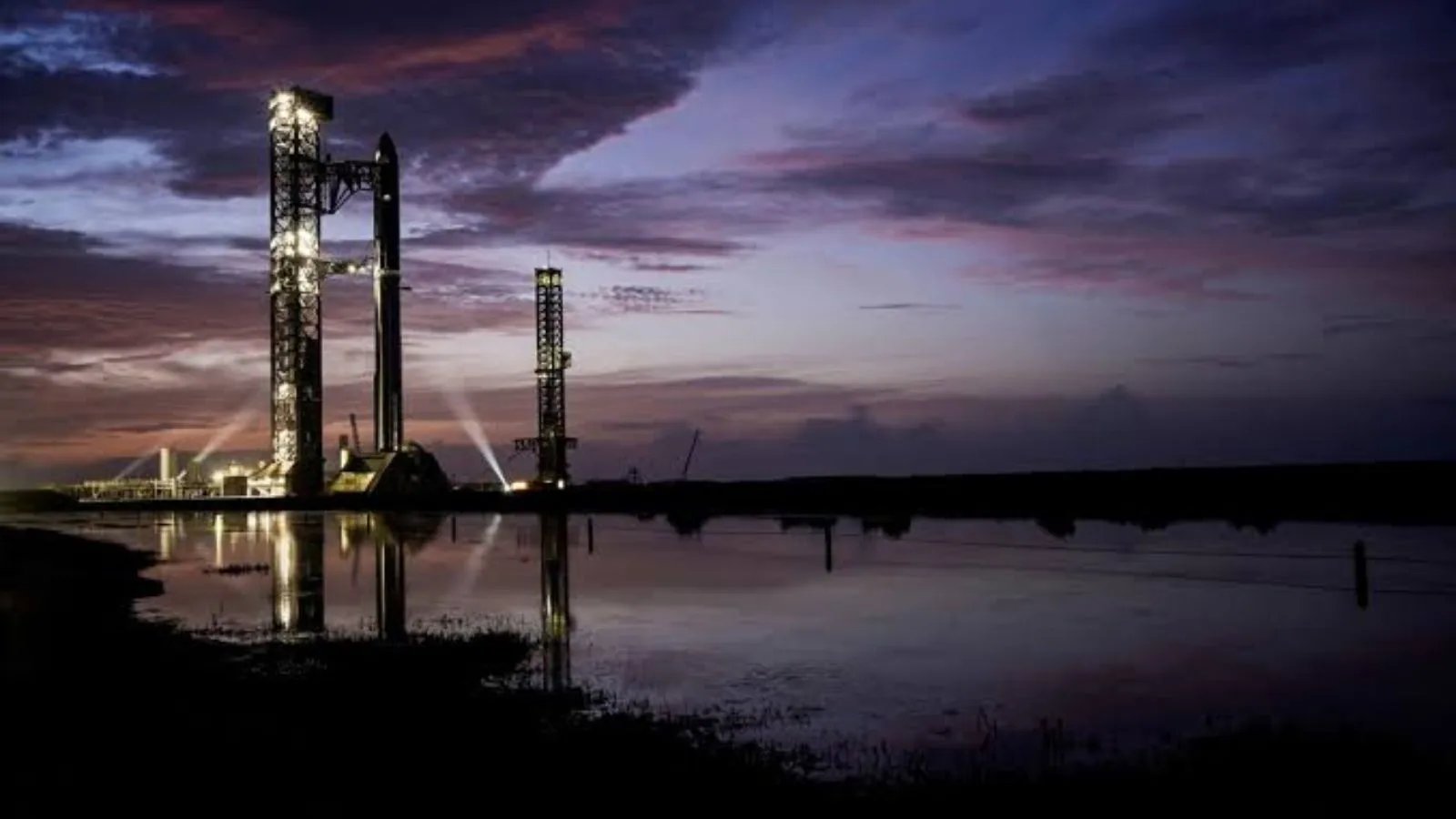
Flight 13 launched from SpaceX’s Starbase facility in South Texas on July 24. The mission followed the basic profile of earlier Starship test flights, with the Super Heavy booster returning to the Gulf of Mexico while Ship travelled into suborbital space before splashing down in the Indian Ocean.
The mission also marked a significant step towards SpaceX’s plans for its next-generation Starlink network. During the flight, Ship deployed 20 functional Starlink V3 satellites.
The satellites were placed into suborbital space and returned to Earth later that day, but the test demonstrated Starship’s ability to deploy the larger next-generation spacecraft.
Story continues below this ad
SpaceX ultimately wants Starship to launch a much larger fleet of Starlink V3 satellites, with plans for a constellation of around 1,00,000 spacecraft.
The company is also preparing for Starship’s 14th test flight, with Musk recently saying SpaceX hopes to launch before the end of August. The next mission is expected to carry operational Starlink V3 satellites into orbit and could include an attempt to catch Ship with the launch tower.
While the recovery of Flight 13’s Ship may fail, the data and imagery collected from the stranded spacecraft could still help SpaceX improve Starship’s heat shield, engines and future recovery operations.