

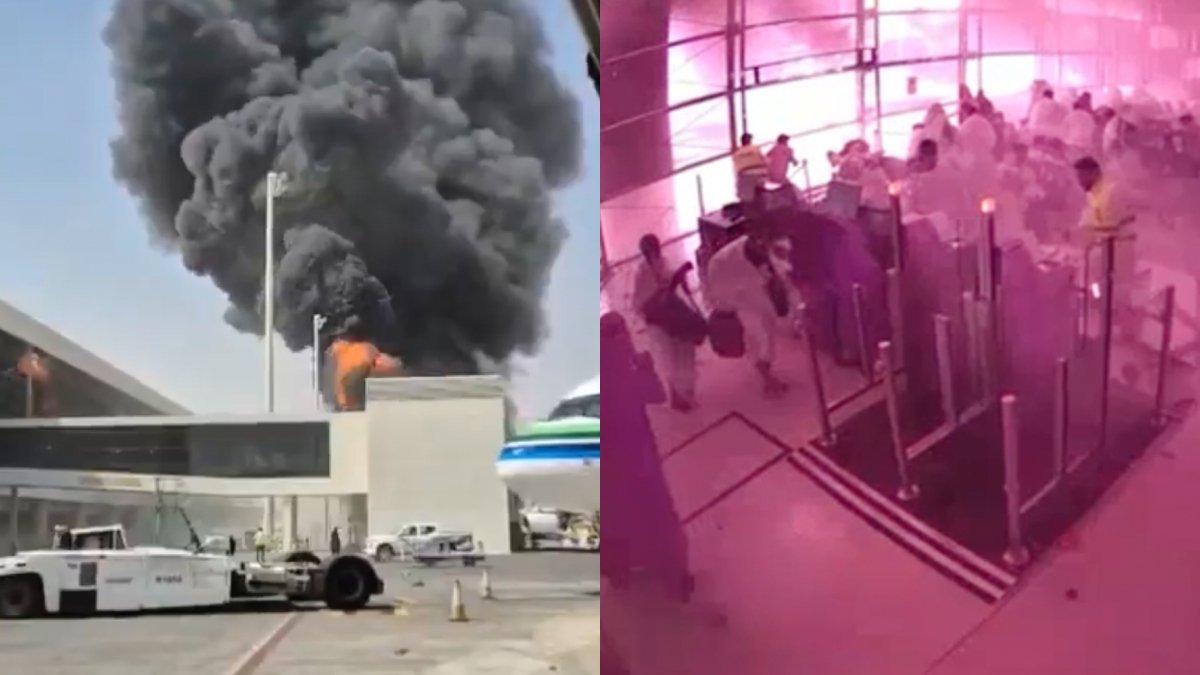

Saudi Arabia’s King Khalid International Airport in Riyadh will remain closed until October 17 following a series of deadly attacks by Yemen’s Iran-backed Houthi rebels that disrupted air travel and raised security concerns.
A Notice to Air Missions (NOTAM), an official aviation alert informing pilots and airlines about flight restrictions, issued on Monday said the airport would remain closed until 2100 GMT on October 17. The extension is expected to force airlines to continue cancelling or rescheduling flights to the Saudi capital as authorities assess the security situation.
Saudi Arabia’s civil aviation authority said airport operations had been suspended “to allow for the completion of procedures to ensure the safety and operational readiness of the airport’s facilities”.
King Khalid International Airport is Saudi Arabia’s second-busiest airport after Jeddah and a major gateway for international travellers. Its prolonged closure has disrupted passenger journeys and prompted airlines to reassess routes across the region.
Saudis turn to US for more help
Saudi Arabia is seeking a more direct role for the United States in its campaign against the Houthi rebels in Yemen.
Washington has so far provided intelligence-sharing support, target identification and operational planning for the Saudi-led offensive but has refrained from launching direct strikes against the Houthis.
However, greater US military involvement could prompt the rebels to target shipping through the Bab el-Mandeb Strait, a strategic waterway at the southern entrance to the Red Sea near Yemen. Any disruption there could further threaten global trade and oil shipments from the Persian Gulf.
The movement of Middle Eastern oil has already faced significant challenges amid Iranian efforts to restrict traffic through the Strait of Hormuz, a critical shipping route that handled around one-fifth of global oil flows before the US-Iran war began.
Probe on to ascertain how defence systems failed
Saudi Arabia has launched an investigation into how its air defence systems failed to intercept a barrage of missiles and drones launched by Iran-backed Houthi rebels, including an attack on Riyadh airport that killed at least 13 people and injured more than 300, according to two regional officials.
The officials, who spoke on condition of anonymity because they were not authorised to comment publicly, said preliminary findings indicated that the Houthis had first deployed multiple drones before launching a combination of cruise and ballistic missiles towards Riyadh’s King Khalid International Airport.
The rebels possess ballistic missiles and advanced systems equipped with warheads capable of changing direction during flight, posing challenges for Patriot interceptors and other air defence systems deployed by Saudi Arabia.
One official said investigators were also examining why the country’s air defences failed to issue an earlier warning before the projectiles travelled more than 1,000 kilometres (620 miles) to reach the Saudi capital.
The attack, one of several Houthi strikes targeting Saudi airports since last week, has exposed potential vulnerabilities in the kingdom’s air defence network and raised concerns about a dangerous escalation in a regional conflict that began more than seven months ago, when the United States and Israel launched their war against Iran.
The Saudi-led coalition said on Monday that it had intercepted and destroyed two ballistic missiles launched by Yemen’s Houthi rebels towards Riyadh.
At least three explosions were heard in the Saudi capital on Monday night. There was no immediate claim of responsibility, while Civil Defence officials later said the danger had passed.
Earlier in the day, Saudi state-run media reported that the country’s military was responding to a fresh attack involving drones and cruise missiles, but did not provide further details.
Also Read:
Riyadh airport struck again, a day after Houthis attack killed 13, injured over 300