

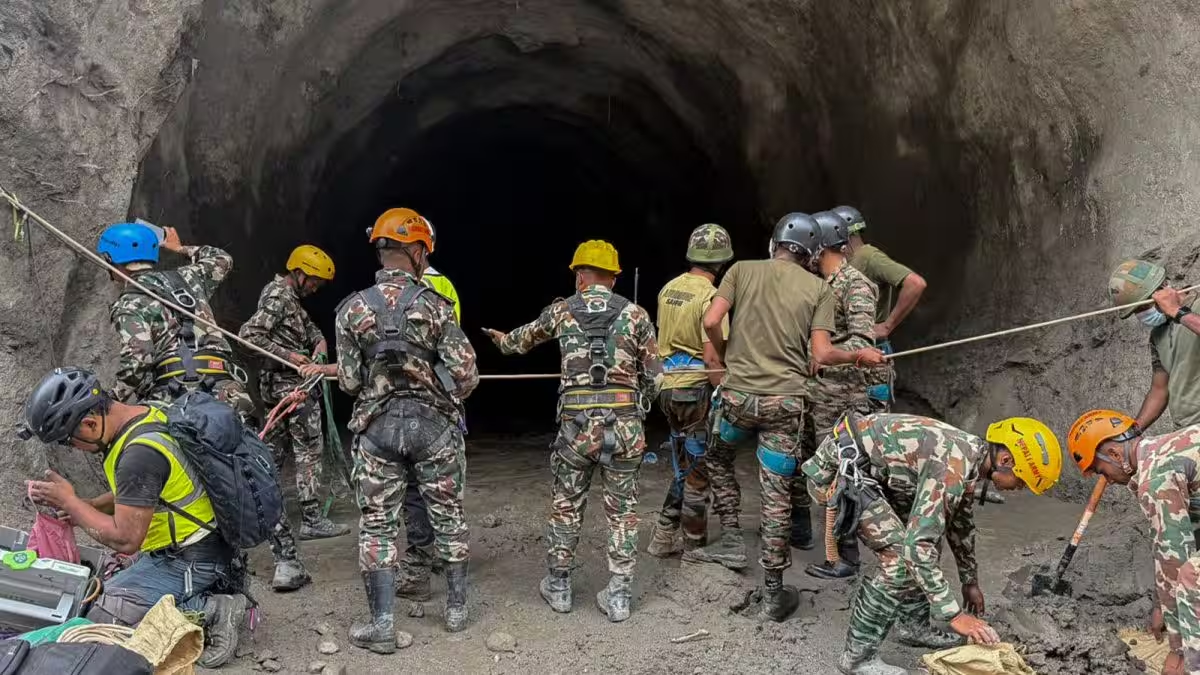

Nepal’s floods could trigger over $132 million in commercial insurance losses, with hydropower projects accounting for most claims
Nepal’s devastating floods could leave insurers facing commercial losses of more than 20 billion Nepali rupees (around $132.3 million), with hydropower projects accounting for most of the damage — even before claims related to deaths, injuries and workers’ compensation are counted.
The estimate, provided by a senior executive at one of Nepal’s leading insurers, underlines the scale of the financial fallout from last week’s disaster in the Himalayan nation.
The floods and landslides struck Nepal’s mountainous border region with China’s Tibet, causing extensive damage to hydropower facilities, roads, bridges and other infrastructure. More than 1,200 people have died and many others remain missing, Nepal’s disaster authority chief told Reuters on Friday.
The commercial insurance losses are separate from claims that could arise from deaths, personal accidents and workplace injuries. Those claims are expected to be assessed as authorities continue verifying casualties and missing people, particularly in areas that remain difficult to access.
Hydropower projects bear the brunt
Eleven Nepali hydropower projects are located in the affected region, with several covered by standard commercial insurance policies that are still being assessed, Toton Chakraborty, CEO of Oriental Insurance Company Nepal, told Reuters.
“Hydropower projects along the affected river corridor have suffered the largest damage,” Chakraborty said.
 More from Business
In many cases, access roads and above-ground infrastructure have been washed away, further complicating efforts to inspect and repair the projects.
Rasuwagadhi, Upper Trishuli-3A, Chilime and Devighat are among the hydropower projects directly affected by the floods. Assessments at five other projects are still under way, Chakraborty said.
The final insurance bill is likely to become clearer only after detailed surveys establish the extent of physical damage.
Claims already worth $171 million
Data from the Nepal Insurance Authority showed that it had received 583 flood-related claims worth 25.87 billion Nepali rupees ($171.13 million) as of August 31.
But the figure does not necessarily represent the final amount insurers will have to pay.
Chakraborty said the claims data largely reflects insured exposure, with final liabilities dependent on detailed assessments of the damage.
The distinction is important because insurance policies can cover different categories of losses. Some commercial policies covering hydropower projects may also compensate developers for lost revenue if damage delays the start of commercial operations.
That means the insurance burden could increase if repairs take longer and projects are unable to begin generating electricity as scheduled.
The damage to roads and other infrastructure could make such delays more likely, particularly in remote mountainous areas.
$5 billion reconstruction bill looms
The potential $132 million-plus commercial insurance loss is only a small part of the wider economic cost facing Nepal.
The country’s disaster authority has estimated total economic losses from the floods at around $2.56 billion, according to Reuters.
Earlier, Nepalese billionaire Binod Chaudhary warned that the eventual reconstruction bill could reach $5 billion.
Chaudhary, chairman of Chaudhary Group and Nepal’s only billionaire, told Bloomberg TV that he would not be surprised if rebuilding the country’s infrastructure reached that figure.
He also stressed the challenge posed by Nepal’s geography, with large parts of the affected region mountainous and difficult to access.
Nepal Finance Minister Swarnim Wagle separately said the country could face losses of at least a few billion dollars once the damage was fully quantified.
The floods swept away or damaged villages, bridges, roads and power infrastructure. The destruction of transport links has also made it harder for rescue teams to reach some of the worst-hit areas.
The $5 billion figure remains an estimate rather than an official government reconstruction assessment. However, it illustrates the scale of the financial challenge Nepal could face once the immediate rescue effort gives way to rebuilding.
Death and injury claims still to come
For insurers, the commercial property and infrastructure losses are only one component of the potential bill.
Life insurance, personal accident and workers’ compensation claims are expected separately as authorities establish the final death toll and determine how many people remain missing.
Those claims could take time to emerge because many of the affected areas are remote and access has been disrupted by destroyed roads and bridges.
The disaster has already killed more than 1,200 people, according to Nepal’s disaster authority chief, with many others still missing.
This means the ultimate insurance impact cannot yet be measured by commercial property claims alone.