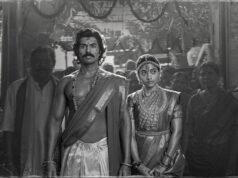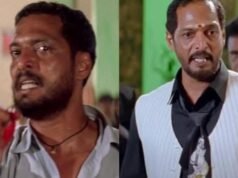

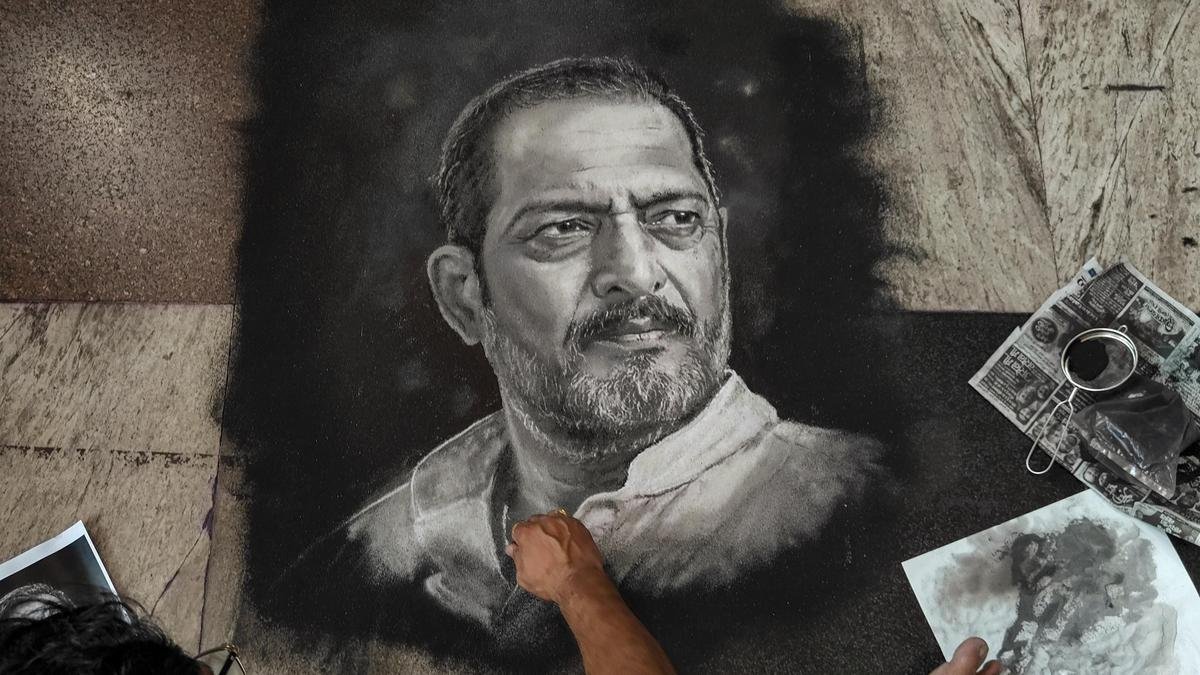

A tempestuous maestro who stripped acting of its artifice, Nana Patekar fell silent on Thursday (October 8, 2026) after a sudden cardiac arrest. From the terrifying vulnerability of Parinda (1989) and primal scream against communalism in Krantiveer (1994) to the tragic grandeur of Natsamrat (2016), he harnessed a staccato rage and colloquial realism that redefined the contours of the screen hero.
Nana Patekar passes away
Before Patekar’s rise to prominence in the late 1980s, anger in commercial Indian cinema was largely stylised and structured around the angry young man trope. Patekar introduced a visceral, unpredictable, and highly localised form of rage, something the man on the street could identify with. Over a career lasting more than four decades, his distinctive style bridged parallel art-house movements and mainstream commercial cinema.
Patekar actively resisted Bollywood’s assembly-line casting, refused to become a slave to fame, and chose characters that defied easy categorisation. The three-time National Award and four-time Filmfare winner could discern which characters would stay with audiences and create a meaningful intervention in times. If in the rasping Krantiveer (1994) he exposed the hypocrisy of demagogues, then in the deeply philosophical Prahaar (1991), a film he also directed, he redefined nationalism. “Borders do not define it, but the moral discipline and collective empathy of a civilian society, he once told this journalist. “To me, a villain also has a bright side and a hero also has grey shades,” he said, and he loved to explore the creative estuary where the heroic and dark shades intertwined. It meant that while the films aged, the characters remained relevant.

Perhaps that’s why his characters who speak up to the system and those who work for it became equally popular at different stages of his career. In fact, his filmography mirrors a transition from defiance in the late 1980s and 1990s (Ankush, Prahaar, Wajood) to institutional exhaustion and pragmatism in the 2000s and beyond (Ab Tak Chhappan, Raajneeti, Apaharan). In his second spring, he chose Sankalp, his last collaboration with Prakash Jha, where his character, Maat Sab, drew comparisons to Chanakya and revolutionary leader Jayaprakash Narayan.
A generational talent, critics and audiences universally recognise that he could carry a flawed narrative on the strength of his magnetic screen presence and explosive dialogue delivery, and a generation of actors and filmmakers looked up to him as a disruptive force, an ultimate anti-escapism antidote who could break the class-mass barrier. Who can forget his furious rant capturing the grinding, repetitive exhaustion of an ordinary citizen’s daily life in Yeshwant, where he explains how a mosquito makes a man impotent. Or, for that matter, his blistering comment on bigotry in Krantiveer, where he points out the shared identity of human blood.
Born in a modest household in a village in Raigad district of Maharashtra on January 1, 1951, Patekar developed a love for visual and performing arts from his father, who ran a small textile business. After his father’s early demise, his mother became the pillar he could lean on. The family’s financial condition pushed Patekar to paint posters and billboards. His passion led him to JJ School of Arts, and he also became a popular face at inter-collegiate theatre events. Soon, theatre legend Vijaya Mehta discovered him and cast him in Hamidabai Chi Kothi and Purush, where he left audiences spellbound with his explosive intensity. Old-timers still get goosebumps talking about Patekar’s depiction of the tyrannical antagonist Gulab Rao in Purush. Years later, a new set of audiences got a whiff of Gulab when Patekar turned up as an obsessive husband in Agni-Sakshi (1996).
On stage, the versatile actor sharpened the rapid-fire cadence and structural discipline that would later define his cinematic career. It also shaped his personal life. He met his wife, Neelakanti Patekar, an accomplished actress herself.
After watching him perform a small role with conviction in Jabbar Patel’s Simhasan, actor Smita Patil pushed a reluctant Patekar into Hindi cinema with Muzaffar Ali’s Gaman (1978) and then Ravi Chopra’s Aaj Ki Aawaz (1984). Around the same time, he flirted with dark shades as a maniacal criminal in the Marathi thriller Maaficha Sakshidar, received international recognition for playing Nathuram Godse in a British television series on Lord Mountbatten, and collaborated with Mira Nair on the Oscar-nominated Salaam Bombay.
However, N. Chandra’s Ankush (1986) brought him to living rooms, impressing audiences with its depiction of an unemployed young man scarred by the realization that honesty is punished while corruption thrives. His portrayal of deeply cynical Ravi, hostile to authority but with a fiercely protective, well-intentioned soul searching for purpose, led Vidhu Vinod Chopra to cast him as the elder brother in Parinda, a role that eventually went to Jackie Shroff. However, it proved a blessing: as the psychotic underworld don Anna Seth, Patekar became a nationwide sensation. Subverting typical villain tropes, he gave menace a deeply vulnerable, pyrophobic, and fickle human face that won him his first National Film Award.
Before he could be bracketed, Patekar quickly shed his explosive, angry persona to deliver a masterfully poetic, whimsical and gentle performance as the Rainmaker in Amol Palekar’s Thoda Sa Roomani Ho Jayen (1990), proving he could fascinate audiences entirely through lyrical charm.

Even when his reputation for explosive anger in films like Angaar was at its acme, he demonstrated a capacity for quiet sensitivity. His performance as a deaf father in Sanjay Leela Bhansali’s Khamoshi: The Musical (1996) proved he could dominate a narrative entirely through silent expressions and sign language.
Throughout, the Padma Shri remained firmly rooted in Marathi theatre and cinema. In Natsamrat, his delivery of the iconic “Kuni ghar deta ka ghar?” (“Will someone give me a home?”) speech is one of the most powerful emotional sequences in contemporary Indian cinema. Patekar masterfully balanced the character’s dual sides: the eccentric, larger-than-life theatre persona who speaks in dramatic verses, and the fragile, aging father suffering from deep psychological betrayal. His portrayal of Dr. Prakash Baba Amte in The Real Hero (2014) remains one of his most understated, deeply empathetic performances. In mainstream cinema, Patekar never played second fiddle to a superstar. Facing off against superstars like Amitabh Bachchan, Rajinikanth and Shah Rukh Khan, he held his own with grit and charisma. From Mira Nair to Anees Bazmee, he collaborated with a varied range of filmmakers. From the politics of Prakash Jha to the poetics of Sanjay Leela Bhansali, Patekar moved fluently across contrasting cinematic landscapes. When he switched to comedy with Welcome, he inverted his signature traits to create one of the most enduring comedic transformations on screen.
Beyond the archlights, Patekar actively championed agrarian rights, secularism, and institutional transparency. Alongside fellow actor Makarand Anaspure, he co-founded the Naam Foundation, an NGO dedicated to supporting drought-hit farmers in Maharashtra. Whilst maintaining close friendships with politicians across the spectrum, he resisted political overtures from the ruling party and used his stance to critique systemic failures and hold elected officials accountable.
An active sportsman who excelled in rifle shooting, Patekar’s unforgiving physical schedule informed the mechanics of his craft. For Prahaar, he refused to fake the army experience and went through rigorous Territorial Army training. Similarly, his shooting-range experience, where he won medals in national events, showed in Sadhu Agashe’s icy gaze and focused aggression in Ab Tak Chhappan. At times, Patekar seemed to treat his famous monologues like an athletic sequence.
However, his acting methods sometimes blurred boundaries with his co-actors. Patekar was a central figure at the inception of India’s #MeToo movement when Tanushree Dutta accused him of sexually harassing and intimidating him on the sets of Horn Ok Please. He denied the allegations, and Mumbai Police found the evidence insufficient to prosecute or substantiate the claims, but the incident fractured his image. The tag of an erratic, hot-tempered individual, who didn’t suffer fools, originally viewed as a charming artistic quirk, was suddenly re-evaluated through a more critical lens.