

If it was foreign rule back in the days of the Raj and social ills always, it is now inflation, unemployment, civic distress and political arrogance. Its power lies in its irreverence. In the lanes of the old city, amid drums, chants and crowds, no leader is above reproach and ridicule.
The festival is a barometer of the popular mood. So the reported last-minute disappearance of a ‘Feku’ badgya and the BJP-ruled Nagpur Municipal Corporation’s Rs 2 crore attempt to recast the festival as a global cultural showcase is being seen as an attempt to desecrate its soul. Political patronage for a folk festival that traditionally challenged power is a mockery of its core idea.
While other badgyas attacked unemployment, paper leaks, smart meters, drugs and civic problems, a ‘Feku’ badgya — an obvious reference to you know who — was dropped at the last moment under pressure from local BJP leaders, and replaced by one targeting Pakistan prime minister Shehbaz Sharif.
****
The Bapat effect
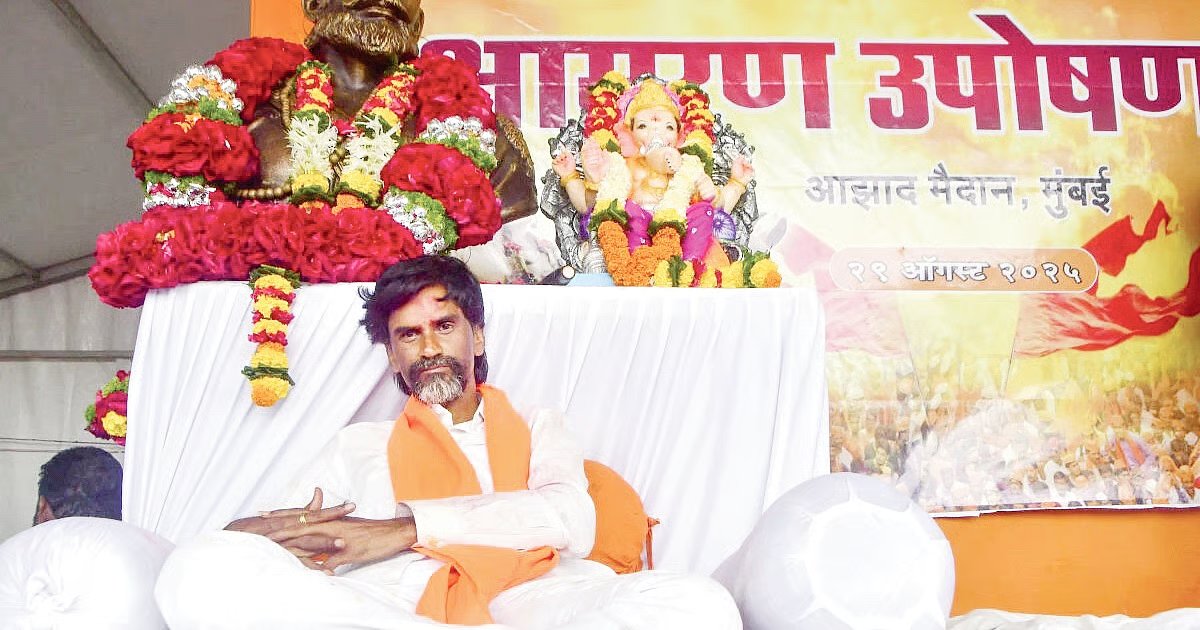
Tens of Ganesha Mandals across Maharashtra have voluntarily given up DJs and high-decibel sound systems as the ten-day celebrations got off to a colourful start on 14 September.
Nagpur’s other unique symbol of resistance — the radical Chandrashekhar Azad Ganesh Mandal, set up seven decades ago by the late freedom fighter Gulab Puri and now headed by his son Chandrashekhar Puri — made up for the Marbat miss.
Austere in form and sharp in tone, this year’s Ganesha pandal decoration is on the Jantar Mantar protests, the sugar price spike and the ethanol controversy, inflation and unemployment, privatisation of education and other such concerns that big media has no bandwidth for. It does not spare the prime minister either. Ganesha-bhakts are loving it.
Jaideep Hardikar is a senior Nagpur-based journalist and author of Ramrao: The Story of India’s Farm Crisis. More by him here