

New air routes via China will offer respite for airlines reeling from the closure of Pakistan airspace
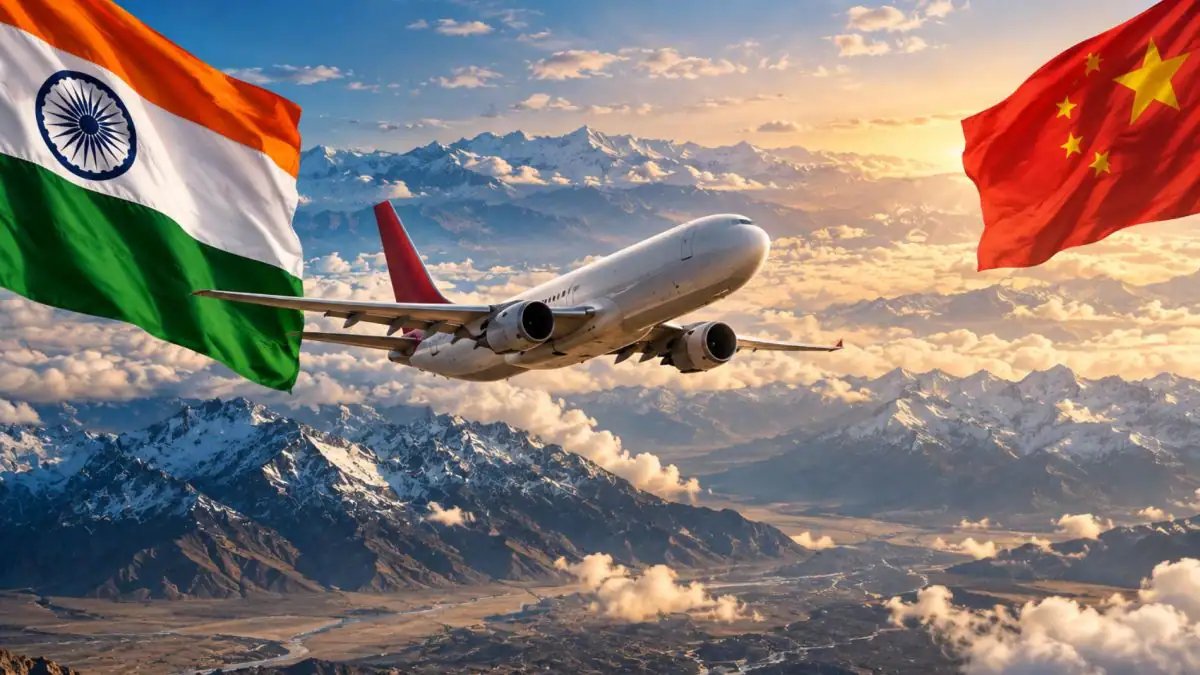
Early this week, the Minister of Civil Aviation made a statement on how India is working closely with China to explore possibilities of allowing Indian carriers to overfly Hotan, which will shorten the route profile of flights to North America and open up options to fly to Central Asia. This is not the first time that a statement to this effect has come from a minister and shows that the government is taking efforts to ease the situation which the airlines are facing after the closure of Pakistani airspace for Indian airlines at the end of April 2025.
The new route, if and when approved, will see flights fly northwards from Delhi over Leh and into China over Hotan, onwards towards North America or Central Asia. Hotan already has an airport and air routes which connect it across geographies, including one regularly taken by the Gulf carriers overflying Gilgit in Pakistan, occupied Kashmir, and into China.
Why is the connection important?
With the closure of Pakistani airspace, Indian carriers, especially Air India, have to navigate flying over the Northeast and into China before flying north and crossing over towards North America. Valuable hours of flying and fuel will be saved. IndiGo had to suspend operations to Tashkent and Almaty from Delhi due to the airspace restrictions. With the West Asia war, IndiGo had to pull out from the Tashkent and Almaty markets completely, where it had started flights from Mumbai. Hotan is the obvious shortcut on the map and also one of the hardest places in China to get permission to fly over. The proposed corridor would have Indian flights enter Chinese airspace via Leh and then head west towards Central Asia.
 More from Business
Airway addition is a process
Contrary to belief, there are airways with unique names (a combination of alphabet and numbers) and way points which create a grid and help aircraft navigate. To form a new airway, the airspace planners identify a structural need, like avoiding airspace congestion, starting a new runway, shortening flight times or bypassing hazardous areas or no-fly zones. This progresses to defining waypoints, which help with establishing the path. This coincides with agreeing on flight levels to ensure lateral separation from existing airways, military restricted areas and terrain. Computer simulations and safety assessments complete the process.
This is then shared with airlines, military branches, and neighbouring countries before proceeding to the International Civil Aviation Organisation (ICAO), which centrally manages airway designators to prevent duplication. The alphanumeric code is then assigned. Changes to global airspace are synchronized via the Aeronautical Information Regulation and Control cycle, which occurs every four weeks. The new route is officially published as part of Aeronautical Information Publication or AIP and then updated by Flight Managemetn Systems for database updates in aircraft so that autopilot functions recognise the new route.
Hotan via South Block
The approvals for a new route have to come from the Chinese government. The route would overfly the area where Indian and Chinese forces had skirmishes in 2020 and led to a diplomatic chill, which is normalising only recently, with even flights cut off between the two countries for long. While the issue of air routes remains a domain of civil aviation, diplomacy is what gets such issues resolved. The flight to Hotan has to go via the South Block, the traditional office of the Ministry of External Affairs.
The talks sit inside a larger sequence the MEA has built since 2024. The border, then leaders’ meetings, then flights and visas. A corridor over Hotan fits as the next step, not a standalone ask. Beijing rarely gives something for nothing. It could seek more flight frequencies for Chinese airlines, easier visas for Chinese professionals, or a softer line on Chinese investment. These are possibilities rather than reported demands, and none has been made public. Beijing will weigh how a corridor looks to Islamabad, and New Delhi will weigh how dependence on Chinese goodwill looks at home. Any deal may be framed modestly as a technical arrangement between air navigation authorities.
Tail Note
The talks have run for nearly a year now and also coincide with the diplomatic relations improving between the two countries, including President Xi’s visit to India for the BRICS summit last month. At first glance this looks like a technical request about air corridors. In practice it tests how far India-China relations have recovered since the 2020 border clashes. China has never had a reason to grant India a favour like this. A decision to open some of its most sensitive western airspace to Indian airlines would say a great deal about where the relationship now stands, especially when China has Pakistan as its ally and the opening up of a new route over Hotan is needed to bypass the restrictions put in by Pakistan.
That is why the decision sits with Beijing’s security and political leadership, not its aviation regulator, and why New Delhi has handed the file to its diplomats. The biggest obstacle may not be in Beijing at all but in Islamabad. China’s closest partner in the region is the country whose closure created this problem. The China-Pakistan Economic Corridor runs from Kashgar in Xinjiang to Gwadar, close to the airspace India wants to use. A corridor for Indian airlines would blunt one of Pakistan’s few remaining levers against India. Beijing will have to judge whether helping New Delhi on this is worth friction with Islamabad. A narrow or quiet arrangement is more likely than a broad, public one.
The Hotan corridor would be a larger step in co-operation. Restoring flights between the two countries is a return to normal. Opening sensitive airspace for India’s routes to third countries would be a new form of cooperation.
Ameya Joshi is an aviation analyst.