

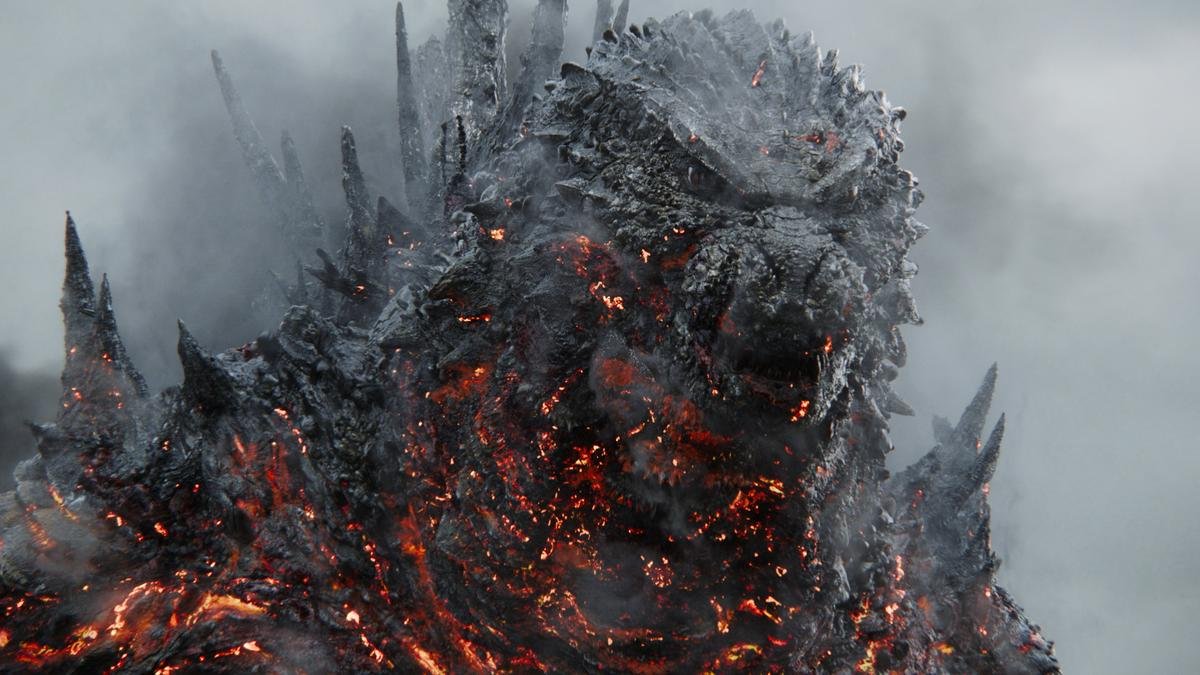

If you’ve ever happened to share a conversation with me for longer than ten minutes, chances are Godzilla has come up at least once. My rabid preoccupation with the King of the Monsters is usually met with bewilderment at best and a barely concealed scoff at worst. Fair enough. What business does a grown man have being so emotionally invested in a giant radioactive lizard? I wish I could quantify what makes this creature inspire such an extraordinary cocktail of ecstasy, terror and outright reverence in me. It is the closest I have come to reckoning with a force beyond human comprehension. Perhaps I do believe in God after all. And it seems Takashi Yamazaki is among its most devoted acolytes.

A direct sequel to 2023’s Oscar-winning Godzilla Minus One, Minus Zero picks up in 1949, two years after Godzilla’s devastating attack on Ginza. Former kamikaze pilot Kōichi Shikishima (Ryunosuke Kamiki), now married to Noriko (Minami Hamabe), is attempting to build a semblance of domestic normalcy with their adopted daughter, Akiko. Unfortunately, Japan’s recovery is interrupted by Ghidorah, a monstrous new extraterrestrial threat. Yamazaki, returning as writer-director and visual effects supervisor, has also made the first Japanese production filmed for IMAX; the spectacle makes its predecessor look almost quaint by comparison.
Godzilla Minus Zero (Japanese)
Director: Takashi Yamazaki
Cast: Ryunosuke Kamiki, Minami Hamabe, Hidetaka Yoshioka, Yuki Yamada, Kuranosuke Sasaki, Sakura Ando, Miou Tanaka, Min Tanaka, Masami Nagasawa, and Jun Kunimura
Runtime: 135 minutes
Storyline: The Shikishima family faces an all-new threat as Godzilla returns to wreak havoc
Minus One has been the only permanent fixture in my Letterboxd Top Four. Its extraordinary thematic depth, resourcefulness with a comparatively minuscule budget, astonishing sense of scale, emotional devastation and thunderous sound design made it an impossibly accomplished piece of filmmaking. It is not merely an exemplary Godzilla movie, but one of my favourite films ever. Consequently, the prospect of Yamazaki returning with the same filmmaking team, a substantially bigger canvas and an opportunity to expand upon that achievement had me frothing at the mouth.
So, is Minus Zero as perfect? The short answer is no. Its second act is often bogged down in exposition and competing character arcs, and the human drama lacks some of the narrative oomph that made its predecessor so effective. But, for almost everything Minus One accomplished, this film finds a way to go bigger, bolder and considerably more grotesque. Yamazaki continues to expand what this franchise can accommodate without sacrificing its essential appeal. There is something so delightfully old-fashioned (Spielbergian, even) about his approach to blockbuster filmmaking — his grandest spectacles are at once exercises in technological mythmaking and propelled by recognisable human anxieties.

The Shikishima family remains the emotional core, although their circumstances have changed considerably. Noriko and Kōichi are now married, and the latter’s reluctance to return to combat is informed by the very real possibility of losing the family he has fought so hard to preserve. Kamiki and Hamabe bring tremendous tenderness to these characters, even when the screenplay struggles to articulate their individual trajectories with the same clarity as before. Akiko, meanwhile, carries the psychological scars of the previous attack, while Hidetaka Yoshioka returns as the eccentric Dr Noda, now heading the government’s Large-Scale Disaster Response Bureau. And having previously played one of Mothra’s twin fairies in 2004’s Godzilla: Final Wars, Masami Nagasawa’s meteorologist Makoto Aoyama is a welcome addition.

A still from ‘Godzilla Minus Zero’
| Photo Credit:
TOHO
I’m frankly running out of adjectives to even begin to describe the sheer scale of this thing. There were stretches of Minus Zero during which I genuinely forgot to breathe, and several moments when my mouth remained embarrassingly open for long enough to give Edvard Munch pause. The creatures are so enormous, their movements so convincingly weighted, that the human beings surrounding them are but puny insects caught in the planet-levelling cross-fire. Yet, Yamazaki still understands that scale is not simply a matter of making everything bigger, rather, establishing the terrifying relationship between the creature and the people forced to confront it. The camera remains insistently human-sized to experience the destruction from a perspective us lowly mortals cannot possibly comprehend or contain.
The franchise’s most recognisable antagonist, King Ghidorah, receives a suitably monstrous introduction. Initially resembling a vaguely Targaryen-adjacent dragon, the kaiju gradually evolves into its familiar three-headed, winged incarnation, eventually perching itself upon its new throne: the real-life Matsumoto Castle, as the city lies in ruins beneath its conquest. Yamazaki makes particularly inspired use of this transformation, turning the creature’s Pokemon evolution into a magnificently sinister coronation for the new king in town.

A still from ‘Godzilla Minus Zero’
| Photo Credit:
TOHO
Much of the terror reaches its apotheosis in the film’s extraordinary aerial sequence, a prolonged exercise in weaponised anxiety that had me gripping my armrests with deeply undignified enthusiasm. TheTop Gun-style aerial choreography is immaculate (Tom Cruise would need a career-defining midlife crisis to stand a chance against this thing), but Naoki Sato’s score is the sequence’s real secret weapon. Sato instinctively understands that a kaiju’s arrival should be felt before it is fully seen — the ominous, Wagnerian intensity of the Ghidorah motif ‘Eclipse’, gives the creature an almost operatic sense of unbridled malevolence, while ‘Narukami’, named after the ill-fated operation to destroy it, builds crippling tension with sadistic patience. The film’s extraordinary sound design is perhaps the first time I’ve understood why my phone periodically feels compelled to remind me that prolonged exposure to excessive volume could permanently damage my hearing. The earth-shattering bass and the monstrous percussion of these creatures colliding are most definitely a public health concern for anyone sitting too close to an IMAX speaker.

I had to physically restrain myself from performing what can only be described as a full-body religious convulsion when those deep-sea fish surfaced, lest the neighbouring audience mistake my enthusiasm for an impending seismic event. When Big G finally returns, the final confrontation between the two creatures is an astonishingly vicious spectacle of atomic breath, electrical discharges, torn flesh and regenerative body horror. There is also a noticeably Neon Genesis Evangelion-esque quality to the carnage (an impression made all the more delightful by Hideaki Anno’s cameo). The compositing is extraordinary, the creatures possess a startlingly tactile physicality, and even amid the most elaborate destruction, the action remains comprehensible. Godzilla also bleeds, and Yamazaki is considerably less keen in sparing us the anatomical particulars than previous installments.

A still from ‘Godzilla Minus Zero’
| Photo Credit:
TOHO
But the most interesting thing about Minus Zero is that its appetite for destruction is inseparable from its understanding of what destruction actually means. The original Godzilla and Minus One were, in their respective ways, films about the catastrophic legacy of war and the repulsive absurdity of nationalism. Here, Yamazaki moves further into the aftermath. Surviving an atomic explosion does not mean escaping its consequences. There are bodies to bury, radiation to endure, children to raise amid collective trauma and communities expected to resume living after witnessing things no human being should have to witness. The film’s harrowing images of Hiroshima, including the charred remains of its victims, strip away whatever comfortable distance the Monsterverse iterations of the franchise have otherwise provided.
One of the film’s most compelling ideas, and arguably the thesis statement for everything Yamazaki is attempting to say, finds its most fascinating expression in a new character: Dr. Kanji Murakami (Min Tanaka), a scientist whose life has been repeatedly and unimaginably blighted by the horrors of mass destruction. Having lost his wife and child in the 1945 Hiroshima bombing, Murakami subsequently witnesses Godzilla’s destruction of Ginza in 1947 before surviving Ghidorah’s attack on Matsumoto. Murakami’s experiences as a hibakusha, the Japanese term for atomic-bomb survivors, eventually metastasise into an especially macabre revenge fantasy. In a brief but utterly deranged dream sequence, his subconscious summons Godzilla to New York, to lay waste to the city. What follows is some of the film’s most stomach-churning imagery, as erstwhile New Yorkers have their flesh seared to the bone in tableaux that recall the unspeakable opening scenes from Grave of the Fireflies. A mushroom cloud blooms over the Big Apple, the Statue of Liberty lies demolished, and Godzilla surveys the carnage with unmistakable satisfaction. The fantasy of atomic retribution is as exhilarating as it is appalling, and it does feels like the film would rather not pretend those two reactions are mutually exclusive.

This, coupled with the United States government’s shameless attempts to cosplay as a benevolent benefactor while insidiously eyeing the military applications of these kaiju, places Minus Zero in fascinating conversation with its fellow Oscar-winning 2023 nuclear parable, Christopher Nolan’s Oppenheimer. Where Nolan’s self-flagellating portrait of the man who unleashed the atomic age found a remarkably receptive audience for its agonised examination of scientific guilt, Yamazaki’s sequel spits in the face of any moral discomfort the architects of the bomb felt by zeroing in on the unspeakable human wreckage their handiwork left behind.

A still from ‘Godzilla Minus Zero’
| Photo Credit:
TOHO
None of this, of course, absolves Imperial Japan of the innumerable atrocities it inflicted across Asia during the twentieth century. That historical guilt, and the country’s complicity in its own wartime devastation, formed much of the moral scaffolding of Minus One. But Minus Zero is equally unwilling to let America’s role in the nuclear age retreat into the comfortable grey area of historical inevitability. The only country ever to have deployed nuclear weapons in warfare has spent the decades since Hiroshima entangled in armed occupations and the sponsorship of neo-colonial violence across the globe, while the prospect of another nuclear catastrophe has become an increasingly disturbing feature of contemporary geopolitics. Yamazaki’s firm, anti-imperial rebuff to let either country’s atrocities disappear beneath the other’s is perhaps the film’s most incendiary statement.
I cannot pretend to be remotely objective about this franchise, nor do I particularly want to be. Minus Zero may not surpass the narrative perfection of Minus One, but it expands its world, deepens its historical anxieties and delivers some of the most exhilarating creature filmmaking I have ever witnessed. There is something genuinely miraculous and unspeakably moving about a character who has borne witness to seven decades of being reimagined without exhausting the possibilities of what it represents. Nothing else in cinema will ever (EVER) possess Godzilla’s capacity for reinvention, regeneration and sheer apocalyptic grandeur. Yamazaki can take his bow. The rest of us can get on our knees, lower our heads and pay obeisance to the King of the Monsters.
Godzilla Minus Zero is currently running in theatres