

Defence Minister Rajnath Singh highlights a sharp rise in defence spending, indigenous production and R&D as India pushes self-reliance in military manufacturing
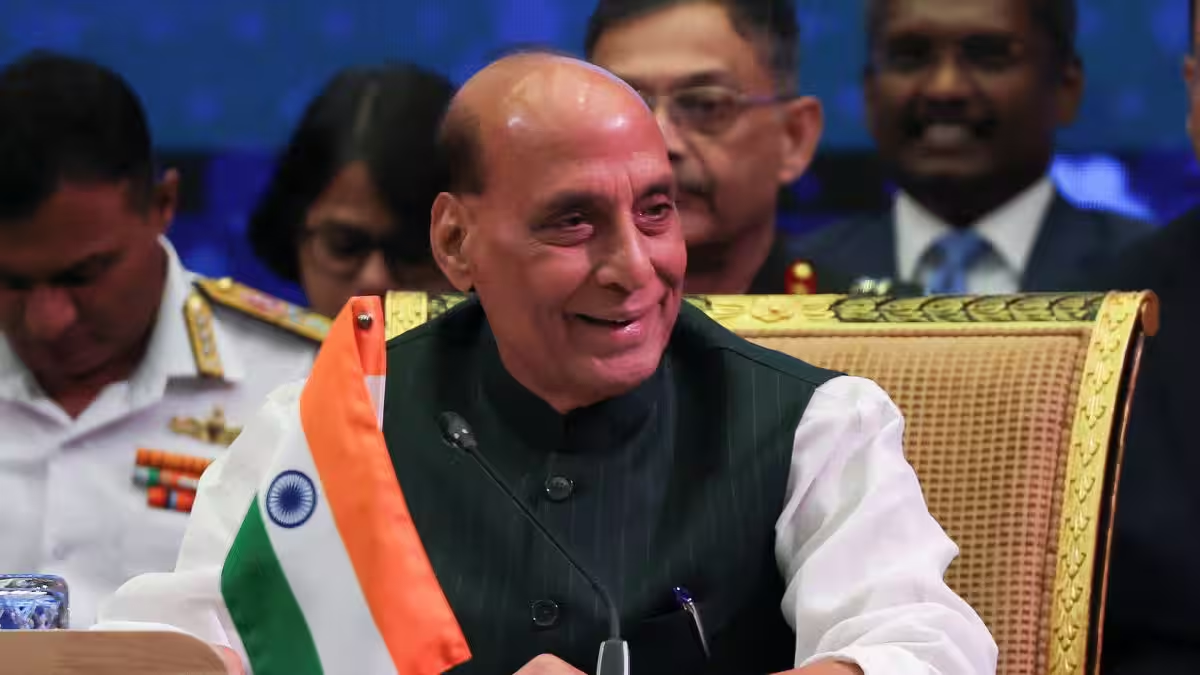
India’s defence budget has increased threefold to Rs 7.5 lakh crore from Rs 2.5 lakh crore, while indigenous defence production has grown fourfold, Defence Minister Rajnath Singh said on Thursday.
Speaking at DefCon 2026, Singh said the increase in defence spending was part of a broader shift towards self-reliance in defence manufacturing, technology and research.
“We have increased the defence budget to Rs 7.5 lakh crore, three times from Rs 2.5 lakh crore,” Singh said.
He said higher spending was being accompanied by greater domestic participation in defence production. Singh described self-reliance as an important element of national security and said India’s approach was increasingly focused on designing, developing and manufacturing defence equipment within the country.
The minister also highlighted the rise in defence research and development spending, which he said had crossed Rs 29,000 crore. Around 25 per cent of the allocation is directed towards industry and academia, with the government looking to increase their participation further.
Singh said 5,522 items had been placed on the positive indigenisation list, with the objective of eventually manufacturing these products in India. The initiative is aimed at reducing dependence on imports while creating opportunities for Indian companies across the defence supply chain.
 More from Business
He also pointed to a larger role for the private sector in defence technology. Singh said conventional missile technology would be transferred to private industry, potentially expanding the technologies available to domestic manufacturers.
India’s defence production has also increased significantly in recent years. Government data shows defence production reached a record Rs 1.78 lakh crore in 2025-26, while defence exports rose to Rs 38,424 crore.
Singh also outlined the technology challenges facing India’s armed forces. He said the country was working towards newer generations of military technology, including fifth- and sixth-generation fighter aircraft, while identifying terrain, technology and thinking as key elements of future warfare.
Cybersecurity, he said, had emerged as a new operational domain, making technological preparedness increasingly important alongside conventional military capabilities.
The minister also highlighted India’s development of advanced strategic systems, including the Agni-V missile with Multiple Independently Targetable Re-entry Vehicle technology.
Singh said India’s security strategy required a balance between diplomacy and military preparedness. He said the country would continue to engage diplomatically while strengthening its ability to respond to emerging security challenges.
The broader push, he said, was to build a defence ecosystem that could not only meet India’s own requirements but eventually cater to international demand as well.