

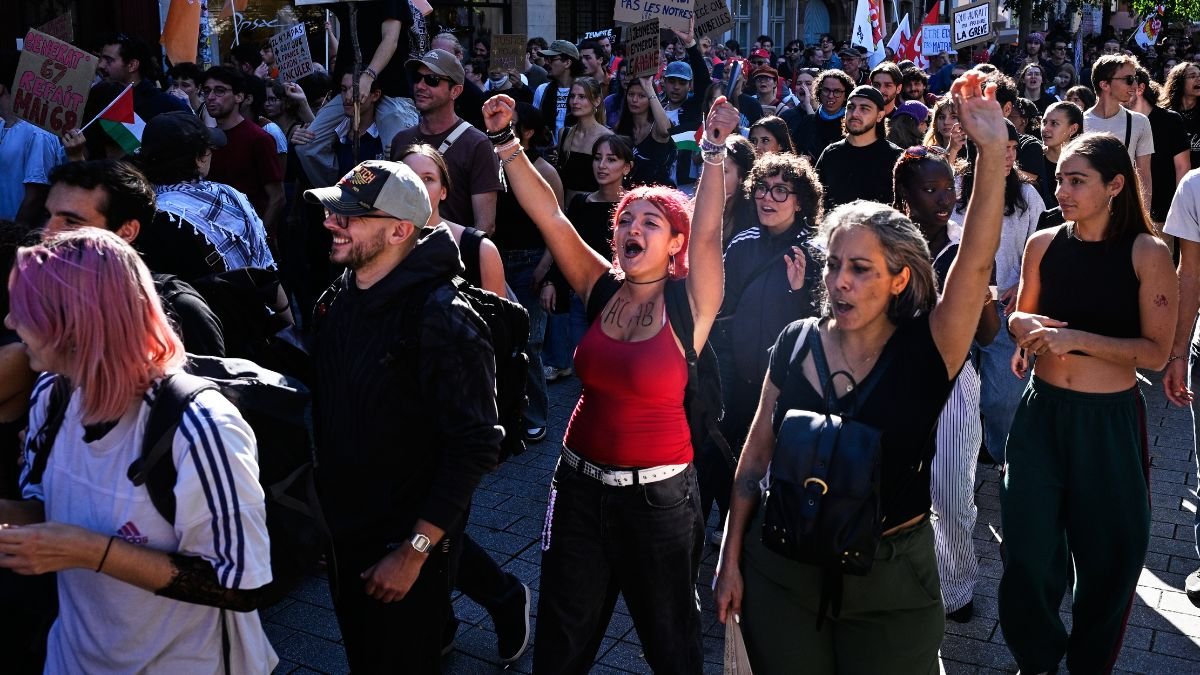

France is facing a major wave of student protests, with thousands of teenagers taking to the streets over what they say are poor conditions in schools, staff shortages and a lack of funding. What started with school blockades in the Paris region has quickly grown into a nationwide movement, drawing support from university students, teachers, parents, unions and other adults.
The scale of the protests has grown sharply. On Tuesday, October 6, the French Interior Ministry estimated that 266,000 people took part in demonstrations across the country, including 56,000 in Paris. Organisers put the figure much higher, at around 450,000 nationwide. Police used tear gas and clashes broke out in some cities, while 488 people were detained on Tuesday, according to the Interior Ministry.
Why are students protesting?
The movement began in the Paris region on September 21, when students started boycotting classes and blocking schools over teacher shortages and poor conditions. The protests then spread rapidly to other parts of France.
At the heart of the anger is a simple complaint: students say their schools do not have enough resources to give them the education they deserve.
They have pointed to teachers being absent without replacements, overcrowded classrooms, long and exhausting timetables and buildings that are in poor condition. Some students have described classrooms with damaged walls, water leaks and inadequate furniture. Others have complained about classrooms becoming extremely hot during heatwaves.
Students are also unhappy with Parcoursup, the online system used to manage admissions to higher education in France. They argue that the system needs to become simpler and more transparent.
What exactly do students want?
The demands go beyond simply asking for more money.
Students want more teachers and staff, better-maintained school buildings, less crowded classrooms and improvements to the daily school experience. They also want changes to the way students are guided towards higher education.
There is a strong inequality argument behind the protests as well. Students from poorer areas say they often study in schools with fewer resources and worse facilities than pupils in wealthier parts of the country.
That has turned the movement into a wider debate about equal access to education and whether a student’s future should depend on where they live or which school they attend.
Why has the movement become so big?
The protests have now moved well beyond high school students.
University students have joined demonstrations and blockades, while teachers’ unions and other public-sector unions have backed the movement. Parents and other adults have also taken part, with some saying they want to support teenagers and protect them amid concerns about police action.
Le Monde reported that around 40% of France’s public higher education institutions were disrupted on Tuesday. The demonstrations have also brought together students from very different backgrounds, including pupils from both poorer and more affluent schools.
For many young people, the anger is also connected to broader worries about their future, including inequality, the pressure of the education system and the difficulty of finding a secure place in adult life.
Why are police and protesters clashing?
Most of the demonstrations have been peaceful, but some have turned violent.
Small groups of protesters have thrown objects, started fires or clashed with police. Authorities say such incidents require intervention by riot police.
The government’s response has itself become a major source of anger. Police have used tear gas and other riot-control equipment, and protesters, parents and some political figures have accused officers of using excessive force against teenagers.
The issue became even more serious after several young people were badly injured during the unrest. A 15-year-old boy lost a hand in an incident involving a police stun grenade in the northern city of Lens. Investigations are continuing into exactly what happened.
Interior Minister Laurent Nuñez has defended the police response, saying officers have acted proportionately in almost all cases. Prime Minister Sébastien Lecornu has condemned what he calls “ultra violence” while saying allegations about police conduct should be investigated.
What has Donald Trump said about the protests?
US President Donald Trump has weighed in on the protests, blaming the unrest in France on what he described as “out of control mass migration” and Islam. In a post on October 6, Trump argued that the demonstrations were being driven by wider concerns over migration and what he described as the growing influence of Islam in France.
Why is this politically important?
The protests are happening at a sensitive moment for France.
President Emmanuel Macron is in the final phase of his presidency and cannot seek a third consecutive term. The unrest has therefore become an issue in the political debate ahead of the next presidential election.
At the same time, France is dealing with serious financial pressures and arguments over government spending. Students’ demands for greater investment in schools are therefore colliding with wider questions about where the government can find the money for public services.
The protests have also added to wider public frustration over inequality, poverty and the rising cost of living, including concerns about higher fuel prices.
That is why the movement is now about more than classrooms. It has become a test of how the French government responds when a generation of young people says it feels ignored.
What is the French government doing?
The government has tried to respond while also taking a tough line against violence.
The Education Ministry opened an anonymous online platform where students can describe problems in their schools and suggest changes. The government has also promised to work on several of the students’ demands.
Prime Minister Sébastien Lecornu has ordered work on the issues raised by students and said the government would examine school conditions and the Parcoursup system. He has also announced temporary suspension of classes at high schools to allow headteachers and students to discuss their concerns through what he called a period of “internal democracy”.
But the government’s response has not satisfied student groups, who say they want concrete changes rather than promises.
What happens next?
The protests are likely to remain a major issue as students, teachers, parents and unions push the government for action.
The movement has already lasted for several weeks and expanded from school blockades in the Paris region into a nationwide campaign. Tuesday’s demonstrations showed just how large it has become, with hundreds of thousands taking part according to official figures.
The big question now is whether the government can address the problems inside French schools while preventing the protests from becoming more violent.
For the students themselves, the message is fairly straightforward: they want better schools, more resources, fairer opportunities and a greater say in decisions that will shape their future.
(With inputs from AP)
ALSO READ:
BAPS France denies asking Eiffel Tower to exclude female staff after probe finds no explicit request