
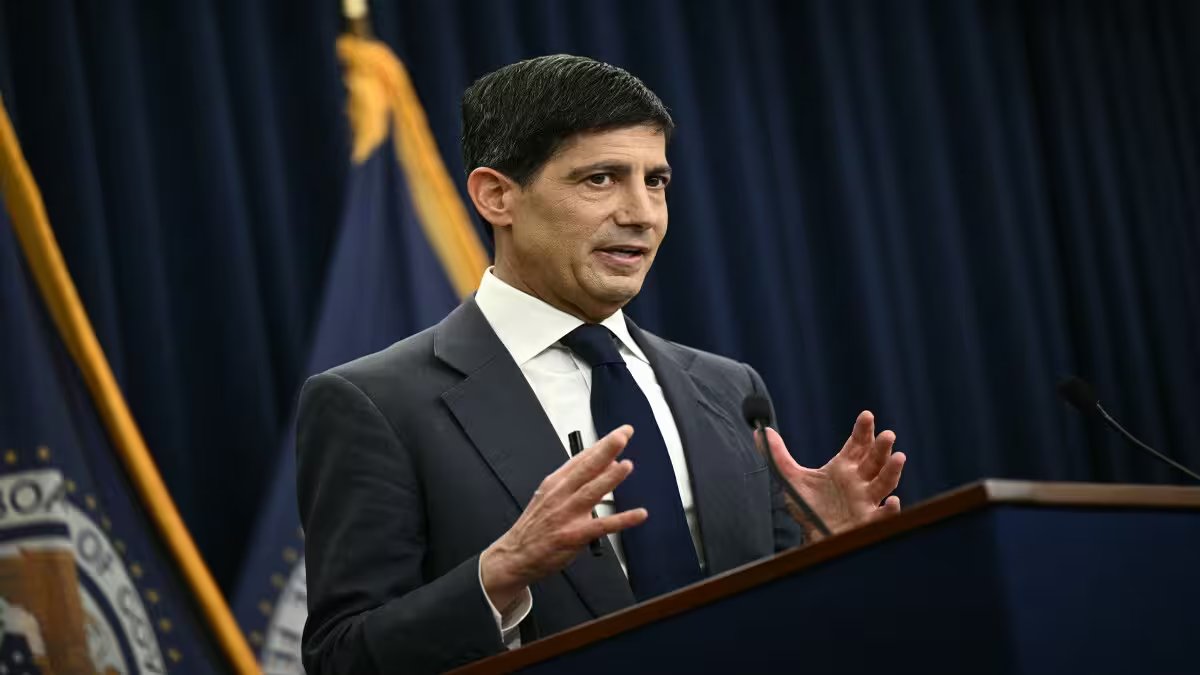

Kevin Warsh faces a difficult first FOMC decision as pressure for lower rates from Donald Trump collides with sticky inflation, crude oil above $100 a barrel and 10-year US Treasury yields at levels last seen in 2007.
Kevin Warsh, the newly appointed governor of the US Federal Reserve, must be breathing heavily today, as he is all set to walk a tightrope as he will announce the Federal Open Market Committee decision tonight. Warsh, who was allegedly installed by US President Trump after Powell to bring down the interest rates, takes charge of the Fed at a particularly difficult moment.
Trump and Powell’s relationship was marred by innumerable conflicts over the pace and extent of interest-rate cuts and the pressure on the new Fed Chief to deliver lower borrowing costs has been anything but subtle.
On one side, Warsh faces mounting pressure from Trump to bring interest rates down to an all-time low – a demand Trump has been making from long time.
On another side, there are spiking bond yields and a slow and increasingly unconvincing disinflation trajectory the US economy is grappling with. And that is exactly why the ongoing FOMC meeting stands so consequential not only for the US economy but for the larger part of the world.
The US Fed is likely to hike interest rates for the first time in the last three years. The last interest rate increase came in 2023. But the timing of the meeting can’t get more complicated than this – when inflation is hovering above the 2 per cent target, financial conditions are tightening through the bond market, and there is a fresh surge in crude oil prices.
 More from Business
Oil prices have bounced back in three-figure territory, riding on the back of renewed tensions in West Asia. The escalation led by the Houthis has disrupted the critical energy routes, including the East-West pipeline, of Saudi, while choking the Bab-el-Mandeb Strait has added another layer of uncertainty to the movement of energy and goods out of the region.
Brent crude was hovering around $103 per barrel, and WTI was around $107 per barrel on Wednesday. And then comes the bond market, perhaps the biggest pain point for policymakers right now. The 10-year US Treasury yield surpassed the level seen in 2007, hitting around 5.02 per cent after remaining above the 5 per cent mark since Monday.
That matters because Treasury yields are not just numbers flashing on a trader’s screen. They feed directly into borrowing costs across the US economy—from mortgages to corporate debt—and can tighten financial conditions even without an aggressive move in the Fed’s policy rate.
So Warsh enters his first major FOMC decision with a difficult balancing act: respond to an inflation problem that has not disappeared while navigating a bond market that is already demanding higher returns, an oil market that has turned inflationary again and a president who wants borrowing costs substantially lower.
The question tonight, therefore, may not simply be whether the Fed hikes rates.
The bigger question is, what does Kevin Warsh say about what comes next?
The rate announcement itself may not be the only event that matters. Investors will closely examine Warsh’s press conference and the Fed’s updated economic projections for clues about the future path of interest rates. The June projections had shown policymakers divided over the direction of rates. Since then, support for a rate increase has strengthened, but uncertainty remains over how many further hikes could follow.
That leaves Warsh with a particularly important communication challenge: the Fed needs to explain not only why it is changing rates but also how it views the path ahead. For global investors, the distinction between a one-off rate increase and the beginning of a broader tightening cycle could have significant implications for Treasury yields, the US dollar, equity markets and borrowing costs worldwide.
With inflation still above target, oil prices above $100 and long-term Treasury yields at elevated levels, the latest FOMC decision is therefore likely to be judged as much by Warsh’s guidance on what comes next as by the rate move itself.