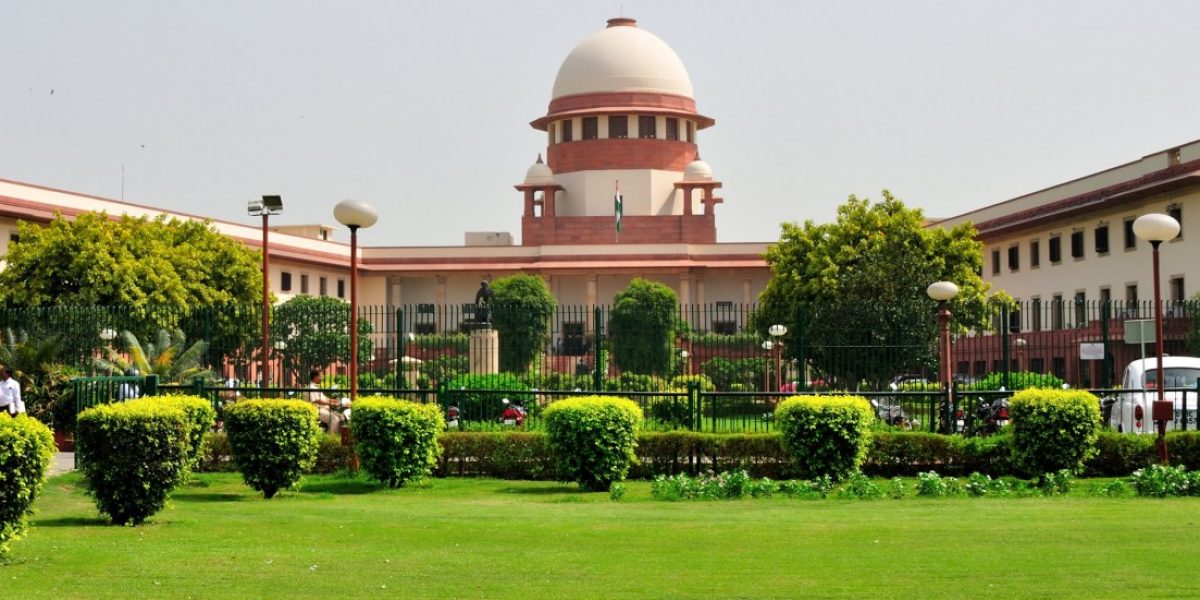

On Thursday, the Supreme Court made a significant intervention in the growing institutional impasse between the West Bengal administration and the Enforcement Directorate (ED). After the Kolkata Police raided the offices of political consulting firm I-PAC, a bench made up of Justices Prashant Kumar Mishra and Vipul Pancholi halted all criminal proceedings and investigations against ED officers. The court issued a harsh warning, stating that the alleged state apparatus obstruction of a central agency is a “very serious issue” that, if ignored, might result in a “situation of lawlessness.”
TMC: “A Threat to Cooperative Federalism”
The ED’s operations have been described by the Trinamool Congress (TMC) as a politically motivated attempt to “steal” internal election strategy prior to the assembly polls. Kalyan Banerjee, a senior counsel and TMC MP, contended that the Supreme Court’s stay is merely a temporary solution, citing the court’s criticism about the raids’ timing.
Interference in Elections:
Banerjee emphasized that the court recognized that the ED’s meddling in a political party’s affairs prior to an election is a “significant matter” that needs to be resolved.
Federal Equilibrium:
He claimed that the nation’s fabric is harmed whenever a central agency targets a non-BJP state prior to an election. He said, “Maintaining cooperative federalism is not the duty of just the state; it is also the duty of the central government,” implying that the ED is being used as a technique to scare the Bengali ruling party.
“End of Mobocracy in Bengal,” according to the BJP
On the other hand, the Supreme Court’s action was praised by the Bharatiya Janata Party (BJP) as a “stunning indictment” of the Mamata Banerjee government. The head of the BJP’s National IT Department, Amit Malviya, described the Chief Minister’s actions as a misuse of authority meant to protect people charged with serious economic offenses.
Defending Against Corruption:
According to Malviya, the court’s caution against “obstruction of central agencies” demonstrates that the state government was successfully shielding those connected to coal smuggling.
Crisis of the Constitution:
The CM’s participation at the raid site, according to BJP officials, was an attempt to replace “democracy with mobocracy.” As evidence of the state’s involvement in undermining the rule of law, they cited the Supreme Court’s order to retain all CCTV material and the notices sent out regarding the possible suspension of senior Bengal police officials.
The I-PAC office in Salt Lake and the home of its director, Pratik Jain, were raided on January 8 as part of a multi-crore probe into money laundering and coal smuggling, which is what led to the legal dispute. Chief Minister Mamata Banerjee allegedly physically attended the raid sites and forcibly removed “key” evidence, including electronic devices and physical documents, according to the explosive claim made by the ED. The West Bengal Police filed several FIRs against the ED personnel after the altercation, accusing them of theft and procedural infractions. The apex court has now stopped the proceedings.
The next hearing is set for February 3, and the Supreme Court has instructed the West Bengal government to submit its response within two weeks. In order to stop more manipulation, the court has mandated that all digital evidence and CCTV footage from the raid locations be kept safe until then.