
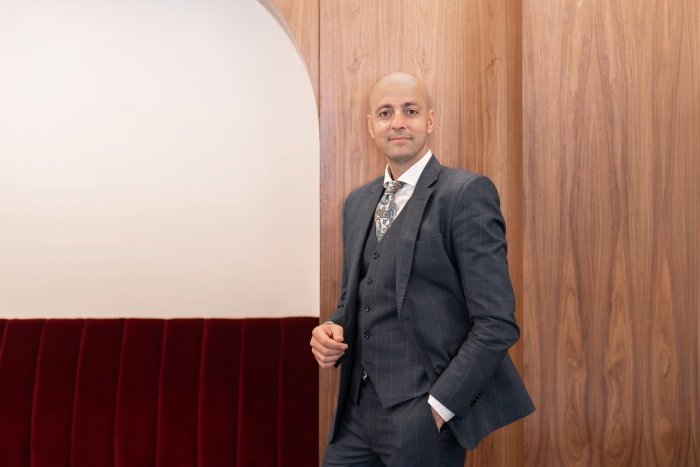


Elie Milky is the Chief Development Officer for the Middle East, Northeast Africa, Greece, and Cyprus at Radisson Hotel Group, where he leads the Group’s strategic expansion and drives the growth of its diverse brand portfolio across key markets. His role covers development and conversions for all of Radisson’s core brands, including Prize by Radisson, Park Inn by Radisson, Radisson, Radisson Individuals, Radisson RED, Radisson Blu, art’otel, and Radisson Collection.
Elie was recently promoted to this expanded role following a successful 15-year journey with Radisson Hotel Group, where he joined in 2010 as Business Development Manager. Since then, he has become a driving force behind the company’s growth in the region, signing iconic deals, forging long-term relationships with key owners, and helping launch new brand propositions across diverse markets.
He is one of the many top level speakers at this year’s FHS World which is being held on 29 September – 1 October 2026, Madinat Jumeirah, Dubai
1. What is the biggest change taking place in hospitality today that the industry is still underestimating?
The industry is moving beyond the traditional hotel model much faster than many realise. Guests and investors are increasingly looking for flexible, mixed-use environments that combine hospitality, residences, extended stays, work, wellness and social experiences. Hotels are becoming part of a broader lifestyle ecosystem, serving local communities as much as travellers. The opportunity is no longer simply to build more rooms, but to create assets that generate demand and value throughout the day and across different customer segments.
2. Which region or destination presents the greatest hospitality opportunity over the next five years, and why?
The Middle East presents one of the most compelling hospitality opportunities globally. The region combines significant tourism investment, expanding air connectivity, ambitious destination development and a growing domestic travel market. Saudi Arabia is particularly important, not only because of its flagship projects, but because of the wider transformation taking place across its cities, religious destinations and emerging leisure markets. Across the region, demand is also becoming more diverse, creating opportunities from luxury resorts and lifestyle hotels to serviced apartments and quality midscale accommodation.
3. Within the Middle East, where do you see the strongest opportunities beyond the most prominent projects and destinations?
Some of the strongest opportunities lie beyond the headline developments. In Saudi Arabia, the Holy Cities and secondary urban centres still require more internationally branded, high-quality accommodation across several market segments. Egypt also offers considerable potential through its combination of major cities, established resort destinations and emerging coastal locations. Across the wider region, we see growing demand for conversions, serviced apartments, branded residences and efficient midscale hotels. These opportunities may attract less attention, but they can offer owners strong fundamentals, diversified demand and attractive long-term value.
4. What is the most important change you are seeing in customer behaviour?
Guests are becoming far more intentional. They’re comparing value, convenience, experience and brand purpose simultaneously, and they expect the entire journey to feel simple and relevant to them. They also move fluidly between business and leisure travel, which is changing how hotels are designed and operated. A business traveller may extend a stay, travel with family or work remotely, so rigid customer categories are becoming less useful. Hospitality businesses need to understand the complete purpose of the trip and respond with greater flexibility.
5. What are guests increasingly willing to pay more for, and what do they no longer value?
Guests will pay more for experiences that genuinely improve their stay, including an excellent location, quality sleep, thoughtful design, wellness, authentic food and beverage, personalisation and services that save them time. They’re less willing to pay for superficial luxury, unnecessary formality or features that photograph well but add little practical value. The strongest hotel concepts balance emotional appeal with functional quality. Guests want an experience that feels distinctive, but they also expect it to be effortless, comfortable and worth the premium.
6. Which hospitality trend has genuine staying power?
The convergence of hotels, serviced apartments and branded residences has genuine staying power. It reflects lasting changes in how people live, work and travel, while giving investors a more diversified asset model. Extended-stay accommodation provides guests with flexibility and a stronger sense of home, while branded residences combine the benefits of private ownership with trusted hospitality services. When developed in response to genuine market demand, these components can strengthen both the commercial performance and long-term resilience of a project.
7. What is the biggest challenge facing the hospitality industry, and where is the corresponding opportunity?
Development feasibility is one of the industry’s greatest challenges. Rising construction, financing and operating costs are placing greater pressure on returns, while owners must still deliver the quality guests expect. The corresponding opportunity is to become more disciplined and creative. Conversions, adaptive reuse, mixed-use development, efficient design and flexible operating models can bring projects to market faster and improve investment performance. Strong collaboration between owners, operators, designers and lenders from the earliest stage is now essential.
8. How are talent shortages affecting the industry, particularly in rapidly growing markets such as the Middle East?
The pace of hospitality growth in the Middle East is creating intense competition for skilled talent, particularly in markets opening large numbers of hotels and tourism assets simultaneously. The challenge isn’t only recruitment. It’s also about developing people quickly enough to support expansion without compromising service quality. This creates an opportunity for hotel groups to invest more deeply in local talent, build stronger partnerships with educational institutions and create clearer career pathways. Sustainable growth depends on developing capability within the markets where we operate.
9. What skills will hospitality businesses need most over the next five years?
Hospitality will need people who can combine emotional intelligence with commercial and digital capability. Data literacy, revenue management, technology adoption and sustainability expertise will become increasingly important, but the ability to build relationships and create memorable human experiences will remain fundamental. We will also need more adaptable leaders who can work across cultures, disciplines and operating models. The most valuable professionals will be those who understand technology without losing sight of hospitality’s human purpose.
10. How must training and career development change to attract, develop and retain the next generation of hospitality talent?
Training must be flexible, accessible and connected to clear career opportunities. At Radisson Hotel Group, our belief is that “We grow talent, talent grows us.” Through Radisson Academy, we combine online, live and on-the-job learning with personalised development and opportunities for internal mobility. More than 8.5 million learning hours have been delivered, while 40% of our job openings are filled internally. This demonstrates the importance of giving people a visible path to progress, real responsibility and the ability to build careers across different functions, brands and markets.
11. What is one specific way your business is using AI today, and what measurable difference has it made?
One specific example is our Hyperlocal initiative, which uses AI-powered translation to deliver more personalised and locally relevant content in 34 languages. This enables us to tailor content across more than 60 markets while maintaining quality and cultural relevance at scale. The impact is measurable, with personalised content generating a double-digit increase in conversion and three times more click-throughs than generic content. It shows how AI can improve both the customer experience and commercial performance.
12. What is the most promising AI application you are exploring next?
Conversational travel planning and agentic commerce are particularly promising. The recently launched Radisson Hotels app in ChatGPT allows travellers to discover and compare hotels through natural conversation, supported by live rates, availability, location information and property details. The next opportunity is to make this journey increasingly personalised, with loyalty recognition, in-conversation booking, reservation management and tailored recommendations. AI can reduce friction throughout the journey, while hotel teams focus their time on the moments where human judgement and care matter most.
13. What are you most excited about in hospitality over the next 12 months?
I’m most excited by the diversity of projects now moving from vision to reality. Across our markets, we’re seeing new destinations emerge, established cities evolve and owners become more ambitious about design, sustainability and guest experience. For Radisson Hotel Group, the next 12 months will bring further growth across our portfolio, including lifestyle hotels, resorts, serviced apartments, branded residences and conversions. Each project gives us an opportunity to introduce the right brand and operating model for its specific market.
14. What first attracted you to hospitality, and what has made you stay in the industry?
I was first attracted by the energy of hotel operations and the opportunity to work with people from different cultures and backgrounds. As my career developed, I became increasingly interested in the real estate and investment side of the industry, particularly how a hotel moves from an idea to a successful, long-term asset. I have stayed because hospitality never stands still. Every market, project and partnership presents a different challenge, and the results are tangible. You help create places that generate employment, attract visitors and become part of a destination’s identity.
15. What is the one issue hospitality leaders should be discussing at FHS World in Dubai?
We should be discussing how to maintain investment discipline while the region grows at unprecedented speed. Ambition is essential, but every project must be rooted in realistic demand, the right brand positioning, efficient design, access to talent and a sustainable operating model. The industry’s success shouldn’t be measured only by the number of hotels announced. It should be measured by the long-term performance of those assets and the value they create for owners, guests, employees and local communities.