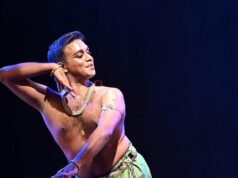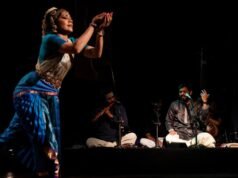

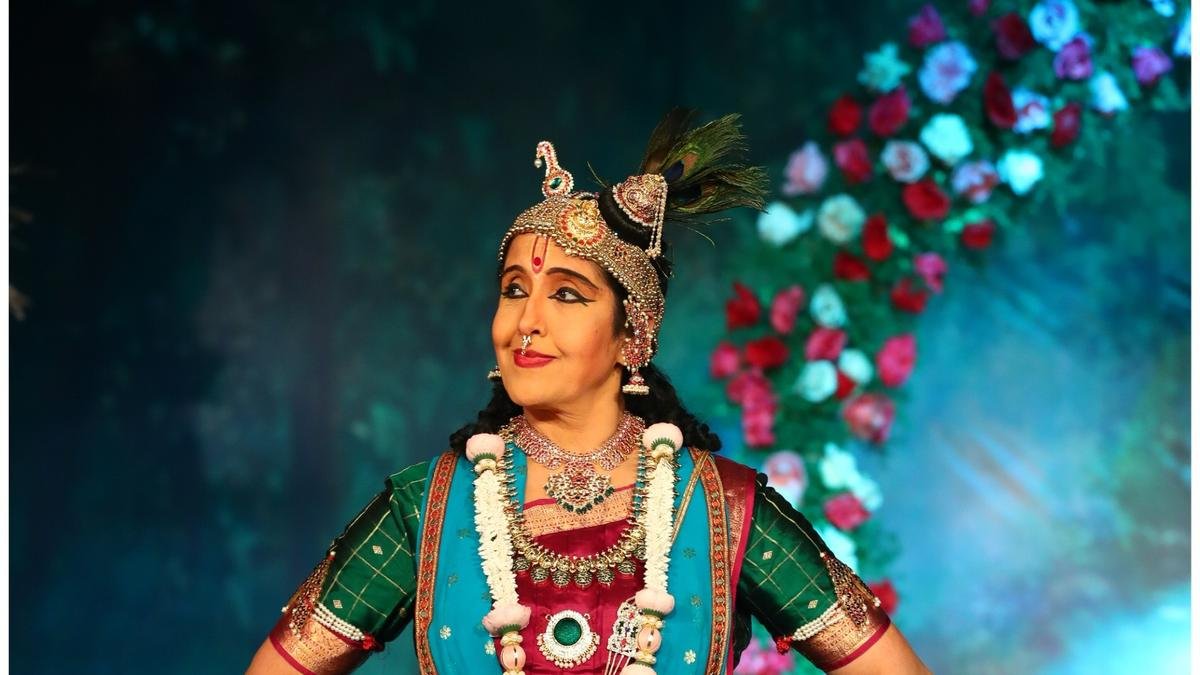


Bala Devi Chandrashekar’s thematic production was based on the works of the saint-poets of Maharashtra.
| Photo Credit: Special Arrangement
Bharatanatyam exponent Bala Devi Chandrashekar’s thematic production, ‘Mauli: A Timeless Tradition’, presented recently at Kalakshetra, was more a spiritual pilgrimage through Maharashtra’s 800-year-old Varkari tradition than a conventional dance performance. Conceived as an ekaharya (solo) production in the bhanika style, it took the audience on a virtual journey from Alandi and Dehu to Pandharpur.
Rather than following a linear narrative, the production unfolded in four acts, each illuminating a different facet of bhakti. Bala Devi’s premise was clear from the outset — true devotion is not measured by ritual or scholarship, but by compassion. Drawing on the lives of saint-poets such as Gnaneshwar, Namdev, Janabai, Tukaram and Eknath, she explored how ordinary acts of kindness can become expressions of the divine, thus making the production as much a reflection on humanity as on spirituality.
The opening act established the sacred geography of Pandharpur through a Pushpanjali in raga Hamsadhwani set to Misra Jhampa tala, followed by evocative abhangs in raags such as Misra Kalavati, Misra Bhoopalam, Megh and Misra Bilawal. The festive spirit of the annual Vari was conveyed through imagery of pilgrims gathering for their journey to Pandharpur, dressed in traditional attire with fluttering bhagwa pataka (saffron flags) in their hands.
Among the most impactful episodes was the story of Pundalika, whose service to his parents compelled Vittala to wait on a brick, affirming that selfless duty itself is worship. Equally compelling was Narahari’s realisation that Shiva and Vishnu are but two manifestations of the same supreme reality.
In the second act, Gnaneshwar’s vision of universal divinity was portrayed through ‘Roopa pahata lochani’ before the narrative moved to Namdev’s offering of milk to Krishna in raga Abheri. One of the most memorable moments of the recital came with how Namdev, pursuing a dog that carries away his rotis, sees in it not an animal but Vittala himself. Janabai’s segment, showcasing how daily chores became acts of worship as Vittala helped her wash clothes and clean vessels, highlighted a devotee’s bond with the divine.
The third act deepened the philosophical core with Bala Devi’s choice of Sant Tukaram’s celebrated abhang ‘Bolava Vitthal, pahava Vitthal’. The narrative then moved to Eknath, whose compassion in offering sacred Ganga water to a dying donkey, rather than reserving it for worship, distilled the production’s central message. The performance concluded with Eknath’s yearning for divine union in ‘Kashi jau mi vrindavana’ set in raga Gamanashrama, its deeply evocative mood lending emotional resonance to the saint’s longing.
The final act brought the pilgrimage full circle with the invocation of ‘Jai jai ramakrishna hari’ in raag Yaman Kalyan, which drew attention to the transformative power of namasankirtanam. Tukaram’s praise of the Lord flowed seamlessly into the ceremonial wedding of Tulasi and Damodara, while the vision of Pandharpur as Vaikuntha on earth culminated in the resounding chants of ‘Vittala, Vittala’.
Conceived and choreographed by Bala Devi Chandrasekhar, the music composition was by O.S. Arun, who also rendered the songs along with Vinaya and Usha Raj. Script was by Umapathy and Abhang Radhakrishnan.
The jathis were composed and rendered by Sheejith Krishna. The orchestra comprised Martin on the tabla, Rakesh on the mridangam, Kishore on the sitar, Venkataraman on the keyboard, Usija Nachiyar on the veena, Sruthi Sagar on the flute, Usha Rajagopalanon on the violin and Mambalam Sivakumar on the nagaswaram and shehnai.
Published – August 18, 2026 06:13 pm IST