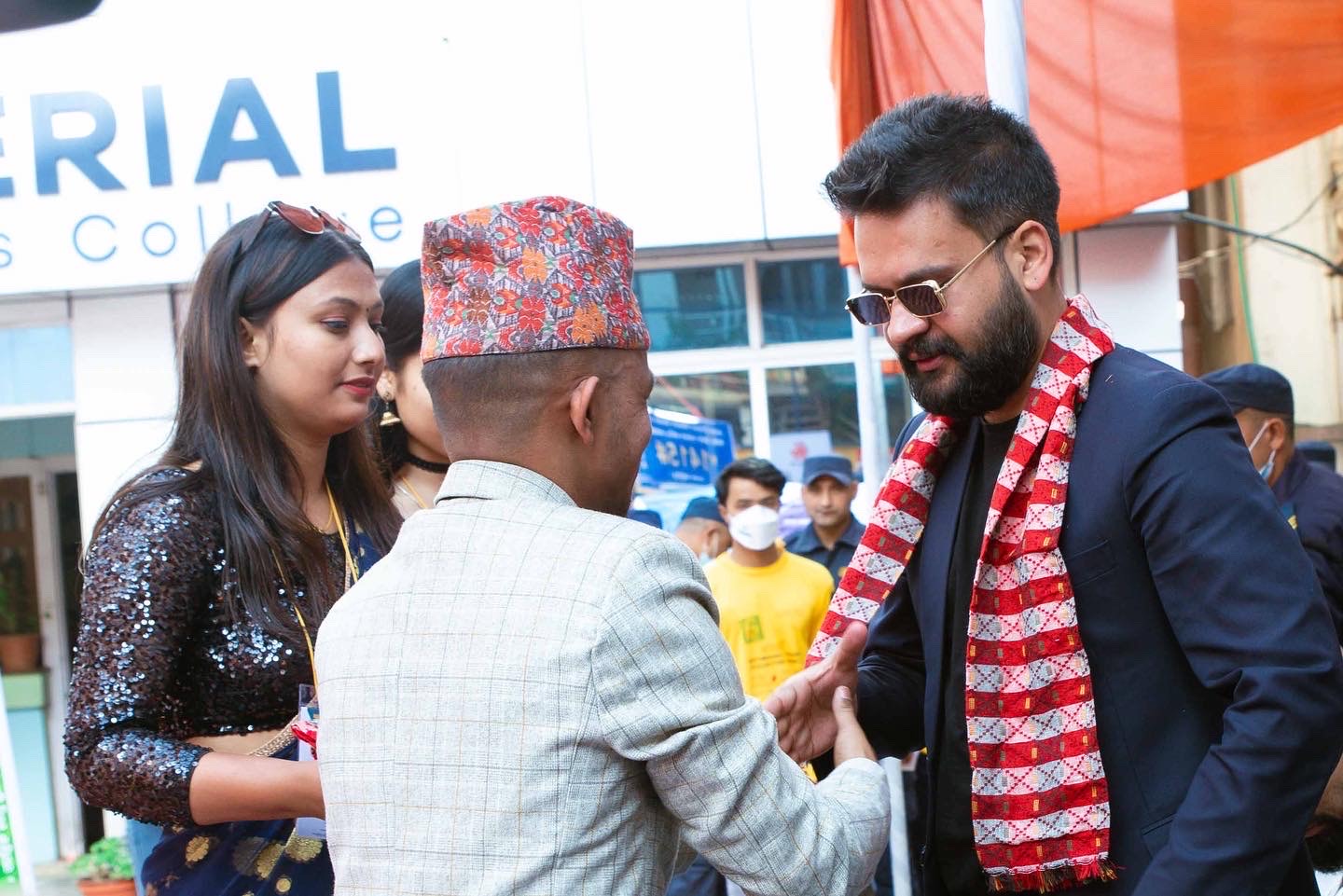

Following a resounding victory in the nation’s first election since the youth-led demonstrations of the previous year, rapper-turned-politician Balendra Shah was sworn in as Nepal’s prime minister.
The ascent of the 35-year-old signifies a significant change in Nepali politics. His pledge of reform struck a chord with voters who were fed up with elite domination, corruption, and nepotism.
Shah, better known by his stage as Balen, released a song full of hope for Nepal’s future before to taking office on Friday.In a song that received over two million views within hours of its release, he rapped, “Undivided Nepali, this time history is being made.”
His origins in the underground rap scene, where he used music to criticise corruption and other social issues in Nepal, are reflected in the song.
Shah joined the Rastriya Swatantra Party (RSP) as its prime ministerial candidate after serving as mayor of the capital city of Kathmandu for barely three years. This month’s general elections saw Shah win handily.
He is viewed by his fans as a symbol of transformation and a departure from the shortcomings of Nepal’s establishment. However, critics doubt the four-year-old RSP’s ability to fulfil its audacious promises.
The disobedient rapper
Shah is the youngest son of his parents and was born in Naradevi, Kathmandu, in 1990. His mother stayed at home to raise the family while his father practiced Ayurveda. Shah resides with his wife and daughter after getting married.
He received engineering degrees in Kathmandu and later in the southern Indian state of Karnataka after quitting school.
He became well-known in 2013 after emerging victorious in a famous rap competition in Nepal. His scathing songs expressed the resentment of a generation that felt marginalised and repressed.
Shah later released a number of well-known songs that attacked social injustice and corruption in the Himalayan country. With his signature square black spectacles, black blazer, and black pants, he made a striking appearance in the music videos.
Balidan, one of his most well-known songs, has received 14 million views on YouTube.
The song’s title, which translates to “sacrifice,” includes the line, “While we sell our identity abroad, government employees get 30k salary and have properties in 30 different places.” “Who will settle the debt of those who work seven seas away?”
The political novice defeated the parties that had controlled elections for decades in the 2022 mayoral contest in Kathmandu by a wide margin as an independent.
During his time as mayor, he worked to combat corruption, maintain indigenous culture, and clean up the city. Additionally, he launched a contentious effort to demolish unauthorised structures, which reduced traffic but also drew criticism from people living in informal settlements and street vendors.
The ascent to power
During the protests in September of last year, which resulted in the deaths of 77 people, many of whom were protestors shot by police, Shah’s message remained relevant to the nation’s youth. Anger over corruption, unemployment, and economic stagnation spurred the disturbance, which was sparked by a social media ban.
His song Nepal Haseko, which translates to “Smiling Nepal,” became an anthem for protesters.I want to see people in Nepal grinning and their hearts beating. The song’s lines, “I want to see Nepal smiling, I want to see Nepalis living happily,” were played for weeks in homes and on the streets.
This year, Shah used his unorthodox approach to run for Nepal’s highest position, avoiding media appearances and the spotlight.
His detractors claim that by using this tactic, he has been able to evade public scrutiny of his record.
Instead, Shah chose to address voters via social media posts, promising, among other things, judicial reforms, a comprehensive anti-corruption strategy, and the creation of 1.2 million new employment.
The political establishment and long-standing power structures were destroyed when the RSP won a landslide victory in the national elections on 5 March. In the Jhapa 5 constituency, which had long been KP Sharma Oli’s bastion, Shah even defeated the former prime minister.
Challenges and controversy
However, Balendra Shah’s record isn’t entirely spotless.
While he sought to keep the capital’s roads free and crack down on unregistered businesses, rights organisations accused him as mayor for utilising the police in an oppressive way against street vendors. A request for response from the BBC was not answered by Shah’s campaign.
One organization that voiced these concerns was Human Rights Watch, which told the BBC that this is the kind of attitude they frequently see in new leaders who are eager to produce results.We hope as prime minister, there would be a focus on a more rules-based order,” said Meenakshi Ganguly, deputy Asia director of Human Rights Watch.
Shah has generated outrage on social media as well. He listed America, India, China, and a number of Nepali political parties, including the RSP, which he eventually joined in January, in a profanity-filled Facebook post from November of last year. Soon later, he removed the post.
Beyond these disputes, Shah and his party leaders will face a number of difficulties in addition to the high expectations of voters who are eager for change.
These include the RSP’s inexperience in power, persistent unemployment and a faltering economy in Nepal, and the conflict in the Middle East, where millions of Nepalis find jobs.
Additionally, there is popular pressure to make public the results of an investigation into the fatal revolt that overthrew the previous administration in 2025.
The newly elected RSP will determine how to carry on the commission’s recommendations, but Nepal’s interim administration has stated that it will make a summary of the findings public.