

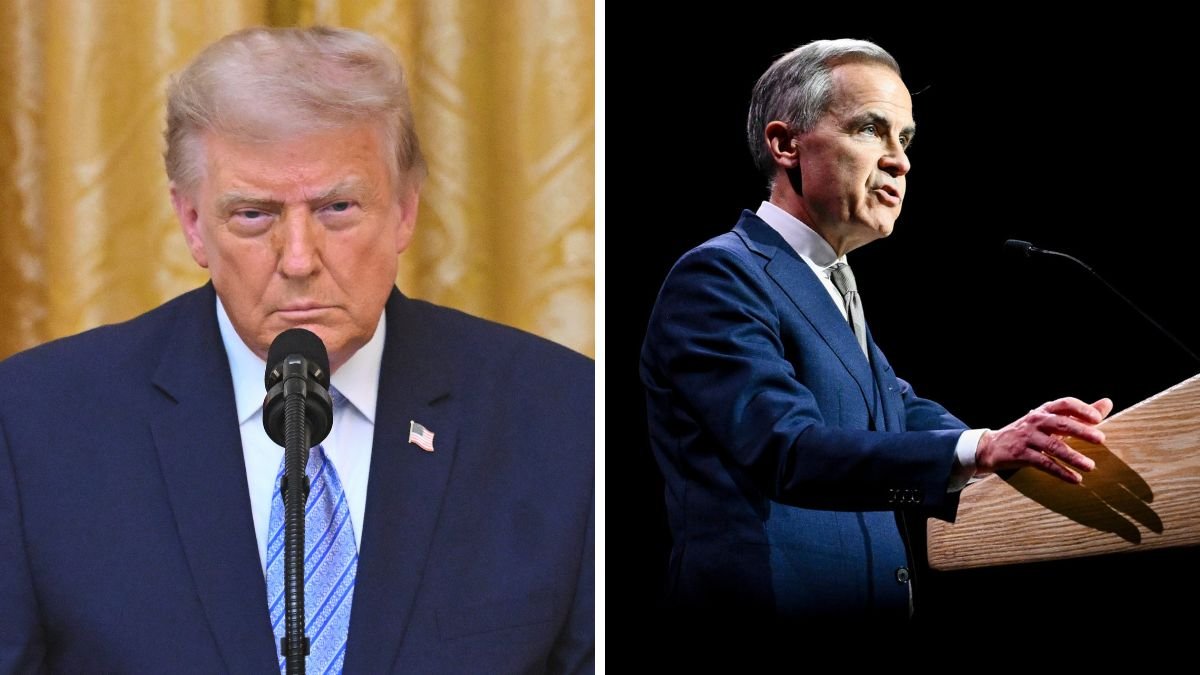

US President Donald Trump’s 50 per cent tariffs on scores of Canadian imports came into effect on Saturday after trade negotiations between Washington and Ottawa collapsed at the eleventh hour. The new levies are expected to affect around 5 per cent of Canada’s annual exports to the US, worth roughly USD 20 billion in goods.
Canadian Prime Minister Mark Carney said the US had introduced efforts in recent hours to restrict Canada’s ability to pursue other trade deals. Carney said Canada had secured 20 new deals over the past year, including economic and security partnerships, and had the prospect of doubling its market access through free trade. He described the US demand as unacceptable.
Which Canadian goods are affected?
The new 50 per cent tariffs are expected to affect around USD 20 billion worth of Canadian goods. Canada sends the vast majority of its goods exports to the US, with 72 per cent going to its southern neighbour last year. According to documents published by the White House, the affected products range from hockey sticks to wine and cement. The list also includes honey, seeds and agricultural products, along with select makeup, perfumes, clothing, jewellery, furniture, cameras and fabric. The 50 per cent levy also applies to some products that were previously protected under the US-Mexico-Canada Agreement, a trade pact signed during Trump’s first term.
Why has Trump imposed the tariffs?
Trump used Section 338 of the Tariff Act of 1930 to impose the 50 per cent tariffs. The provision was part of legislation passed during the Great Depression era and allows the US president to impose import taxes of up to 50 per cent on goods from countries that have discriminated against US businesses. Section 338 has never previously been used specifically to raise tariffs. The provision does not require an investigation to justify the levies and does not set a limit on how long they can remain in place. The move could face legal challenges as there is no precedent for using the provision in this way.
Trump had previously accused Canada of unfairly discriminating against US exports of automobiles, alcohol and dairy products. He also pointed to Canada’s retaliation against US tariffs, saying imports of American alcohol and cars had started to fall last spring.
Canada announces retaliation
Carney has promised a “dollar for dollar” response to the latest US tariffs, with Canadian retaliatory measures set to begin on September 8. Canada’s tariff increases will target steel, dairy, appliances, agricultural equipment, pulp and paper and electronics. Carney said Canada was willing to remove its remaining retaliatory tariffs on steel, aluminium and autos if the US substantially reduced its own tariffs. He also said Canada was willing to encourage provinces to restore US alcohol sales.
However, Carney said Washington’s final demands went too far. He accused the US of using “economic integration as a weapon” and said Canada had been “attacked” by the latest tariffs. Trump’s top trade negotiator, Jamieson Greer, meanwhile pledged additional measures in response to Canada’s retaliation. He did not immediately specify what those measures would involve. Greer also claimed that the administration had offered to cut tariffs on steel, autos and lumber, but said Canada did not want the deal.
What happens next?
The latest escalation has pushed the US and Canada deeper into a trade dispute that has continued throughout Trump’s second term. Tariffs are taxes paid by importers, or businesses that buy goods from abroad. These costs can eventually reach consumers through higher prices and can also create uncertainty for workers in affected industries. The new 50 per cent tariffs come on top of previously imposed levies, including a 10 per cent rate Trump introduced last month over concerns about imports produced using forced labour, as well as separate sectoral levies affecting trading partners globally.
Experts have warned that steeper tariffs could increase costs for businesses and households. Augustine Lo of law firm Dorsey & Whitney said nearly all industries and professions were likely to experience downstream effects from the escalating trade dispute. Dave Townsend, a partner at Dorsey & Whitney, described the current situation as a “new tariff landscape” for North America, with a key question being whether the latest tariffs will be temporary. The growing trade sanctions have also raised concerns about the future of established US-Canada trade ties. Carney’s government has indicated it is prepared to respond, while Washington has warned of further measures.
(With inputs from PTI, ANI)
Also read:
US-Canada fail to reach trade deal, Carney vows to match Trump’s 50% tariffs ‘dollar for dollar’ | DETAILS