


Alessandro Bonato expresses delight in sharing stage with Indian musicians
| Photo Credit: Special Arrangement
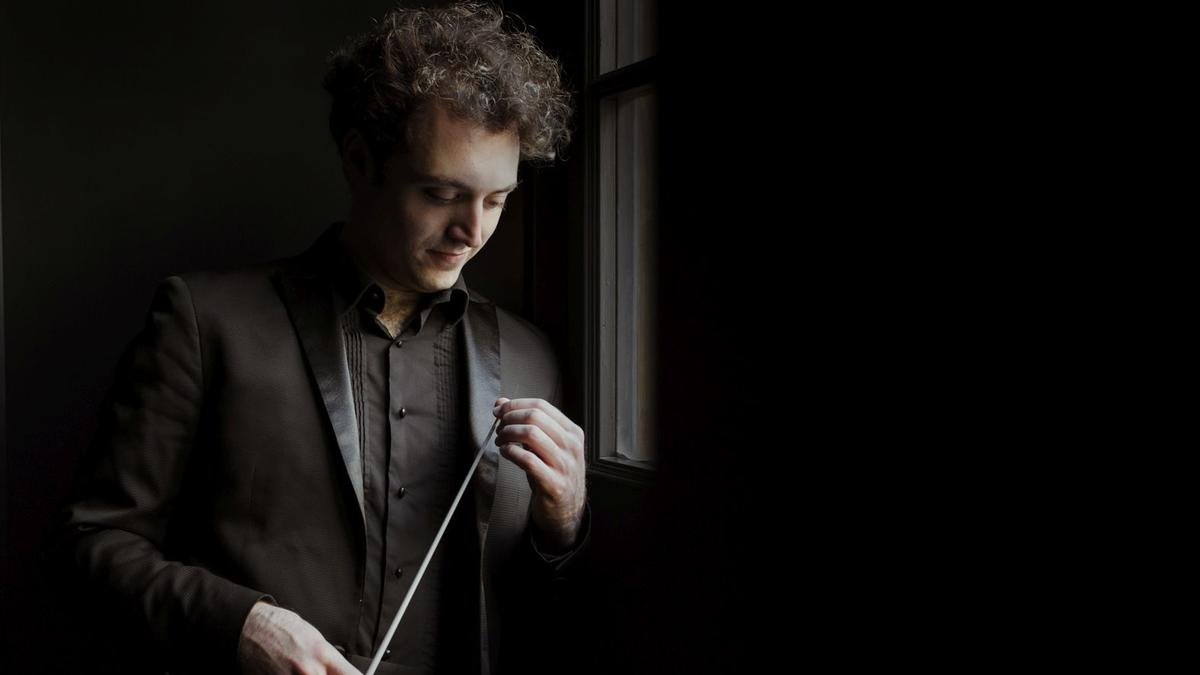
At 31, Alessandro Bonato has earned renown as one of Italy’s most promising young conductors. Besides conducting the Haydn Orchestra of Bolzano and Trento, he has collaborated with other orchestras and soloists too. “My approach does not change with the orchestra I conduct. I prioritise preparation and respect the musicians I work with,” he says.
The Verona-born musician is now looking forward to his debut concerts in India — on August 26 and 30 — where he will conduct the Symphony Orchestra of India (SOI). Presented by the National Centre for the Performing Arts, the concersta are a part of the Autumn Season 2026. British maestro Martyn Brabbins, who took over as the chief conductor of SOI earlier this year, will lead the season’s first two concerts on August 16 and 21.
The season also marks 20 years of SOI. Bonato says he is delighted to share the stage with the musicians in a country that is new to him and eager to discover. He adds: “Music is something we create together and everyone has to give their best in order to achieve the common goal — to bring the scores we perform to life in the best possible way.”
The programme, for Bonato’s August 26 concert, includes compositions by Italian genius Gioachino Rossini, besides German legend Ludwig Van Beethoven’s Violin Concerto, featuring violinist Francesca Dego. On August 30, the programme includes Rossini’s GuillaumeTell Overture, Felix Mendelssohn’s Symphony No 4, Beethoven’s Symphony No 8 and Pyotr Tchaikovsky’s 1812 Overture.
According to Bonato, the programme includes two major compositions by Beethoven because 2027 will mark his 200th death anniversary. He says, “I have conducted Violin Concerto many times, but never with Francesca. I know her by reputation and am absolutely delighted to have an opportunity to collaborate with her.”
The other composer to feature prominently is Rossini. Bonato explains, “Ever since I played at the Rossini Opera Festival in Pesaro, Italy, at age 23, I have lived Rossini’s music to the fullest, breathing the atmosphere of the festival and of the foundation which oversees all the critical editions of his works. We will perform two of the most beautiful overtures Rossini ever wrote — La gazza ladr and Guillaume Tell — his last extraordinary opera. Both are demanding, musically and technically. One of the challenges of Rossini’s music is its dynamics, in particular, the famous ‘Rossinian crescendo’, one of his distinctive stylistic features, which has to be carefully balanced and calibrated.”

He believes a conductor is also a motivator and guide
| Photo Credit:
Special Arrangement
Though he started by learning violin and composition, Bonato’s dream was to become a conductor. “Since I was a boy, I always wanted to understand music in its entirety, without limiting myself to a single part,” he shares.
According to him, a conductor is not just someone who “puts the musicians of an orchestra together and keeps time. A conductor is a motivator and a guide, who must understand the people in front of him and help them give their very best. He must create a shared vision to achieve the best possible result. And he has to study a great deal in order to understand the scores in depth.”
Though he has conducted most of his concerts across Europe, Bonato made his debut in Muscat, Oman. “I conducted Mozart’s The Magic Flute with the local orchestra. I was 20 and it was my first experience abroad. I returned in 2022 with Rossini’s La Cambiale di Matrimonio. Arab audiences are engaging and enthusiastic. Although they do not have a western musical tradition, they do have a rooted popular music culture.”
Bonato has also conducted in Japan and will be returning there later this year. He says, “I love Asia and cultures that are different from my own, from which there is much to learn. The orchestras are fantastic and audiences enthusiastic.”
Having conducted both symphonic music and opera in equal measure, Bonato says there are no fundamental musical differences between the two formats and adds: “however, there are structural differences. In opera, there are singers with specific needs that the conductor must recognise and respect. Conducting technique is also slightly different and must accommodate the singers’ breathing. Apart from that, music is approached in the same way: by working on the details.”
Bonato hopes to return to explore India more deeply. He says, “I particularly want to learn about and experience its great centuries-old spiritual tradition.”
Published – August 14, 2026 12:37 pm IST