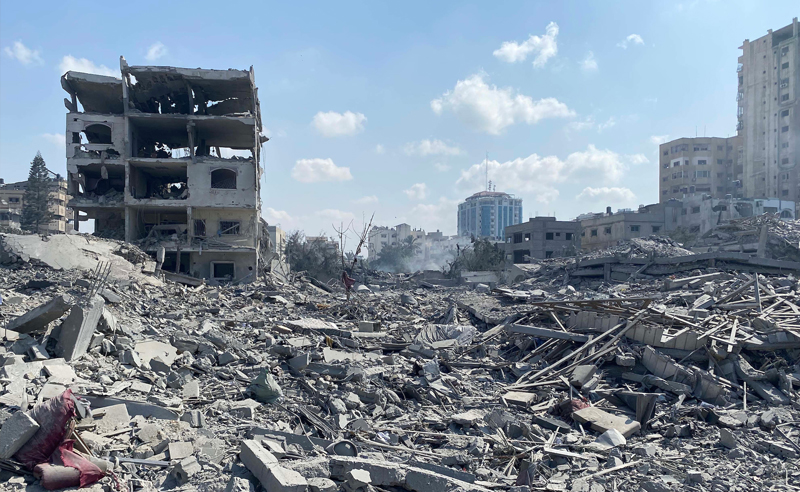

BEIRUT April 15: Ali and Wael Sabbagh, brothers, stood in front of the ruins of the structure that had served as their family’s residence for over fifty years.
Last week, their mother, brother, and family assistant were killed as Israeli strikes pounded the site into rubble.
Their inability to bury their mother and brother properly has added to their pain; other families from south Lebanon are in a similar situation. They are compelled to temporarily bury their dead in Beirut until it is safe enough to transfer their remains to their final resting place because they are unable to travel to their ancestral areas to honour their deceased.
“We come from the south of Lebanon, from Nabatieh, and that is being bombarded on a daily basis,” Wael stated. “We want them to be buried in the family cemetery, but unfortunately we’re unable to do that.”
A FAMILY CAN’T RISK A TRIP SOUTH
Israel has promised to keep control of area up to roughly 30 kilometres (20 miles) north of the border and to create a buffer zone in southern Lebanon.
The southern city of Nabatieh has basically been left to ruins. The brothers claimed that because they are afraid of being killed in the attacks, they are unable to send someone in their place or take the chance of travelling south.
“This shouldn’t have to happen to anyone. Sadly, my sister, brother, and I are not the only ones experiencing this,” Wael remarked. “Hundreds, if not thousands, of families…are mourning in the same way I am, not understanding what happened.”
Some of the bloodiest attacks on the Lebanese capital in decades occurred last week when Israel attacked Beirut. According to Lebanese authorities, about 350 people were killed nationwide.
Since the conflict between Israel and Hezbollah began last month, Israeli attacks have killed over 2,160 civilians in Lebanon. Israel launched an all-out attack on Lebanon in retaliation for Hezbollah’s rockets. Since then, more than 1.2 million people have been displaced in Lebanon, according to Lebanese officials.
Hezbollah is the focus of Israeli military operations in Lebanon, according to the Israeli military.
The body of Ali and Wael’s mother was discovered in her house. The family identified their brother by his arm tattoo, but it took them two days to find him. The family arranged for the housekeeper’s body to be sent to Ethiopia.
The brothers spoke to Reuters one day after Israeli and Lebanese officials met in Washington, D.C., in a rare meeting between representatives of two nations that have been officially at war since Israel’s founding in 1948.”The Israelis will always have us under their control,” Wael stated. The brothers stated that they will attempt to take legal action against those responsible for their family members’ deaths.
Ali bemoaned the cycle of death, devastation, and rebirth that has characterised Lebanese life for the most of his nation’s history.
Construction workers were already hard at work on a new structure behind the Sabbaghs’ bombed-out house.”There will be a new building, new children, new mothers, and new brothers when you return in a few years,” Ali remarked. “I’ll be there. I will keep that in mind. No one else will.