
Observers have seen President Trump’s choice to share the post without making any additional remarks as an indication of active backchannel diplomacy.
Washington
After sharing an official statement from Pakistani Prime Minister Shehbaz Sharif, US President Donald Trump sparked considerable diplomatic speculation over Islamabad’s possible role as a mediator in the ongoing Washington-Tehran impasse.
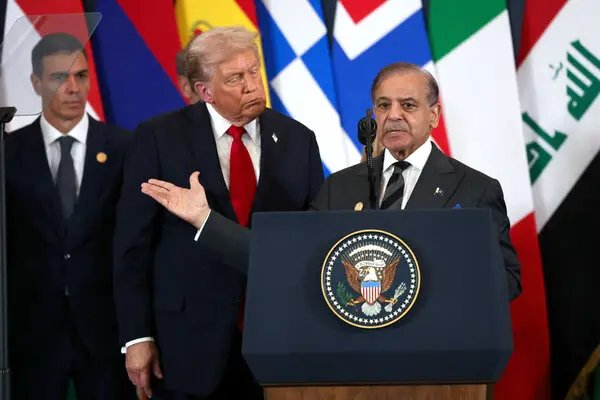
The action comes after Prime Minister Sharif stated in a post on X that Islamabad is eager to help resolve the regional problem diplomatically. According to Sharif, if both sides agree, Pakistan is “ready and honoured” to mediate “meaningful and conclusive talks” between the US and Iran.
The Prime Minister elaborated on Islamabad’s stance by saying, “Pakistan welcomes and fully supports ongoing efforts to pursue dialogue to end the war in the Middle East, in the interest of peace and stability in the region and beyond.” He further stated that, “Subject to concurrence by the US and Iran, Pakistan stands ready and honoured to be the host to facilitate meaningful and conclusive talks for a comprehensive settlement of the ongoing conflict.”
Observers have interpreted President Trump’s choice to repost the post on his Truth Social account without offering any additional commentary as an indication of active backchannel diplomacy. This event is consistent with reports from around the world indicating that Pakistan, Egypt, and Turkey are discreetly attempting to mediate a Middle East peace agreement.
The White House has been strategically cautious, despite reports that Islamabad is being considered as a possible neutral destination. The current situation is “sensitive” and “fluid,” according to US Press Secretary Karoline Leavitt, who cautioned against taking unverified information at face value.The United States will not negotiate through the media during these delicate diplomatic talks.
Leavitt said, “This is a fluid situation, and rumours about meetings should not be considered final until they are formally announced by the White House.” This declaration coincides with unsubstantiated rumours that Vice President JD Vance and ambassador Steve Witkoff could meet Iranian officials in Pakistan.
Indirect communication seems to be increasing despite the lack of official confirmation, with Islamabad allegedly acting as a crucial messenger. CNN says that the United States has sent Tehran a list of 15 demands via Pakistani channels. In order to promote these diplomatic interactions, the network also revealed that senior Pakistani intelligence personnel have kept in close contact with US officials, such as special envoy Steve Witkoff and Jared Kushner.
Following President Trump’s recent announcement of a five-day halt to planned strikes against Iranian energy infrastructure, there has been a sudden surge of diplomatic activity. Trump said the US is in communication with a “top person” in Iran and blamed the hold on “very good and productive conversations” with Tehran. On the other hand, Tehran insists that since the start of the conflict, it has not held direct talks with Washington.