
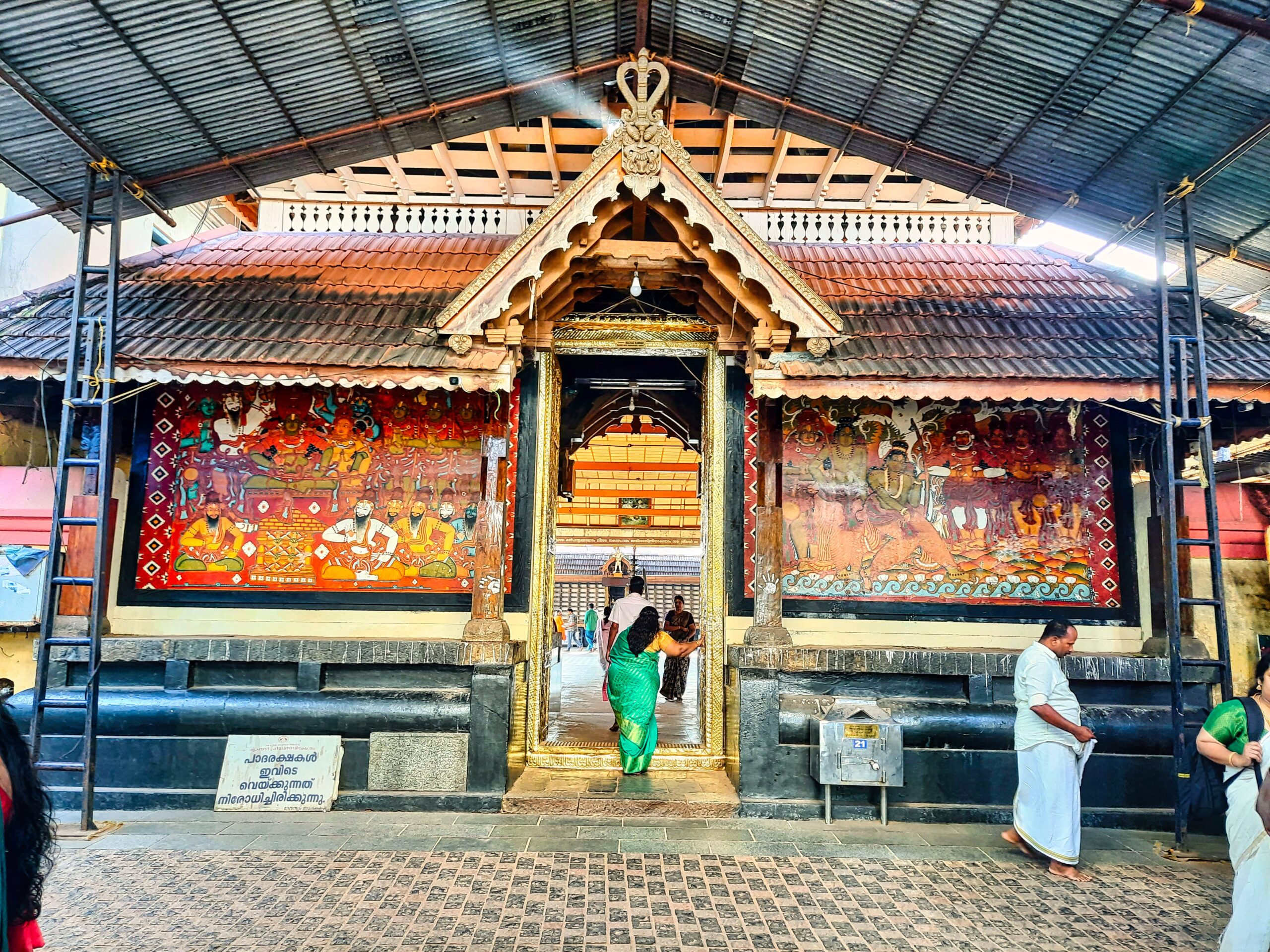

Kerala, often referred to as “God’s Own Country,” is known for its backwaters and lush greenery. However, aside from the greenery and calm waters, Kerala is also known for its rich heritage, grand architecture, and royal history. Kerala has a long history of trade with Arabs, Chinese, Portuguese, Dutch, and British. Each of these peoples left behind a terrific inventory of palaces, temples, forts, and colonial structures. Each heritage site in Kerala has a story to tell of dynasties, of devotion, and of the development of art and architecture. Below are some of the important heritage sites in Kerala that tells tales of its royal past and architectural beauty.
1. Padmanabhapuram Palace – The Royal Heritage of Travancore
Situated in the Kanyakumari district (previously part of the erstwhile Travancore kingdom), the Padmanabhapuram Palace is one of the best examples of Kerala traditional architecture. Built in the 16th century by King Iravi Varma, the palace is a wooden palace crafted out of rosewood, teak and granite. The interiors have depicted fascinating carvings, murals and Belgian mirrors. The Council Chamber inside the palace is a highlight, along with the mica-covered ceiling that cools down the interiors. Entranced by the beauty of the King’s Council Room, the Queen’s Courtyard and the working clock tower which has been functioning for the past 300 years.

2. Mattancherry Palace (Dutch Palace) – A Fusion of Cultures and Periods
The Mattancherry Palace, or Dutch Palace, located in Kochi, is another jewel in the heritage crown of Kerala. Originally built by the Portuguese in 1555 and gifted to the Raja of Kochi, it was rebuilt by the Dutch in 1663. The design of the palace is a beautiful marriage of Kerala and European architectural styles, with its sloping roofs, wooden ceilings, and large courtyards. The palace walls are decorated with painted murals of subjects from the Ramayana and Mahabharata. The palace features the royal regalia, idols, palanquins, and ceremonial costumes of the Kochi kings.
3. Bekal Fort – Guardian of the Arabian Sea
Perched on the emerald waters of the Arabian Sea, Bekal Fort in Kasaragod is one of the largest and well-preserved forts in Kerala. Built by Shivappa Nayaka in the 17th century, the massive structure covers over 40 acres. Its prominent coastal location made it an important defensive position during the reigns of Keladi Nayakas and Tipu Sultan as well. The fort’s circular ramparts, look-out tower, and water tank are functional pieces of military architecture from a period long gone. Today, the monument is a historical site and a popular tourist attraction, with stunning views and tranquil coastal beauty.
4. Hill Palace Museum – A Vision of the Royal Past of Kochi
The Hill Palace Museum, located in Tripunithura near Kochi, was the administrative office and residence of the royal family of Kochi. Built in 1865, the palace covers 54 acres and has 49 buildings with Kerala-style and colonial style architecture. The palace is now the largest archaeological museum in Kerala. Its collection includes royal ornaments, weapons, antique furniture, manuscripts, and the golden crown of the Maharaja of Kochi. The gardens and deer park around the palace have been developed beautifully, which provides an excellent experience for heritage lovers.
5. Krishnapuram Palace – A Masterpiece of Travancore Architecture
Located near Alappuzha, Krishnapuram Palace was constructed in the 18th century by Anizham Thirunal Marthanda Varma, the ruler of Travancore. The palace is an excellent example of Kerala’s traditional architecture, with gabled roofs, narrow corridors, and dormer windows. Visitors can admire the famous mural “Gajendra Moksham,” one of Kerala’s largest mural paintings that depicts a mythological elephant’s salvation. The palace currently houses a archaeological museum consisting of old sculptures, coins, and bronzes that provide insight into the glorious past of Kerala.
6. Napier Museum – A Fusion of Indo-Saracenic Architecture
In the center of Thiruvananthapuram, the Napier Museum, named for Lord Napier, the then-Governor of Madras, is located. The design, by Robert Chisholm from 1880, features Indo-Saracenic architecture and a combination of Mughal, Gothic, and Kerala styles characterized by exquisite woodwork, stained glass, and finely carved arches. The museum exhibits rare items including bronze idols, ancient jewelry, ivory carvings, and a collection of traditional musical instruments. Located next to the museum is an art gallery featuring the work of Raja Ravi Varma, one of India’s greatest painters.
7. Thalassery Fort – A Remnant of Colonial Power
Built by the British East India Company in 1708, Thalassery Fort in Kannur stands as a significant marker of colonialism in Kerala. Its massive laterite walls, secret tunnels, and bastions facing the sea tell the story of trade, war, and diplomacy in the region. Thalassery served as a center for the export of spices and cardamom. The fort now stands amongst green scenery, providing tourists with a full view of the Arabian Sea, and beautifully complements its historical significance with nature.
8. Kuthiramalika Palace – The Palace of Horses
In close proximity to the Padmanabhaswamy Temple in Thiruvananthapuram is the Kuthiramalika Palace, also referred to as Puthenmalika Palace. This stunning example of craftsmanship is a product of Travancore. Built by Maharaja Swathi Thirunal Balarama Varma, the palace is named for its eaves decorated with 122 wooden horse carvings. The museum features the king’s musical instruments, chandeliers made of crystal, items made from ivory, and paintings. The finely crafted woodwork and striking architecture evoke the lavish days of Travancore royalty.
9. Palakkad Fort – A Symbol of Tipu Sultan’s Rule
Called Tipu’s Fort, Palakkad Fort was built by Hyder Ali in 1766 and expanded by his son Tipu Sultan. The fort’s location between the Western Ghats made it and important military outpost. The solid granite walls, a moat, and Hanuman temple decks a combination of both Hindu and Islamic architectural styles. Now, the fort is managed by the Archaeological Survey of India and still one of the better preserved monuments of Kerala.
10. St. Francis Church – The Oldest European Church in India
Situated in Fort Kochi, St. Francis Church is among antiquated European churches in India, having been built by the Portuguese in 1503. The church has seen centuries of colonial rule, including the Portuguese, the Dutch, and the British. The famous Portuguese explorer Vasco de Gama was buried here in 1524 before his remains were brought back to Lisbon. The church’s uncomplicated, but beautiful, architecture, along with its wooden ceilings and stone flooring, reflects Kerala’s early colonial history.
Conclusion
Heritage sites in Kerala are not mere remnants of the past, but vibrant narratives in art, spirituality, and cultural dialogues. From royal residences such as Padmanabhapuram and Hill Palace to ancient forts like Bekal and Palakkad, there is a unique narrative behind every structure in Kerala’s illustrious past. These sites present a real opportunity to delve into the royal charm and artistic genius of Kerala’s heritage, whether you are an architecture scholar, history enthusiast, or an inquisitive traveler.