

Though the short Busan negotiations were focused on trade relief rather than global co-management, Trump’s “G2” comment prior to his meeting with Xi Jinping sparked concern about a potential US-China power alignment. His post seems to be more rhetorical than a genuine change in U.S. policy.
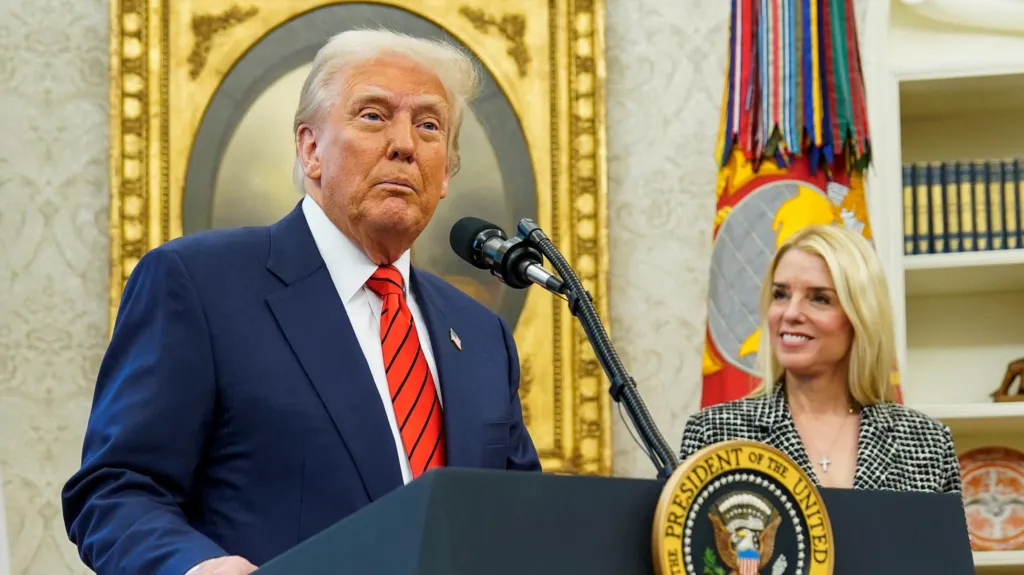
Ahead of his summit meeting with Chinese President Xi Jinping in South Korea on October 30, Donald Trump referenced the abbreviation for the “Group of 2” and said, “The G2 will be convening shortly.”
The informal concept of a partnership between the two major economic powers in the globe, co-managing international affairs, is known as the G2.
Whether Trump’s article suggests a change in US strategy, the establishment of a hypothetical Washington-Beijing G2 axis that directly strikes major deals overriding multilateral engagements, is what the US’s Asian allies, particularly South Korea and Japan, would want to know.
The goal of the less than two-hour-long Trump-Xi meeting in Busan was to defuse the continuing trade battle between the United States and China. Following the meeting, the United States did not issue a comment.
Trump’s remarks to American reporters following the summit did not suggest that a G2 would have involved the division of the world into several areas of control, as was done after World War II.
Trump said that the United States had cut tariffs on China by 10% to 47% in exchange for Beijing promising to resume US imports of soybeans, supply the US with rare earths, and crack down on the illegal supply of fentanyl.
The tone and tone of the Chinese statement, which was issued separately following the meeting, was more akin to that of the G2: “In today’s world, there are still many problems, and China and the United States can jointly show the responsibility of major countries and work together to do some major events, practical things, and good things that are beneficial to the two countries and the world.”
The declaration reflected the naive hope of US leaders who conceived of the G2. Former US National Security Adviser Zbigniew Brzezinski described the G2 as “a mission worthy of the two countries with the most extraordinary potential for shaping our collective future” on the 30th anniversary of the US and China’s diplomatic ties.
As NSA and Secretary of State, Henry Kissinger led the US-China rapprochement in 1971 and believed that co-evolution, not competition, was the solution. “Global issues are at the forefront of the world scene. He stated in his 2011 book on China that “confrontation on these issues is self-defeating, but consensus may prove difficult.”
The prospect of the world’s sole superpower and the most prominent rising power working together to confront the main challenges facing the global order has, in reality, been rejected by both the US and China.
In order to avoid being perceived as a US subordinate partner, China has traditionally rejected formal G2 framework and preferred multilateralism through the UN or BRICS.
Trump has emphasized US supremacy, and the US has traditionally supported multilateralism. Every regional ally, especially important East Asian allies like Japan, South Korea, and Taiwan, would be extremely concerned about a G2, which also runs the risk of upsetting institutions like NATO and AUKUS.
Therefore, it seems that Trump’s social media statement is more hyperbole than a significant change in US policy. Therefore, it should not be interpreted as a strategic endorsement of G2 co-management, but rather as tactical rhetoric.